
TRAVEL | BULGARIA | GRAPES | WINE
Every House Has a Grape Vine In Bulgaria
And there is a good reason for it!
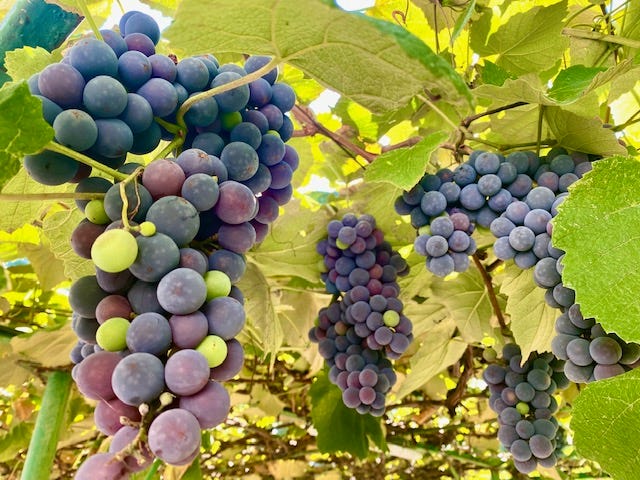
On our recent days of cycling through the Bulgarian countryside, we noticed that every house we passed had some sort of grapevine growing.
And I’m not kidding when I say ‘every house’.
When we first arrived at the house that we are staying at, we immediately noticed the grapevine that hangs over the front veranda area. It was dripping with numerous fat plump red grapes.
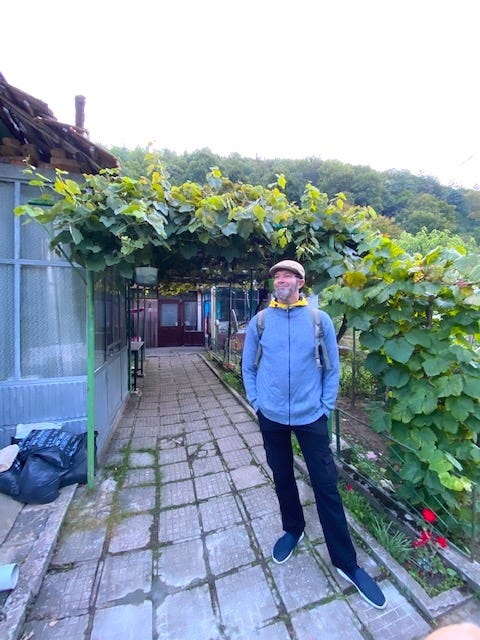
Of course, we had to sample a few of the grapes, but we later learned that this was not a good idea. We had been there for about 4 days when we finally asked our Bulgarian host if they were for making wine.
“Dah,” he exclaimed. Yes, in Bulgarian.
Then he went on to say a bunch of Bulgarian words of which we had no idea what they meant. As we do with most of what he says, we stared at him clueless. He then disappeared into the house and came out with a jug of homemade wine and two glasses.
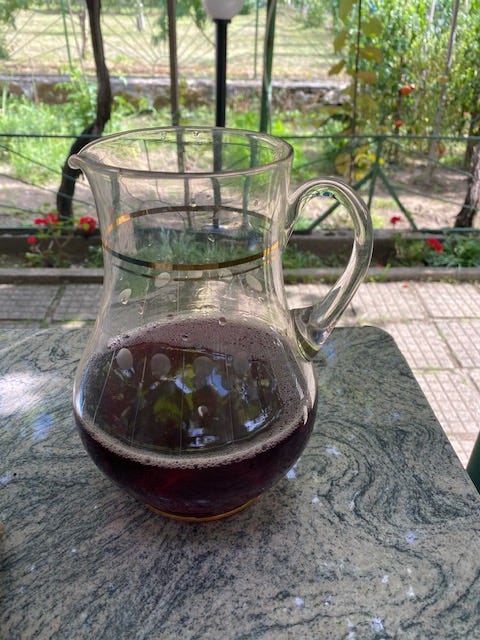
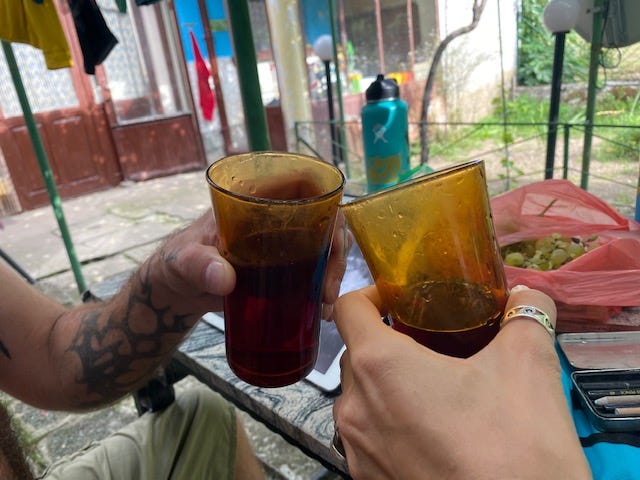
We were very surprised that he had this little stash and even more surprised to learn that he doesn’t really drink it. We aren’t sure who he has it for. Maybe it’s just for guests.
Lucky us!
I have to say that it was delicious. Nothing like the homemade wine that is made at You Brew’s in Canada, that is for sure!
It has been made clear to us that wine is a huge part of the Bulgarian culture, and one just has to look up ‘Bulgarian Wine’ online to see that it has immense popularity in the world.
According to Wikipedia:
Bulgaria was the world’s fourth largest wine exporter in 1980s.
However, they also go on to say that the industry declined after the fall of communism. Thankfully, though, it is on the rise again.
I’m glad because the world needs to taste this delicious beverage!
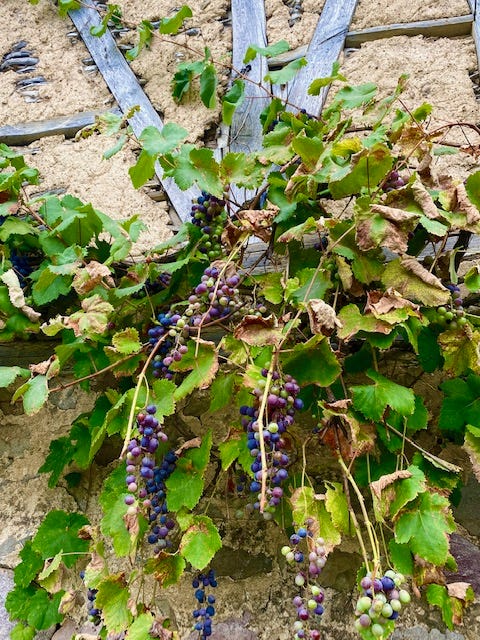
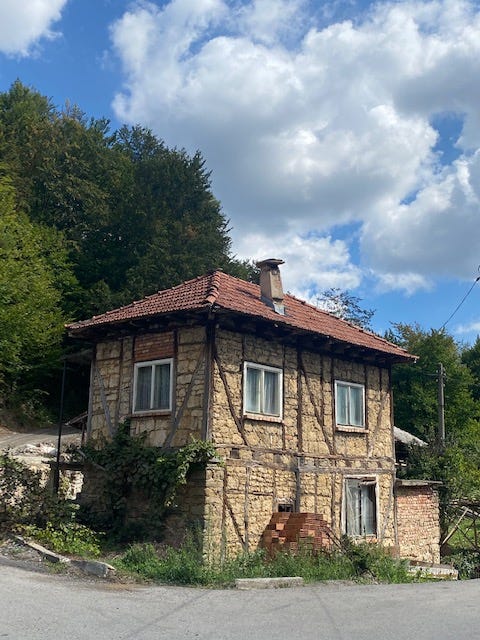
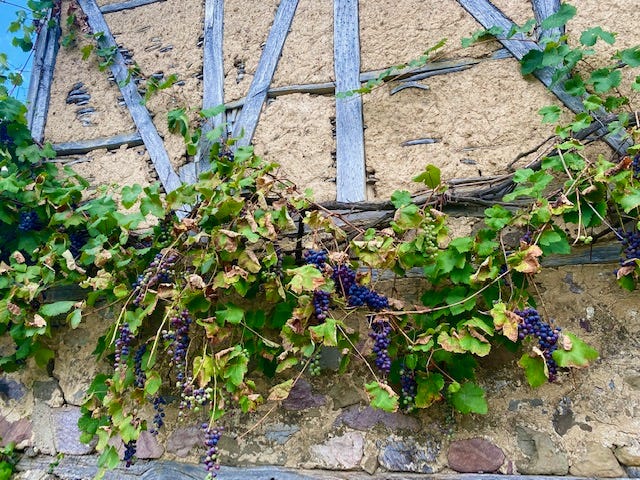
Wine is something that we have not drank much at all in our nomadic life. We have either been in places where it barely exists, or it is far too expensive for our budget-conscious wallets. I actually am a bit sensitive to preservatives that are put in commercial wines and tend to choose my wines carefully to avoid a reaction to them.
I’m happy to say that I have not reacted badly to Bulgarian wine yet!
It seems as though the Bulgarians have perfected their recipe, and I can see why since, also according to Wikipedia, wine production in this area dates back to the Thracians!
But wine isn’t the only drink that is derived from grapes. Rakia, Bulgaria's most popular liquor, also referred to as Raki, can also be made using grapes.
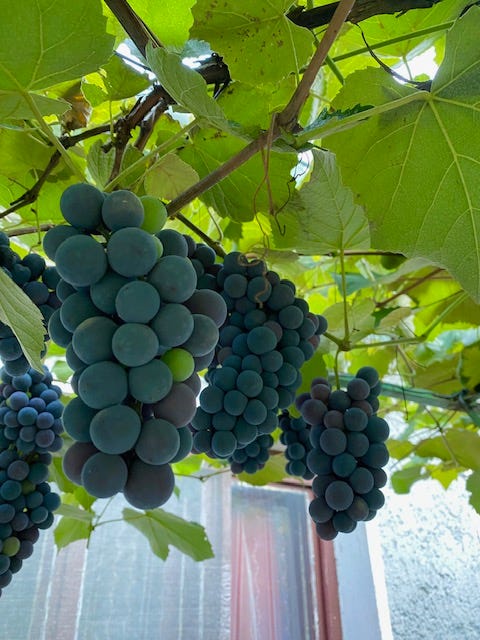
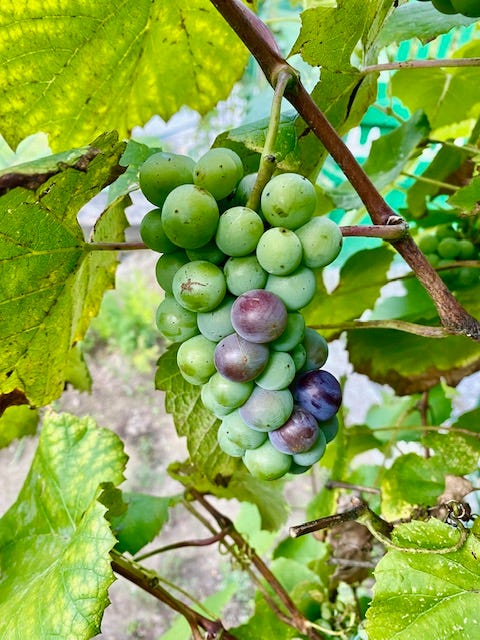
So it seems that there are a couple of very good reasons for people to be growing grapes in Bulgaria. I’m sure the spirits that they produce from them keep the people warm on those cold winter nights.
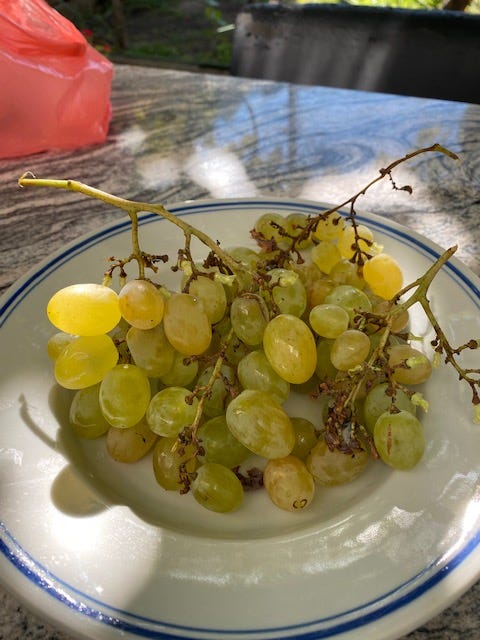
And of course, they are a healthy snack as well.
Our host brought these ones from a neighbor's house the other day. I guess these ones don’t get turned into wine.
Bulgaria is also famous for some other foods, which I will be writing about soon!
Happy travels:)
xo Jill
This post is a response to Globetrotter's September writing prompt The Harvest and The Food. To participate in the challenge, here is the prompt introduction:
Here are some other writer’s responses to spark your muse:

Hi there, we are 2 Canadians, Jill and Chris from Artistic Voyages. We have been nomadic since 2017 living in numerous different countries, and experiencing the life and diversity of our planet on the ground and firsthand. We paint FREE murals in exchange for accommodation. Consider tipping us on Ko-fi!
Subscribe to Medium through my referral link (I will earn a small commission) to get full access to my writing plus thousands of others! Plus sign up here to get my articles by email!
Join our adventure by hitting the links below!
Website | Instagram | Facebook | Twitter | Patreon| YouTube | Medium


