Evergrande Crisis: How will China’s economic bubble burst affect the world?
1. Introduction
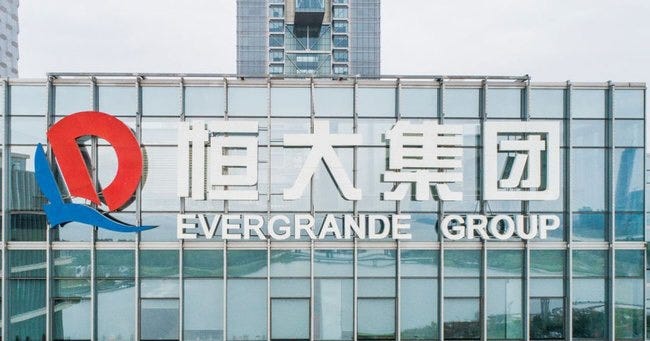
At the heart of China’s economy lies the Evergrande Group.
This massive company has been responsible for many of the towering skyscrapers and luxurious apartments that define China’s urban skylines. However, lurking behind its success were risks that many either didn’t know about or chose to overlook.
Evergrande’s growth had been meteoric. Its expansion strategy dovetailed with China’s rapid economic growth, driving urban development across many cities. But in the shadows of this growth was a massive real estate bubble.
A real estate bubble is when property prices far exceed their actual value. For instance, during Japan’s bubble economy in the 1990s, a plot of land in central Tokyo was valued at the equivalent of several luxury sports cars. Such conditions, if sustained, eventually lead to a bubble burst, affecting the broader economy.
In Evergrande’s case, its aggressive expansion meant massive real estate projects in many cities. While this allowed many to own new homes, it also meant accumulating significant debts, which piled onto Evergrande’s liabilities.
Understanding this backdrop sheds light on the current situation surrounding Evergrande and the potential global implications of its challenges. This story isn’t just about the rise and fall of a company. It’s about the intricate webs of the economy and the impacts on our daily lives.
2. Historical Background:

In 2008, the world experienced a significant financial earthquake. Its epicenter was the bankruptcy of the giant American investment bank, Lehman Brothers.
This event was more than just a bank going under; its repercussions were felt globally.
The Lehman Brothers collapse originated from the subprime mortgage crisis. These high-risk home loans were given to individuals with poor credit histories, often at high interest rates. Initially overlooked due to a buoyant housing market, as property values began to fall, many struggled with repayments.
This led to significant losses for financial institutions, culminating in the Lehman Brothers’ collapse.
This sent shockwaves through global financial markets, causing stock markets to plummet and many businesses to face liquidity crises. The crisis hit the global economy hard, with unemployment rates rising in many countries.
Meanwhile, Japan in the early 1990s experienced its bubble burst. Spawned by surging stock and property prices in the late 1980s, the bubble’s collapse led Japan into a prolonged economic stagnation. Banks were burdened with bad loans, and numerous businesses went bankrupt.
While this crisis deeply impacted Japan, its international effects were limited, given Japan’s financial markets were not as globally integrated back then.
Comparing these two events helps understand how economic globalization and interdependence in financial markets can amplify the impacts of a crisis.
The Lehman Brothers collapse showcased the vulnerabilities of interconnected global financial markets, while Japan’s bubble burst highlighted structural domestic economic issues.
3. Potential Collapse of China’s Economic Bubble

Past events, like the Lehman shock and Japan’s bubble burst, remind us that periods of economic prosperity are not always everlasting. So, could China, a massive economic powerhouse, face a similar fate?
Imagine a scene from a movie. Japan in the 1980s, streets illuminated with neon lights, and people brimming with dreams for the future. But that changed abruptly. The bubble burst, and the economy, businesses, and individuals suffered. Japan’s economy then entered a period of prolonged stagnation.
On the other hand, America in 2008. Wall Street in chaos, businesses collapsing. This was the Lehman shock, affecting economies worldwide. Yet, China weathered this storm and continued its economic ascent.
However, Japan and China have different political and economic contexts. While Japan experienced its bubble burst after achieving economic growth as a developed country, China has been rapidly growing, expanding its ties with emerging markets.
Politically, China operates under a one-party authoritarian regime, influencing its economic policy direction.
Predicting the potential collapse of China’s economic bubble is like waiting for a massive ship to sink in the dark. Due to its magnitude, China’s economy remains resilient to minor economic fluctuations.
However, a significant economic shock can have unforeseeable consequences. If we were to use a metaphor, it’s like a dormant dragon. The dragon’s every move can sway the surrounding environment and economic balance.
Given the various factors influencing China’s economic stability, predicting the future is challenging. Still, amidst this uncertainty, we must comprehend the upcoming trends and impacts, laying the foundation for further discussions.
4. Debt Restructuring and Asset Allocation:
Imagine a family’s breadwinner suddenly losing his job, putting the household on the brink of financial collapse. They seek help from a specialized trust service to manage their debts. This service investigates the family’s assets and income to create a feasible repayment plan.
The concept of debt restructuring is common across countries, but the specific methods and legal systems differ. In the U.S., for example, bankruptcy procedures like Chapter 7" or Chapter 13" exist. These provide a legal framework for liquidating assets and creating repayment plans.
In contrast, Japan’s bankruptcy law offers procedures like personal reconstruction and specific mediation to make repayment easier. China also has bankruptcy laws, but their application is often more stringent and focused on companies.
From these comparisons, it is clear that while the U.S. emphasizes individual freedom and responsibility, Japan aims for societal harmony and individual relief, and China prioritizes national stability and economic growth.
Understanding these background differences lays the groundwork for deeper discussions on the complexities and diversities influenced by debt restructuring and asset allocation.
5. Public Funding
Once upon a time, a kingdom had a king who would occasionally distribute gold from the royal treasury to villages during droughts or famines.
This act not only gave hope to the villagers but also stimulated the kingdom’s economy. This is similar to the modern concept of 「public funding,」 where governments inject funds into financial institutions and companies to combat economic stagnation or crises.
Especially under China’s Xi Jinping administration, the approach to public funding is a topic of much debate. The regime emphasizes economic stability but remains vague about specific funding policies.
For instance, if major Chinese real estate firms face economic difficulties, millions of jobs and many projects could be at risk. Public funding may be considered, but no clear criteria or scope have been defined.
6. International Response to China:

China has been growing rapidly in economic, political, and military spheres, increasing its role on the international stage. As ties in technology, communications, and supply chains strengthen, some countries are reassessing these connections.
The concept of 「decoupling」 refers to reducing or severing economic ties and dependencies. While the U.S. and some European countries are considering decoupling from China, the process is complex due to strong dependencies on Chinese goods and components.
In this context, communication to deepen and strengthen relations with China becomes increasingly important. Understanding each other’s intentions and thoughts is essential for cooperative dialogue, which will be the key to achieving global stability and prosperity.
7. China’s Economic Situation
Imagine a distant town that was once prosperous. But suddenly, the prices of goods began to fall, and the lives of the townspeople changed drastically.
This change resembles the current economic situation in China, where the concern of deflation is growing among domestic and international economic analysts. The impact of deflation can be severe, leading to reduced consumption, lower wages, and job instability.
An example is the potential collapse of Evergrande Group, a major Chinese real estate company. Its deteriorating financial condition could affect the entire Chinese economy. The government’s role in addressing such large-scale corporate issues is being questioned.
Summary:
China’s economic issues are increasingly likely to impact the global economy due to their scale and complexity.
These are not just issues for China or Japan but can potentially affect the lives and businesses of people worldwide. The deepening economic relations between Japan and China are a focus for international companies and investors.
The world’s consumers, investors, and businessmen must carefully monitor economic relations with China.
Changes in China’s economic situation could affect product prices, investment returns, and employment opportunities. Therefore, sharing information and jointly devising countermeasures will be key to building future economic stability and prosperity.
Lastly, I’m aiming to reach 10,000 followers. It would mean a lot and be a great motivation if you could follow, comment, or clap for this content. Your support is greatly appreciated