
Ever Wonder How Dangerous Fentanyl Is? They’re Now Using It In Executions
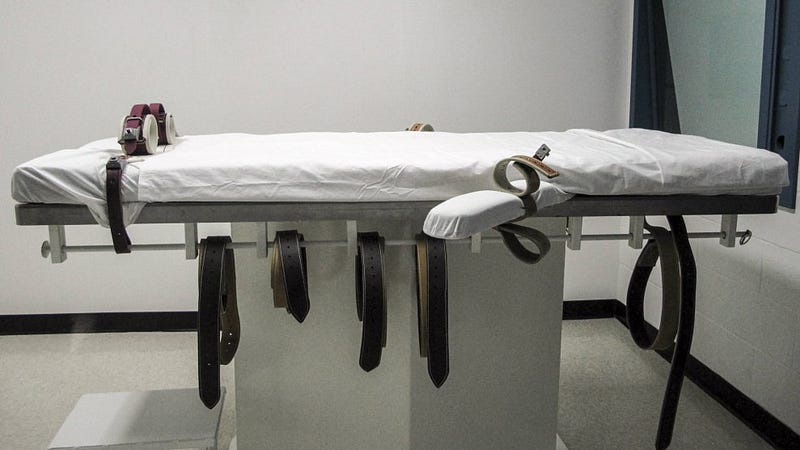
On May 25 2018 a BBC headline read “Fentanyl bust ‘enough to kill 26 million’.” This was the headline for an article describing the largest seizure of fentanyl in the state of Nebraska and one of the largest busts involving pure fentanyl in the U.S. Fentanyl is a synthetic opioid that is 30–50 times more potent than heroin and 50 to 100 times more potent than morphine. The headline, combined with the fact that the drugs were seized in Nebraska, seemed prophetic as just a few short months later the drug would be used to execute someone when the state would become the first to use fentanyl to execute someone.
What is Fentanyl?
Fentanyl is an extremely powerful synthetic opioid analgesic that is similar to morphine. The drug is often used to for severe post surgical pain or sometimes to treat chronic pain when patients have become tolerant to other opioids. Fentanyl has also been used as an intravenous anesthetic since the 1960’s.
Fentanyl is a schedule II prescription drug, which are drugs that have a high potential for abuse and use can lead to severe psychological or physical dependence. Schedule II drugs are considered as dangerous as Schedule I drugs, the main difference being that Schedule I drugs are those deemed to have no currently accepted medical use (although Marijuana is still classified as a Schedule I drug).
Fentanyl has a number of potentially life-threatening side effects including severe respiratory depression, respiratory arrest, severe cardiac arrhythmias and cardiac arrest. Patients are warned that accidental ingestion of a single dose can result in a fatal overdose even in those not taking the drug already. The synthetic opioid has been blamed for roughly half the deaths in America’s overdose epidemic. A number of celebrities have died as the result of an overdose of fentanyl. These include singers Prince and Tom Petty, rappers Lil Peep and Mac Miller, professional wrestler Anthony Durant (“Pitbull #2”), guitarist and singer-songwriter Jay Bennett and bassist Paul Grey.
Nebraska and Nevada Announce They Will Use Fentanyl for Executions
At the end of 2017, Nebraska and Nevada stated they would begin using Fentanyl for upcoming executions of death row prisoners. Immediately, legal challenges to scheduled executions were made. These were based on the discovery that both states adopted new execution procedures not to make them more humane but only after failing to replenish supplies of the drugs previously utilized.
This failure was due to a successful embargo by the pharmaceutical industry which didn’t want their products associated with ending lives. Their embargo was extremely successful at stopping the sale of potential execution drugs to states that carried out the death penalty. The original U.S. lethal injection protocol called for three injections, sodium thiopental to render the prisoner unconscious, pancuronium bromide to paralyse the muscles and potassium chloride to stop the heart.
While potassium chloride is commonly available, the other two drugs have been unavailable for some time due to the embargo. As many states have run out of their supply of these drugs, as well as other close analogues, new lethal injection protocols have to be created. This has proven increasingly difficult as the pharmaceutical industry has effectively worked to prevent access to each new drug proposed for use in executions.
The protocol adopted by Nevada and Nebraska consist of diazepam, fentanyl, and the skeletal muscle relaxant cisatracurium, none of which have been used in lethal injections before. Nebraska’s protocol also includes potassium chloride as a fourth drug.
However, Nevada and Nebraska officials stated that they had no difficulty buying fentanyl through their pharmaceutical distributor. Long before the new drug cocktail which included the opioid was approved, both states had purchased enough fentanyl to use in future executions for years to come.
The legal challenge to the cocktail in Nevada did not focus on fentanyl but on the third drug, cisatracurium, which was to be used to cause paralysis. Critics argued that if the first two drugs failed to induce true anesthesia, the prisoner would suffer slow asphyxiation while conscious, while the paralytic drug would prevent his suffering from being observed.
This argument was used on behalf of Nevada death row prisoner Scott Dozier, whose scheduled November 14 execution with fentanyl was stayed while a court decided the issue. Dozier, who killed two drug associates, later committed suicide so the case was thrown out. This made Nebraska the first possible state to use fentanyl for a lethal injection. The condemned man was Carey Dean Moore, age 60, who had been convicted of killing two taxicab drivers when he was 21. Despite not seeking a stay in the final months of his life, due to the controversy surrounding the new drug cocktail, appeals were conducted on his behalf.
Once the appeals were exhausted, two pharmaceutical companies tried to block the execution claiming that the fentanyl had been obtained illegally and that their reputations would suffer should the execution proceed. U.S. District Judge deciding the case denied a further stay, ruling that blocking the execution would ‘frustrate the will of the people.” Moore was subsequently put to death.
The Execution of Carey Dean Moore and Subsequent Protests
The execution of Moore was expected to take no longer than 15 minutes yet he was not pronounced dead until 23 minutes after the first drug was administered. Mr. Moore was reported to breath heavily and cough at one point with his face turning bright red then purple. This was stated by four Nebraska journalists selected as witnesses to the execution.
Many, including those in favor of the death penalty, have concerns due to the journalists account, fearing it could mean that something possibly went wrong. The executive director of the nonprofit Death Penalty Information Center, was one of those who worried about the outcome of the Nebraska execution.
“I can’t tell from the description whether it’s an indication of an execution gone bad or there are just question marks,” Mr. Dunham said. He added that the description of Mr. Moore coughing and his face reddening were troubling.
The uncertainty regarding whether or not Moore suffered while being executed has served to re-energize anti-death penalty protests. Among many physicians protesting the new drug cocktail is Dr. Joel Zivot, associate professor of anesthesiology and surgery at Emory University School of Medicine. He believes the new fentanyl drug cocktail almost guarantees suffering, a clear violation of the Eighth Amendment which opposes cruel and unusual punishment. He said that no one could be certain that Moore wasn’t suffering as potassium chloride burned through his body to make his heart stop. Zivot added that the cisatracurium would not have impaired his senses but simply caused him to be unable to struggle or express discomfort as he choked to death.
“The state here has successfully created a combination of drugs that will cause maximum pain. But outwardly it will look as if the prisoner is OK,” Zivot claimed. “And that I think is a clear violation of the Eighth Amendment of the U.S. Constitution, and is unambiguously cruel.”