
Ever Shifting Terrain of the Great Sand Dunes
A Wondrous Destination for Your Bucket List
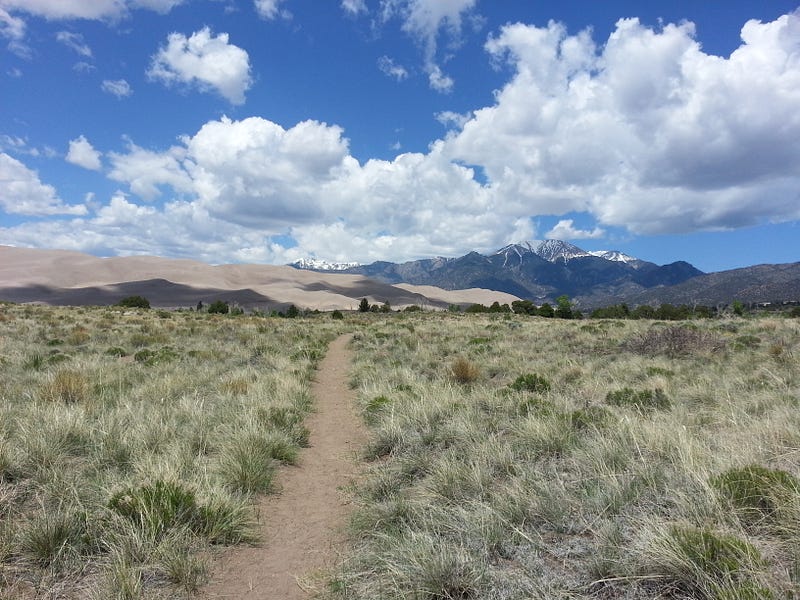
The moment I saw the Globetrotters February 2023 monthly challenge, terrains, I knew I’d write about Great Sand Dunes National Park. It is one of the most wondrous geological places in the United States and a top family favorite. Learn how the terrain shifts in this corner of Colorado and why this lesser-known National Park should be on your travel bucket list.
Creeks and streams carried sand particles into the San Luis valley, creating the Great Sand Dunes, which at 741 feet, are the tallest dunes in North America. With nowhere to go, due to the Sangre de Cristo Mountains, the sand accumulated over thousands of years to about thirty square miles.
“In physical geography, terrain is the lay of the land. This is usually expressed in terms of the elevation, slope, and orientation of terrain features. Terrain affects surface water flow and distribution. Over a large area, it can affect weather and climate patterns.” -Wikipedia
Seasonal Shifts
The Great Sand Dunes have it all- elevation, slope, water flow, and an effect on the weather. We’ve visited the dunes a half dozen times, and they are stunning year-round. As one of the least visited National Parks in the United States, it is easy to go at times when it is nearly people-free.
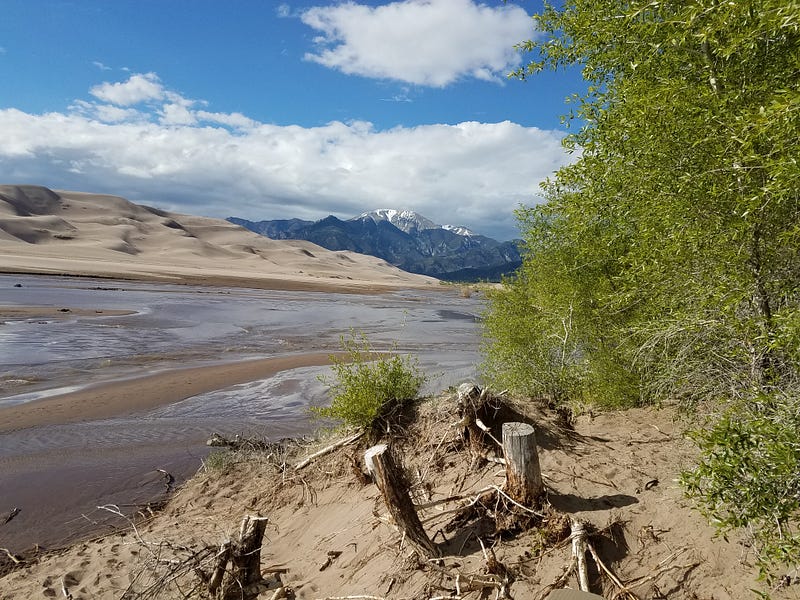
The Disappearing Medano Creek
Our favorite time to visit is also the most popular, but well worth the “crowds”. Each Spring or early Summer, the snow melts off the mountains and creates the Medano Creek. For a landlocked state, this is the closest thing Coloradans have to the beach. The shallow creek bed attracts sunbathers and families armed with sand toys, tubes, and sunblock. Even on a busy day, heading out in the early morning or a short walk up the creek will give you plenty of space and solitude.
To experience this short-lived pleasure, check the website first to see if the water is flowing.
Water Surge in the Creek
The creek is lots of fun to play in and has one of the most extraordinary geological phenomena. Underwater sand ridges build up and collapse approximately every twenty seconds, creating rippling waves. A creek in this breathtaking place with waves? Come on now!
Winds Continue to Move the Dunes
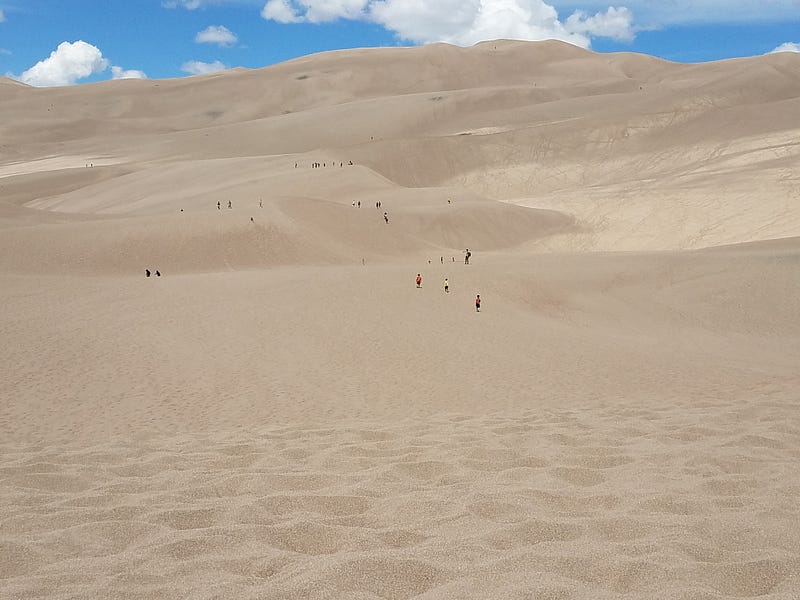
The first time my husband and I went, we huffed it up the dunes, proud of ourselves for reaching the top of one peak, only to discover seemingly endless mountains of sand and no true summit. Then the wind picked up so fast and hard that sand pelted our skin. Fortunately, we had a sheet we’d planned to sit on and sheltered under it until it was safe to head down.
Strong winds are likely in the early Spring and can get up to 70 miles an hour. Due to these strong winds, the dunes are constantly moving. While the largest dunes have stayed in place, smaller ones migrate. Another fun feature? As the air carries the sand, it can sound like humming or singing.
What Else to Know for Your Visit?
You won’t find much to do in the area, but trust me, it is worth the trip. It’s about a four-hour ride from Denver. You can camp at the Sand Dunes but need to make early reservations for the summer months. Zapata Falls is a beautiful campground outside the park, but a 4-wheel drive is a must. We damaged my friend’s Honda Pilot on a mom-and-kids weekend and finding service in the area was not fun!
One of the most challenging parts of the visit is figuring out what shoes to wear. Any pair is going to end up with uncomfortable sand in it. On a summer day, the sand can get up to 150° F, so open-toed shoes or bare feet are not advised. Boots or high-top shoes and long socks are a good bet. Remember that it gets cool at night year-round, so pack your layers.
Many people rent sandboards from nearby shops and sled down the dunes. We haven’t tried it but learned the hard way that regular sleds do not work on the sand. Don’t forget your bathing suits and beach toys if you visit when the water is running.
Whether you hike up the dunes or other nearby trails (Zapata Falls is a favorite) or go for the photos, I am sure you will leave wondering why more people don’t visit The Great Sand Dunes. At the same time, keeping the secret gem to yourself is tempting!
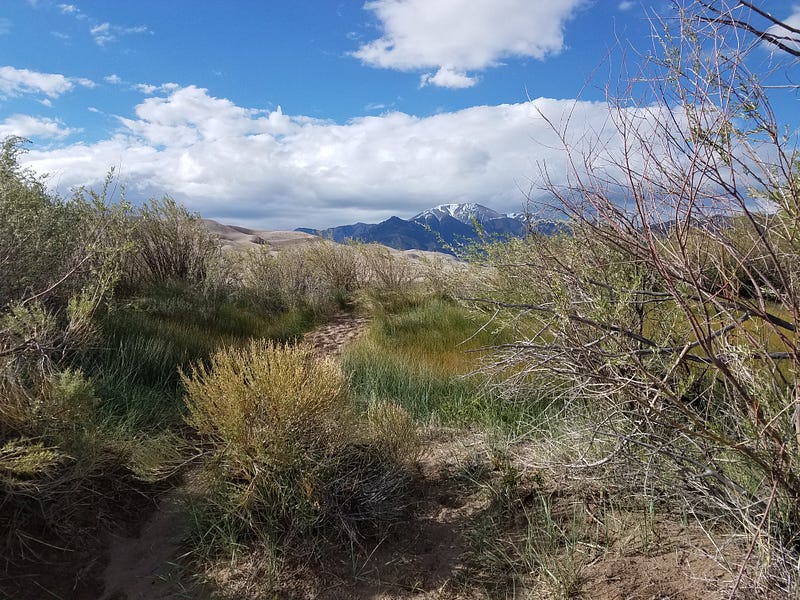
Other Medium Great Sand Dunes and Other Dunes stories.
Gail Sawchuk writes tourist destination content for local businesses and for fun.


