
Ever Felt Different? Gosia Was Diagnosed with Autism at 38
Adult diagnoses are on the rise… generations have been missed

“Autistic people see, hear and feel the world differently to other people,” says the National Autistic Society.
Those words are ringing true with an increasing number of undiagnosed adults, who’ve spent their lives wondering why they feel different.
Better awareness of Autism in recent years has meant that across the western world, the number of adults diagnosed with autism is growing. Autism was little recognised until the 1980s when it was first classified as a mental disorder. Asperger’s Syndrome, a form of autism, was not recognised in diagnostic manuals until the 1990s.
As a result, many thousands of autistic children struggled to navigate their way through life without a diagnosis in the ’60s, ’70s, and beyond, growing into autistic adults, who’ve perhaps always felt misunderstood.
Today, people in their 30s, 40s, 50s and 60s are being diagnosed with autism, and it often happens when they hit a crisis in their lives and find a doctor or therapist who incidentally has some knowledge of autism.
Perhaps most famously, the British television presenter and naturalist Chris Packham was diagnosed with Asperger’s in his 40s, after seeking therapy because he felt suicidal following the death of his dog.
He realised these extreme feelings were not usual, and during counselling, his therapist suggested that he might be autistic. He was later diagnosed with Asperger’s syndrome.
Diagnosed at 38
Gosia Batram from Devon, England, was diagnosed with Autistic Spectrum Disorder in 2019 at the age of 38.
She’s struggled with anxiety, social interactions and mental health challenges for years, but for a long time, she managed to ‘mask’ her autistic traits, to meet society’s expectations.
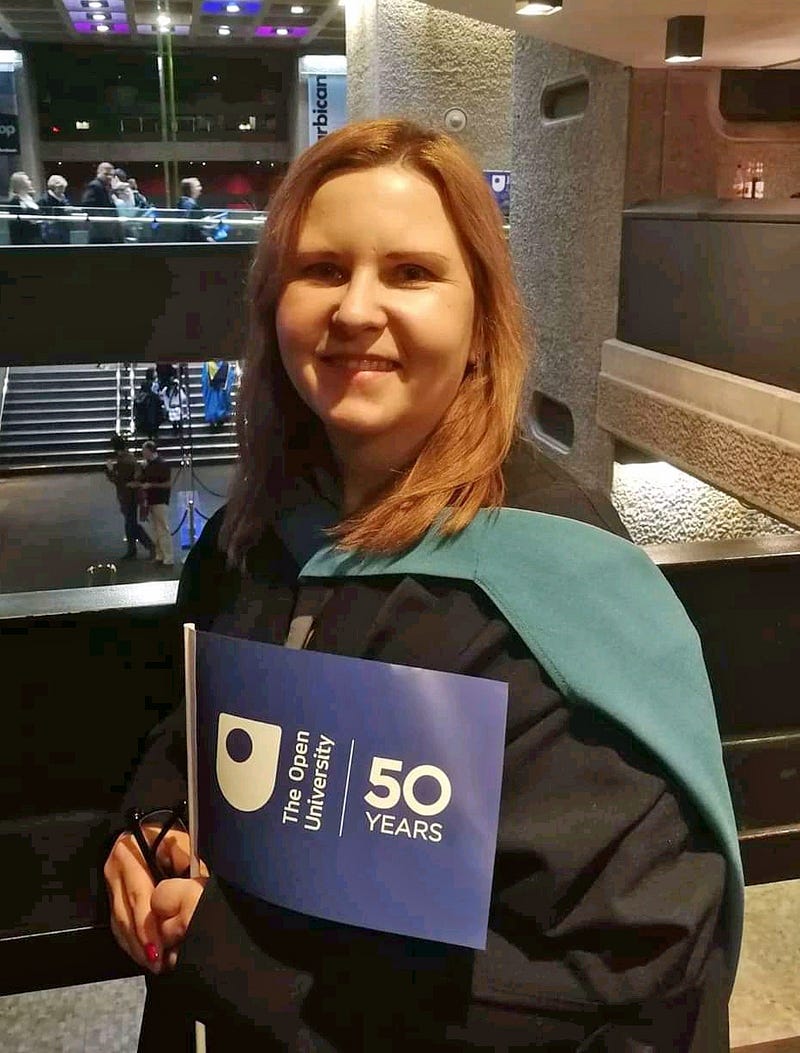
Then in 2018, her anxiety levels peaked, so she sought help. She attended a group workshop for anxiety but immediately felt overwhelmed.
“I scared the crap out of the staff,” she says. “I was so stressed, I was shaking and it looked like a fit. The room was tiny, with 20 participants, literally sitting with knees and elbows touching. That was too much. I wasn’t comfortable in a group setting. I’m fine with one-to-one contact, but it needs to be prepared and structured.
“I know my anxiety will never completely disappear,” she says, “but I’m trying to manage it.” The experience in the workshop made her eligible for one-to-one therapy, and then more advanced treatment.
“It was my GP that first suggested I may be autistic,” she continues. “He gave me a book about Asperger’s to read. I didn’t pursue it initially, but after post-natal depression in 2016 and my mum passing away suddenly in 2018, my mental health deteriorated. I had a breakdown in December 2018 and the crisis team referred me for an assessment. It took place over two separate days and was really quite pleasant.”
A lot of autistic people have trouble finding or keeping work, but Gosia hasn’t let her anxiety stop her from achieving things in life. She was shortlisted as a regional finalist for Breaking Into News 2018 and graduated with a BA in law from the Open University the same year. That spurred her on to continue her studies.
“I’ve worked all my life,” she says, “including customer service, but I struggle with social interactions and anxiety, so if I don’t respond as people expect, they just assume it’s because I’m rude or foreign.”
Since her diagnosis, a lot of things have made more sense. People with autism aren’t good at reading body language, noticing subtle signals, or taking hints. This means they miss communication cues that other people take for granted. The knock on effect is that they don’t respond as expected, and sometimes that offends people.
“I’ve always had bad luck with jobs,” Gosia explains, “but following the diagnosis, I now understand that it was both sides not able to understand each other. I also understand better my own strengths and limitations. So rather than trying to fit into the roles I always found uncomfortable, I understand now that I have to use my differences as a guide to finding a type of employment that will suit me better and, therefore, be sustainable.
“As for my private life, I can understand my son and step-son better (both diagnosed with autism) and use my own experience to ensure they are getting the right support for their needs.”
Characteristics of autism in adults
While every autistic person is different, with different traits, there are some common themes.
Autistic adults may have had lifelong difficulties making friends, feel anxious in social situations, cause unintended offence, prefer to be alone, have difficulty expressing themselves, be hyper-sensitive to sounds, smells, and irritants, be comfortable with routine and anxious if it changes, and express a keen interest in their favourite topics. They may also take things too literally and have trouble understanding sarcasm.
Face blindness is common and they may not like being touched. Stress, anxiety, depression, and PTSD are common, and they’re more likely to have suicidal thoughts.
Under-diagnosis
It’s thought that there are high levels of under-diagnosis, especially among girls and women, partly due to lack of recognition of autism, and partly because people who are moderate on the spectrum learn to hide it effectively, by their sheer effort of trying to fit in.
Research published by Stanford University School of Medicine in 2015, reported that autistic girls are less likely to demonstrate repetitive and restrictive behaviour than boys.
Autistic girls may also try harder to be socially accepted than their male counterparts, but they can end up “isolated and mistreated” if they’re not diagnosed or supported, says Julia Bascom from the Autistic Self-Advocacy Network. This can lead to anxiety, depression, and mental health problems, such as eating disorders or OCD.
While boys might act out their frustrations with upset and aggression, girls are more likely to internalise their problems and sink into depression. Girls are also often more adept at hiding their autistic traits.
Many people who are diagnosed as adults find a sense of relief, but getting the assessment isn’t always easy. Due to increased awareness, demand for autism assessments has never been higher. Waiting times doubled between 2017 and 2019, with people in some parts of the UK having to wait two years for an assessment, but other areas are able to offer an assessment in as little as two weeks.
What’s Gosia’s advice, if you think you might be on the Autistic Spectrum? “You can follow the NHS advice online, or the National Autistic Society website, which tells you how to broach the subject with your GP. Or try one of the online quizzes that helps you self-diagnose,” she says.
© Susie Kearley
Previously published in Lacuna Voices
More from me…
- How to Stop Lying Awake at Night Thinking About Shit!
- Mindfulness: Two Books That Might Change Your Life
- Positive Psychology for Overcoming Depression by Miriam Akhtar
- Got a Weird Rash, Digestive Troubles, or Headaches? It Might be an Allergy
Would you like to read unlimited stories on Medium? You can use my referral link below, to join and I’ll get a small commission, at no extra cost to yourself.


