
Even when they are conscious of being deceived.
P.T. Barnum on entertainment. (Commonplace Book Project)
The Commonplace Book Project is a daily post based on Ray Bradbury’s advice to aspiring writers: read a poem, a short story, and an essay every day for 1000 days. These posts start with a quote and go wherever the rabbit hole leads. Follow The 1000 Day MFA publication so you don’t miss a thing.
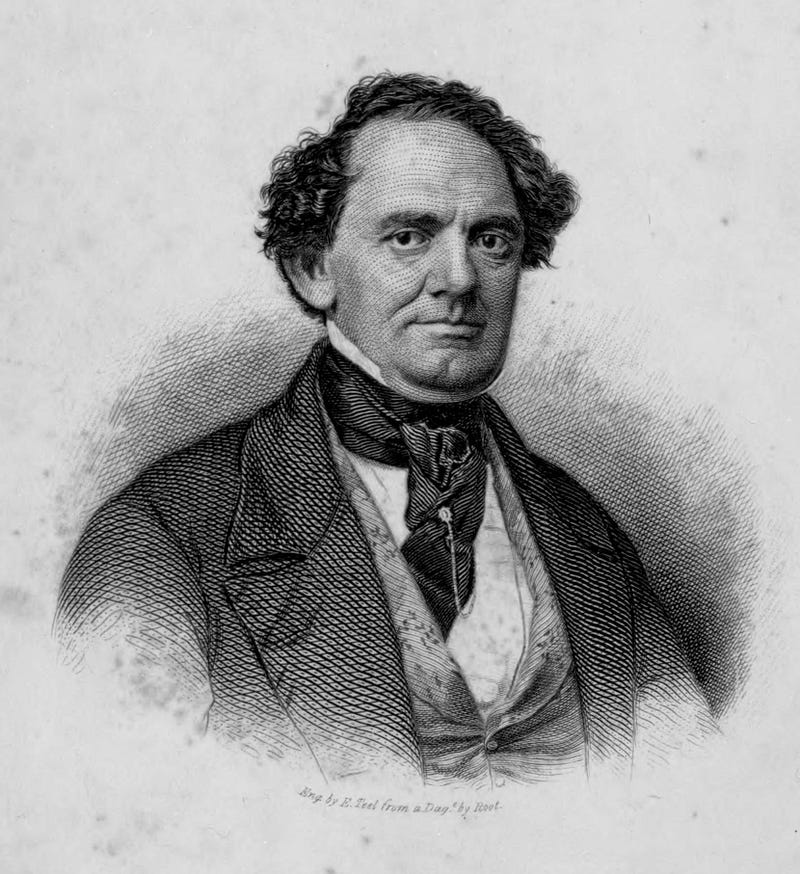
“The public appears disposed to be amused even when they are conscious of being deceived.” — P.T. Barnum, The Life of P.T. Barnum.
So, I bought this giant book of quotes — the eighteenth edition of Bartlett’s Familiar Quotations — specifically to help me choose quotes for this project. I opened it randomly and landed on this P.T. Barnum quote.
It seemed interesting to me — considering that the President of the United States, who is often compared to Barnum, is giving his State of the Union address tonight. So. Here we go down this rabbit hole.
P.T. Barnum was strange man with a complicated history, and like it or not, a firm place in American history. And, perhaps, a solid understanding of some of the darker aspects of human nature.
He came from poverty and built his fortune on the suffering of others. He made a career out of lying.
He ran a minstrel show — white men in black face — that was known for being highly satirical, known for making biting commentary on the idea that white men were superior to black men.
He also was highly involved in anti-slavery politics leading up to the American Civil War. He campaigned for Abraham Lincoln and held elected seats himself.
The 2018 film The Greatest Showman is loosely based on his life. It leaves out that he got his start by leasing an elderly slave named Joice Heth for a year for $1000. It was illegal to purchase a slave in New York at that time, but he was able to rent her. He toured with her, telling a story that she was more than 160 years old and George Washington’s nurse.
When she died the next year, Barnum staged a public autopsy (which finally put to rest any idea that she was anything like 160 years old) and charged a ticket price to observe. More than 1500 people paid 50 cents a piece to watch her autopsy — a startling piece of Barnum’s, and America’s, history.
Here’s a Smithsonian Magazine article that looks at Barnum’s life and the way he is often perceived of in the American lexicon.
Today, Barnum and his career arguably serve as a Rorschach test for where we are, and what kind of humbug tale we are willing to be sold. But if you’re looking clear eyed at Barnum, an undeniable fact of his biography is his role marketing racism to the masses. “He had these new ways of making racism seem fun and for people to engage in activities that degraded a racially subjected person in ways that were intimate and funny and surprising and novel,” says Reiss. “That’s part of his legacy, that’s part of what he left us, just as he also left us some really great jokes and circus acts and this kind of charming, wise-cracking ‘America’s uncle’ reputation. This is equally a part of his legacy.”
As I write this, Donald Trump is on the verge of giving the State of the Union address. He’s often been compared to Barnum, and in this article in the Washington Post, he seems to welcome it.
Here’s a New Yorker article that details some of the truths of Barnum’s life that are usually left out of stories about him, including The Greatest Showman.
Here’s Barnum’s obituary in the New York Times.
I’ve added Harriet A Washington’s Medical Apartheid to my reading list. In it, she details the life and death, and subsequent public autopsy, of Joice Heth.

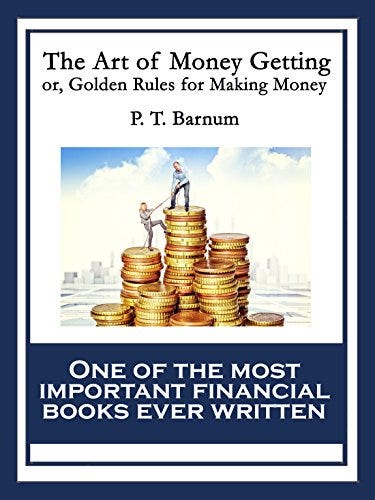
I found it interesting that Barnum, like Donald Trump, wrote a business book — with a very similar title. Trump’s is The Art of the Deal. Barnum’s is The Art of Money Making. I’m not sure if “One of the Most Important Financial Books Ever Written” was the actual subtitle when it was first published — but it would be fitting if it was.
Today’s Poem:
At The Circus by Umberto Fiori
At the center of the lit circle, rising from cotton-candy calf muscles, the White Clown ushers his eyebrows skyward. He grates his ukulele, opens a heart-shaped mouth, inhales — his serenade begins.
Now’s the time. From the shadows, a blast like a trumpeting elephant: obscene, ragged. The Auguste capers like a fawn, darts away, pads around with his trombone. The gold of the slide slips into and out of the infinite.
Everything smells of panther and piss and mint. His gaze fixed on the clash between the welled tears and the awful laughing shoes, the little boy grows ever more grave, ever more severe.
Shaunta Grimes is a writer and teacher. She is an out-of-place Nevadan living in Northwestern PA with her husband, three superstar kids, two dementia patients, a good friend, Alfred the cat, and a yellow rescue dog named Maybelline Scout. She’s on Twitter @shauntagrimes and is the author of Viral Nation and Rebel Nation and the upcoming novel The Astonishing Maybe. She is the original Ninja Writer.


