
Even The Toilet Isn’t Private Anymore
How social media has led us to see-through public toilets in Japan
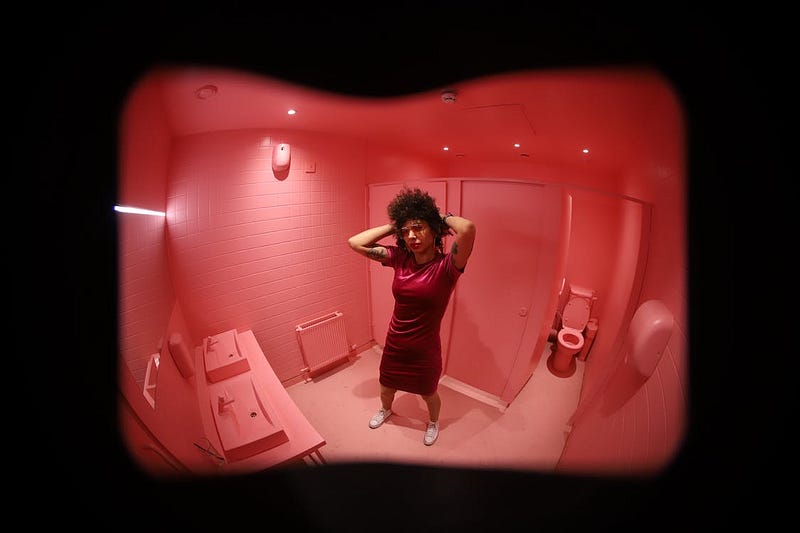
Transparent public toilets made from colored ‘smart glass’ that turns opaque when the toilets are occupied have been opened in two public parks in Shibuya, Japan.
The project, which aims to dispel the misconceptions that public toilets are dark, dirty, and nasty, has been organized by The Nippon Foundation. They are renovating 17 public toilets across Shibuya, Japan in the hopes of addressing the two main concerns that people have when it comes to public toilets. The first being whether or not they are clean inside and the second being whether they are already occupied or not.
These new toilets that are made from colored, smart class turn opaque from the outside once the toilets are occupied and locked but users have noticed that from the inside, the glass stays transparent so it gives them a strange feeling of being watched when they are doing their private business.
Although this project seems to be a huge step forward in terms of making public toilets cleaner and less intimidating, you can’t help but wonder where do we draw the line.
These new see-through toilets in Japan demonstrate our need to constantly show ourselves off to the world. We can’t even go to the toilet in private anymore, we need to have a sense that people are watching us and that we are exposing every part of our lives to the world.
See-through toilets aren’t the beginning of our society’s need to be seen and they most certainly aren’t the end of it. They are simply the newest edition to the already established cultural norm of sharing everything about our lives and what we are doing. They may be unique and somewhat concerning, but they aren’t alone. We have been broadcasting everything about our lives for years now with the invention of social media. Transparent toilets may have shocked a few people but they aren’t any different to the oversharing that we, as a society, do on a daily basis, they are merely the next step.
The first steps were actually taken a long time ago, in 1792 with the invention of the telegraph. However, only small amounts of information were conveyed in telegraphs about the most important things going on in a person's life. A telegraph was sent to only one person and the information contained in it was generally on a need-to-know basis.
The telephone was invented in 1890 which upgraded communication between people because it was instantaneous, however, yet again people only talked one-on-one over the phone and there was no time to discuss minor details about people’s lives because phone calls were expensive and were generally only used to share vital and important information with one person.
Technology began to change very rapidly in the 20th Century. After the first supercomputers were created in the 1940s, scientists and engineers began to develop ways to create networks between those computers, and this would later lead to the birth of the Internet.
E-mail and chatrooms were developed but the first real social media site was developed in 1997 called Six Degrees. Users could have a profile and make friends with other users, allowing for information to be spread to people that you didn’t necessarily know.
1999 was when the first blogging sites started to gain traction which birthed the age of oversharing that we are still living in today.
The most influential and popular social networking site of that time was undoubtedly MySpace. Created on the 1st of August in 2003, it quickly rose to fame and became the most popular social media site, surpassing all of its predecessors.
However, in 2008 the fall of MySpace occurred and Facebook rose to number one. Facebook was started in 2004 by Mark Zuckerberg as I’m sure most of you know. It was originally intended for just Harvard students but it quickly became available to all those over the age of 13.
Twitter, which was launched in 2006, became a place where people shared their random thoughts and opinions with whoever wanted to read them.
By this time, sharing every detail of people’s lives has been normalized on these sites. What people had for breakfast, who they were with, and what they were doing after work or school amongst other things became general knowledge.
In 2010, Instagram was launched and was quickly followed by Snap Chat in 2011. These two sites only added to people’s ability to share their lives with other people. The more they could share online and the more perfect it looked, the better.
Now there is TikTok.
TikTok, previously known as Musical.ly until it was bought by the Chinese tech company Byte Dance in 2018, has taken the younger generation by storm. It has an endless display of short 15 second videos uploaded by users and the range of content on TikTok is astonishing.
There is a recent trend that is very concerning though where teenagers share their deepest secrets and their weirdest behaviors by typing all of their confessions on the screen and uploading it to their accounts.
Some say in their captions that they are way too comfortable on this app and I’m going to have to agree. Social media went from sharing your interests and hobbies, to what you had for breakfast, to your random thoughts and opinions and now to your deepest, darkest secrets.
At first, our society’s oversharing was harmless but it has now developed into something much more harmful. People are exposing themselves online and that could have serious consequences for them.
One google search of your name by a future employer leads to your social media accounts where everything about you, good and bad is on display and open for judgment.
These online trends that encourage sharing every detail of your life are scary, but they aren’t the end. The opening of these new, see-through public toilets in Japan demonstrates just that. The current society that we live in wants to be seen and heard. Privacy is a thing of the past.
We are a society that wants to put ourselves on display. We want to show the world what we have, who we are, what we do, and how we do it. Nothing is kept quiet or to ourselves anymore.
Nowadays, social media is a huge part of our world. We share everything on it and it seems that it is no longer enough. Sharing everything imaginable is no longer enough for our society of over-sharers.
The next logical step has been to create see-through toilets. People can only share so much on social media and we, as a society, want more. Ultimately our world could look an awful lot less private in the next couple of years and it’s something to keep in mind.
I’m not saying that it’s a bad thing, but I am saying that it’s a thing.
Look around you. What are other people sharing with the world and you right now? What are you sharing with them?
Then the most important question that you need to ask yourself is, are you comfortable with sharing that? Are you prepared to deal with the consequences sharing that might have? Because there could be many.
Once information is out there, it’s never coming back. It will always be out there and you can’t control who sees it, hears it, or has it anymore. You can’t make it disappear and go away when you don’t want it because you already made the decision to share it.
Bear that in mind the next time your about to share something online because just because everyone is doing it, doesn’t mean it’s right.


