
Even If You Don’t Hit The Gym, Please Do These 3 Mobility Exercises To Protect Your Body
Especially as you get older when injuries are more apparent
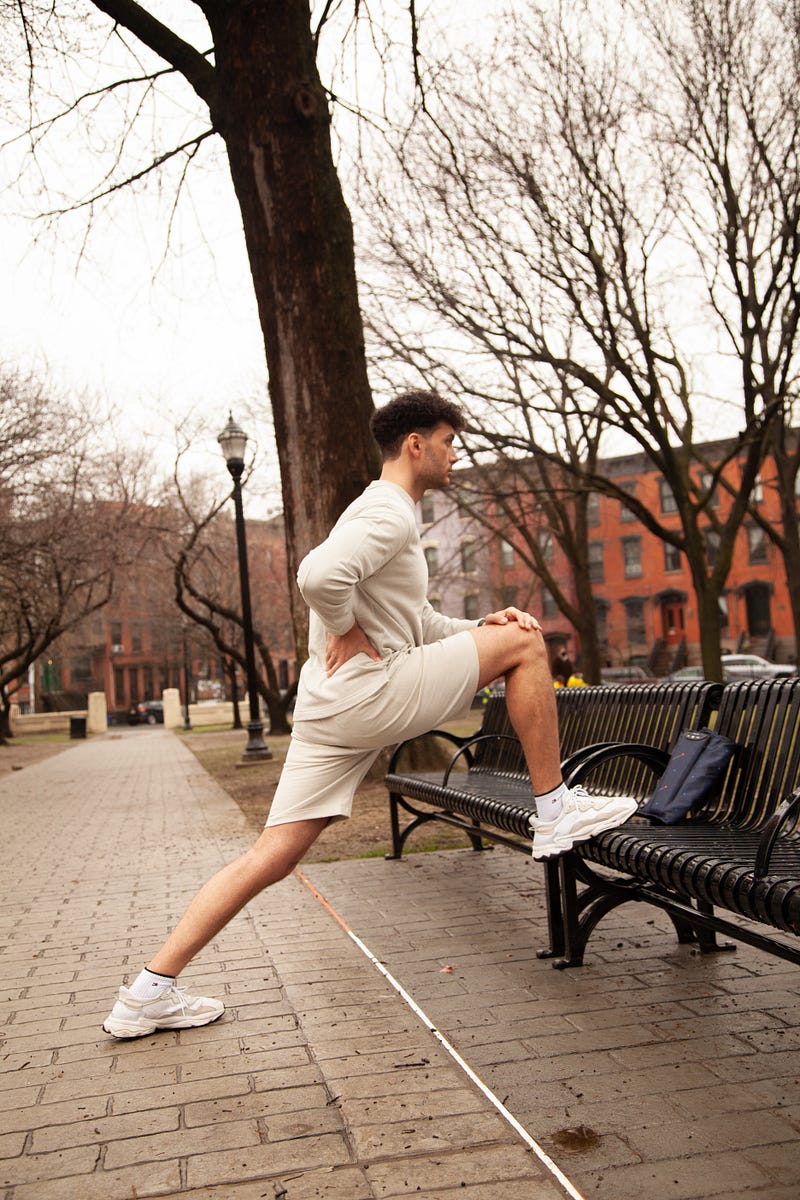
The older people get, the higher the chance of people cutting down on exercise.
I get it.
It gets incredibly hard to get started and continue with it.
As you get older:
- Responsibilities pile up
- Exercising doesn’t pay the bills
- It feels more like a luxury few can enjoy
But the turning point is when you start mounting injuries on top of injuries. In the blink of an eye, you turn 65. That’s where you realize that it might be better if you started exercising years back.
Yet, if you don’t have the time to carry out an all-out exercise regime to build a completely healthy body, the least you can do for your body is a couple of mobility exercises each day.
These exercises won’t help you to build a ton of muscles but they will help you stay mobile and prevent injuries.
How Do Most Injuries Come Up?
Injuries usually arise when your main muscle group is too weak to balance out certain movements.
A very common example is weak hamstrings.
With weak hamstrings, you’ll naturally make use of your hip and lower back muscles to support your movement. That’s how problems and injuries start to appear because your surrounding muscle groups will likely take over to support those movements.
A similar result can also be due to a lack of mobility which inhibits movement, causing your surrounding muscle groups to take over.
Therefore mobility exercises are required to strengthen those weak and immobile muscle groups to help you engage the right muscle groups when executing day-to-day movements.
How To Strengthen And Mobilize Those Muscle Groups
A couple of these key exercises will help with that and they can be done day to day without much effort.
They don’t even have to be done in the gym and you can start with no load at all. Once you’re comfortable with these exercises, adding loaded stretches would greatly help with strengthening and mobilizing those weak and immobile muscle groups.
1. Deep Squat
The deep squat is a natural movement that Asians in the past are usually in.
It’s functional such that it will help with many everyday tasks like squatting to lift a box or getting on the floor and up again. Not only does it help you to get stronger thigh and hip muscles, but it also helps with relieving back pain and increasing ankle mobility and general flexibility.
Studies also found that:
“If you can tolerate a deep squat, that’s a good sign that you’re able to get up from the floor, get out of a low car, climb the stairs, or kneel to play with kids. A deep squat is functional, not dangerous,”
When doing the deep squat for the very first time, you might need to put your ego aside and lower the weight that you’re used to squatting, otherwise you might run the risk of suffering from injuries.
A couple of tips that you might want to take note of are:
- Keep your entire foot planted on the ground — This includes your heel
- Avoid bending your spine — Start with this movement is incredibly difficult so a counterbalance might help you out here
- Knees over toes are perfectly normal — Most people think otherwise, but recent studies have repeatedly shown that it’s okay for knees to go past your toes. It’s advisable to do so to strengthen your knees too!
Take a look at this video to learn how to achieve a deeper squat:
2. World’s Greatest Stretch
The world’s greatest stretch doesn’t have a name to it but it’s a combination of movements that stretches out most parts of your body which is why it’s tauted as the world’s greatest stretch.
The entire movement involves a lunge position, followed by the opening of the hips and thoracic spine. Since most people spend most of their days in the office, behind the table for almost 5–6 hours a day, this exercise helps to open all the tight areas in your body.
Starting with the lunge, this movement will already help to stretch your hips and glutes. The next action would be to raise your opposing arm and point it to the ceiling, opening up your hips, back, and chest.
The exercise can also be done together with the couch stretch since the movement is largely similar.
All you need is 30 sec to 1 minute of stretch and repeat it for 3 times a day, and you can probably feel your tight areas opening up. This particular exercise has been my day-to-day go-to mobility exercise just before I go to bed since it’s helped me to ease into those tight areas in my body.
3. Thoracic Spine Relief
Being in the office the entire day, you’ve probably realized that you’re placed in this hunch-over position where your entire torso is caving in.
Adding on to staying in this position for a couple of hours a day, it’s not difficult to realize how tight you can be.
A variation of this exercise is the kneeling thoracic extension.
Doing this particular exercise will help to extend your thoracic spine, improve back flexibility, and increase the stability of your back. And if you’re outside of your home where you’re not comfortable with kneeling on the ground but you still feel the need to do this exercise, you can easily find a wall or a sturdy object to hold onto to do this exercise.
As long as the object that you’re relying on for support is stable, you should be able to perform this exercise properly.
Closing Thoughts
You don’t need much time to prevent injuries from appearing.
It’s understandable to some extent if you don’t enjoy exercising but a certain amount of mobility exercise is still required each day to prevent such injuries from popping up.
All you need is 10 minutes a day to do these exercises just before bedtime.
But if you hit the gym regularly, these exercises can also be done as part of your warm-up to warm up those muscles before hitting them with your main lifts.
It’s pretty much all you need to get started, so what are you waiting for?
Join my newsletter to read my articles for free (no Medium paywall) and receive my learning experience in my fitness experiments!
Consider buying me a coffee here!


