avatarCraig Brett

Free AI web copilot to create summaries, insights and extended knowledge, download it at here

1165

Abstract

between paintings at two different museums — the Metropolitan Museum of Art in New York and the Rijksmuseum in Amsterdam.</p><figure id="1c28"><img src="https://cdn-images-1.readmedium.com/v2/resize:fit:800/1*OMxzjsMMO4uBNudgCbBpcg.png"><figcaption></figcaption></figure><p id="a42b">What it came up with is striking. The image on the left is a depiction of St. Serapion, a priest who was crucified and disemboweled in 1240 while trying to rescue slaves in the Mediterranean (the exact location was either Marseilles or Algiers).</p><p id="da5c">The painting of the swan on the right is believed to be an allegory of the lynching of John de Witt, a Dutch politician who was murdered by a mob during an English invasion.</p><p id="6143">The two paintings use a very similar visual style to express sympathy for a martyr. Humans hadn’t noticed this, but the machine intelligence did.</p><blockquote id="73b3"><p>(The Martyrdom of Saint Serapion by Francisco de Zurbarán was painted in Spain in 1628, while The Threatened Swan by Dutch artist Jan Asselijn was painted around 1650. They never met or saw each others’ work.)</p></blockquote><p id="b98c">And the machines

Options

aren’t stopping with studying art. They’re making it too.</p><p id="4e3b">Art created by AI is widely available <a href="https://www.artaigallery.com/collections/all-paintings?utm_term=&amp;utm_campaign=Best+Practices+-+Search&amp;utm_source=adwords&amp;utm_medium=ppc&amp;hsa_acc=8014060492&amp;hsa_cam=8657928637&amp;hsa_grp=102164903461&amp;hsa_ad=452212078515&amp;hsa_src=g&amp;hsa_tgt=dsa-929583154702&amp;hsa_kw=&amp;hsa_mt=b&amp;hsa_net=adwords&amp;hsa_ver=3&amp;gclid=CjwKCAjwsan5BRAOEiwALzomX6oL_saR2f9_cht3u5z99NeP3WT31HyhC4XkR3OqV57jujLZb7mHqBoCZLkQAvD_BwE">online</a> and some pieces have even <a href="https://www.artsy.net/news/artsy-editorial-artwork-created-ai-sold-40-000-sothebys-failing-generate-fervor-propelled-ai-work-sell-40-times-estimate-year">been auctioned at Sotheby’s</a> for over $50,000.</p><p id="e70c">This trend toward machine-generated art will only speed up, especially now that the new AI platform called GPT-3 is amazing beta testers with its ability to mimic human speech and design. I wrote about GPT-3 <a href="https://readmedium.com/game-changer-or-game-over-get-ready-for-gpt-3-3b67f39ee643">here</a>.</p></article></body>

Even Art Critics Aren’t Safe From AI

A machine intelligence at MIT was able to find hidden connections of meaning and emotion between painters who had never met.
Credit: MIT

Art critics and students may not have the best employment prospects but at least they’re safe from the machines that are making other occupations redundant.

Well, maybe not for long. It looks like the machines are coming for the art experts as well.

Researchers at MIT and Microsoft have created an algorithm that reveals hidden similarities between paintings that have no known connections. This goes beyond finding similar shapes or colors like Google image search does with cats.

This new algorithm found images that shared meaning and emotion.

Here’s what happened. The algorithm was instructed to find connections between paintings at two different museums — the Metropolitan Museum of Art in New York and the Rijksmuseum in Amsterdam.

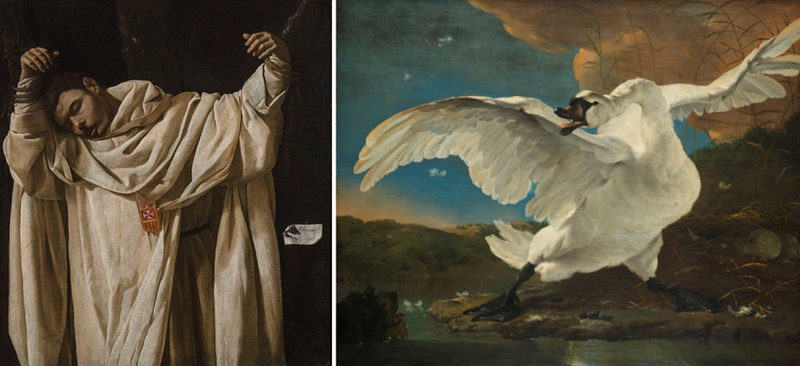
What it came up with is striking. The image on the left is a depiction of St. Serapion, a priest who was crucified and disemboweled in 1240 while trying to rescue slaves in the Mediterranean (the exact location was either Marseilles or Algiers).

The painting of the swan on the right is believed to be an allegory of the lynching of John de Witt, a Dutch politician who was murdered by a mob during an English invasion.

The two paintings use a very similar visual style to express sympathy for a martyr. Humans hadn’t noticed this, but the machine intelligence did.

(The Martyrdom of Saint Serapion by Francisco de Zurbarán was painted in Spain in 1628, while The Threatened Swan by Dutch artist Jan Asselijn was painted around 1650. They never met or saw each others’ work.)

And the machines aren’t stopping with studying art. They’re making it too.

Art created by AI is widely available online and some pieces have even been auctioned at Sotheby’s for over $50,000.

This trend toward machine-generated art will only speed up, especially now that the new AI platform called GPT-3 is amazing beta testers with its ability to mimic human speech and design. I wrote about GPT-3 here.

AI
Art
Artificial Intelligence
Painting
Future Technology
Recommended from ReadMedium