Evangelical Writer Michael Brown Claims to Love LGBTQ+ People
He is so close to getting it, but so far
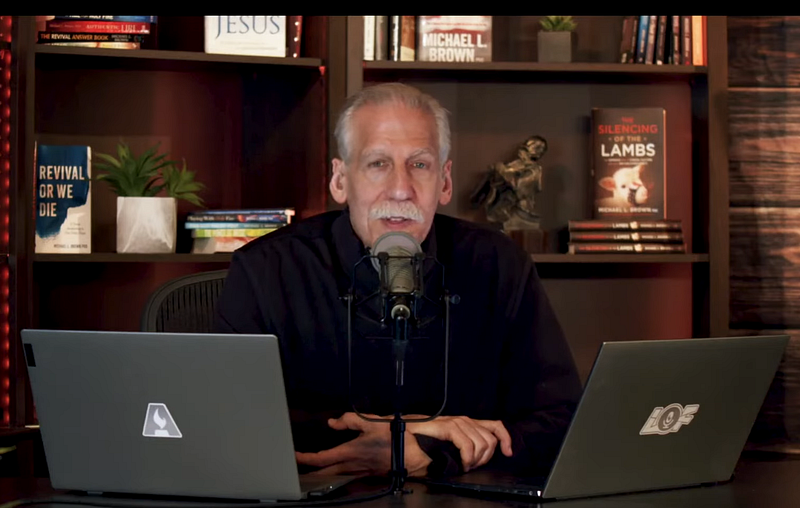
In a Christian Post column yesterday, contributor Michael Brown says he understands why some call him hateful. Why, indeed? Brown has dedicated his ministry to confronting the “gay agenda” in what he calls a “loving” manner, to try to convince LGBTQ+ people that we are wrong and sinful and need to change our ways. But he continues to hold to his hateful beliefs, and he doesn’t seem able give any justification for them.
Brown has many good points in this article, but offers no reason or evidence for why he holds to one belief while, by his own admission, he discards “passages that seem to challenge our own lifestyles while emphasizing the passages that condemn homosexual practice.” He offers no reason for reinterpreting some Scripture while refusing to consider reinterpretations of other Scripture.
In my own journey from condemning to affirming LGBTQ+ relationships, I went through a phase where I believed pretty much the same thing Brown appears to believe. I have always believed that God is love and that Christians should be known for our love, but I thought that doing gay things was sinful.
This seems to be where Brown is stuck.
Brown says that he “sought their theology and commentary books, reading every argument they brought in support of same-sex relationships.” If he has truly done this, he is very stubborn in his convictions. Some might say being secure in his beliefs is a good thing. But I believe there is even more strength in being willing to change when you learn you are wrong.
When I read LGBTQ+ Christians’ arguments, I was convinced. You might say that means I wasn’t strong in my faith. But I was born and raised in the church, my dad was a retired pastor, my mom was a passionate worshipper, and I wanted nothing so much as to do what Jesus wanted of me. That is still what I want.
I don’t think Brown truly does understand. He is so close, though, and I pray that he will take that last step. Although, I think his pride will make that very difficult for him. Unlike me, he has a public presence and platform that will be shaken to the core if he changes his stance on this. Remember Eugene Peterson?
Peterson is known for his modern English Bible translation, The Message. In 2017, Peterson said in an interview that homosexuality is “not a right or wrong thing as far as I’m concerned.” The interviewer then asked him if he would perform a same-sex wedding if he was asked to do so, and he said, “Yes.”
The evangelical world immediately turned against him. Christian bookstores threatened to pull his books from their shelves. A day later, the Washington Post released a statement on Peterson’s behalf retracting the statements in the interview. It wasn’t until after his death that Peterson’s family disclosed that Peterson didn’t write the retraction. His literary agent did it to save Peterson’s career. When Peterson said “yes” he would perform a same-sex wedding, he really meant yes.
It is difficult to be a trailblazer. Going against the flow is never easy. But the more people who do it, the more leaders who follow the Spirit into the future, into love, the easier it will be for those who follow.
Like Saul on the road to Damascus, Michael Brown needs an encounter with Jesus.
Esther learned to read when she was four years old, and began writing shortly thereafter. She is a queer Christian poet, crafting with words to create art and music.
Enjoy my work? Buy me a coffee!


