Europe Inches Closer To Sending Troops to Ukraine
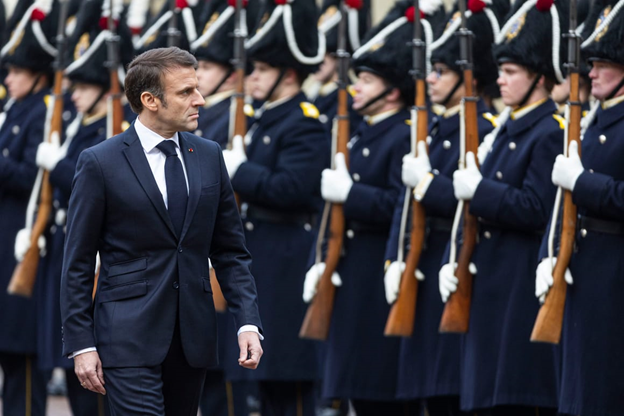
French President Emmanuel Macron recently made headlines when he stated that he does not rule out the possibility of sending a French military contingent to Ukraine. Such a possibility, he emphasised, should be part of a policy to show Russia that Western countries are ready to take decisive action.
He has recently been back by the European Parliament, which urges its member countries to do whatever it takes to defeat Russia.
The French president faced a barrage of criticism, but reinforced his position when he said his comments were “weighed, thought through and measured.”
“I remind you that two years ago, many around this table were saying: ‘We’re going to offer sleeping bags and helmets…Today they’re saying: ‘We’ve got to go faster and harder to get missiles and tanks.’”
Macron said he wanted to send a message to Putin that he “won’t win in Ukraine,” and to show support for the ally nation after suffering a loss in Avdiivka.
The prospect is so upsetting to Russia that the speaker of Russia’s lower house of parliament even warned Macron against sending troops to Ukraine, saying they would meet the same fate as Napoleon’s army.
Napoleon’s army of course was invading Russia, not defending a territory that Russia invaded.
More appropriately, the Russian speaker could have referred to the Crimean War, the last time when Britain and France united with a local power (the Ottomans at the time) to crush the Russian armies of Tsar Nicholas I. The Tsar lost partly because he kept micro-managing the war. He died after catching a chill. One of his servants summed up his reign: “the main failing of the reign of Nicholas Pavlovich was that it was all a mistake.”
That would sound familiar to Putin-world.
Shock-waves of horrified denial bounded through some European capitals. Many countries took the stance that they were not at war with Russia.
In fact, that is exactly what they are doing.
Putin had the nerve to ask if the West was prepared to risk nuclear war because of direct involvement. There was no push-back from the West, which could have asked Putin: “when you started all this, you war-junky, were you prepared for nuclear war?”
Russians need to ask themselves why all their surrounding neighbors have formed defensive alliances; pacts that will only be triggered if they are attacked by Russia. Who is the aggressor here?
And if European troops are in Ukraine, they are still not in Russia, and they have no intention of being in Russia. What Ukraine does is Ukraine’s business; a sovereign state does not have to ask permission of another sovereign state.
The sheer entitlement mentality of Putin, evidently reflected in the controlled opinions of Russia’s citizens, is evil waiting to happen.
And after Putin’s latest threat was made, high-ranking officials in some of the European countries like the Netherlands, Estonia, and Lithuania actually pushed harder for involvement. They said they were also open to the possibility of sending their military to Ukraine.
It is in any event a bit late to get finicky about sending European soldiers — they are already in Ukraine. NATO countries — including the United States, Britain and France — have deployed small numbers of special forces and military advisers to Ukraine in unspecified roles for years. They are probably related to logistical support work and training. The United States’ CIA has funded and partially equipped a sprawling network of spy bases across Ukraine that aid Kyiv’s efforts to track Russian troop movements and target the Kremlin’s prized military assets.
In addition, thousands of sympathetic volunteers — largely from the West and post-Soviet states — enlisted under Kyiv’s banner. The international legion that emerged has been deployed across the front lines and in some of the war’s worst battles. Some 20,000 foreigners from 50 countries are fighting to defend democracy. It comprises a mixed cast of ideological die-hards and experienced warriors. At least 50 American citizens — the majority former U.S. military veterans — have been killed in Ukraine.
Other volunteer brigades fighting for Ukraine include detachments of Belarusian fighters opposed to the Putin-backed dictatorship in Minsk, anti-Kremlin Russians and ethnically Turkic nationals from Russia, and post-Soviet states like Kazakhstan and Kyrgyzstan.
Far from the shores of Europe, Canada has the largest Ukrainian population outside Ukraine itself. Canadian Defense Minister Bill Blair says Canada does not rule out the possibility of deploying its troops in Ukraine. He emphasised that they will only be employed in a training capacity. He also clarified that this idea came about after the NATO Security Summit, where he met with French President Emmanuel Macron and discussed his proposal.
The Canadian troops are already being used in roles that exceed ‘training’; Blair noted that there were a number of Canadian troops in Ukraine in a protective role, guarding their diplomats.
He added that Western countries had to show Russia that they were ready to take decisive action.
European countries that have not yet announced a troop movement to Ukraine are already a nightmare for Putin. Sweden is one of the least aggressive countries in the world, yet even before it joined NATO, it could crush any Russian invasion of its territory. See video How Sweden Could Easily Crush A Russian Invasion. And this is what Putin would have to do to beat NATO: he has to fight each country and beat the world’s largest military alliance. NATO is not backing down. What is hard for Putin to understand about this?
The history of the conflict thus far shows that this move of European troops would be a welcome move. It is when Putin senses indecision that he moves aggressively, cheered on by a handful of ‘advisors’ who do not offer “what if” scenarios: “What if, Mr. Putin, we trigger the enlargement of NATO, close world trade against us, push a million skilled workers into fleeing the country, destroy our economy…” etc.
Not one of his close advisors — not one — pushed back.
Now it looks like the West is tentatively saying that it is getting ready to enter the ring. In fact, many are already IN the ring.
Private European armaments companies like Rheinmetall are now building factories in Ukraine using the labor of their own national work-forces; they are not ‘soldiers’ per se but the German government would nevertheless be very upset if any died. The president of Rheinmetall responded to Putin’s threat that he would bomb their factory by begging him to go ahead and try; they would welcome the target practice.
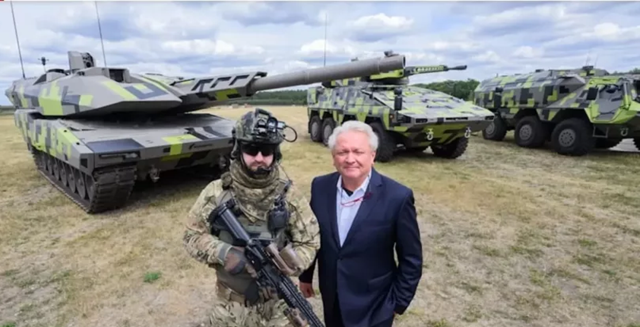
German Chancellor Scholz backed him up, pushing allies to give more military aid to Ukraine and announcing a new package of air-defense and artillery systems for Ukraine worth about $1.3 billion.
The EU has also deployed 37 EU-flagged military missions on three continents since 2003 which positions them to assist Ukraine in missions ranging from logistics to guarding the Ukrainian/Belarusian border or shielding major Ukrainian cities.
Ukraine has special forces travelling the world hunting down Russian agents and eliminating them. A recent operation saw Wagner Group troops being captured in the Africa country of Chad.
Estonian Major General Neeme Väli indicated that the discussion will have a shock-level impact on the Kremlin. He has stated that seeing European leaders talk about supporting Ukraine with the deployment of Western ground forces will be a signal by Russia: “It is definitely sending a message to Russia as well: That Europe is ready to invest in Ukraine.”
He added that Ukraine’s primary need is for weapons and equipment.
The Estonian Prime Minister Kaja Kallas leaned further forward on the table and said that all options are under consideration to help Ukraine defeat Russia.
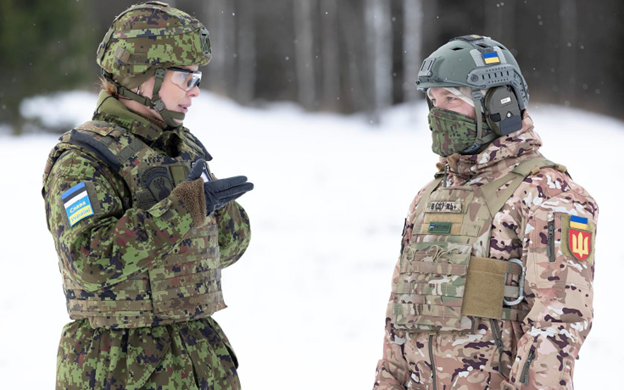
Thus far, they are saying that such assumptions are linked with support personnel who will provide training, help set up processes, and do other work without being involved in hostilities.
French Prime Minister Gabriel Attal confirmed the words of French President Emmanuel Macron about deploying troops to Ukraine and explained the potential purpose of such actions.
He clarified that the possible deployment of troops would not be aimed at participating in combat operations at the front but at rear support. He explained that supporting Ukraine is very important because if the country falls, the European Union and France, in particular, will be in a dangerous position:
“The struggle of Ukrainians is our struggle as well. Because fighting for 2 years for the integrity of their territory, they are also fighting for the security of the European Union and France, since dictators do not go on vacation. And if Ukraine falls, the front line will inevitably move to the west.”
if French troops are deployed to Ukraine, they will train the military, provide air defense, and protect some parts of the border.
That last bit does not sound like a ‘rear support operation’ to me. Good for them.
Dismissing Putin’s continuing threats to escalate the war, Britain’s top Armed Forces official has said the world is not on the brink of World War Three because Vladimir Putin knows NATO would beat Russia in any conflict.
Admiral Sir Tony Radakin, speaking at a conference in London, said that Russia had “struggled” in Ukraine and that its “military weakness” had surprised Western officials.
Ukrainian ambassador to France Vadym Omelchenko believes that French President Emmanuel Macron’s statement about the possible deployment of troops to Ukraine is “the beginning of a process” that will trigger relevant discussions in other states.
A problem for Putin is that the UK already has solders on the ground in Ukraine. Maybe the British did not get the memo about restraint.
British PM Rishi Sunak recently confirmed the UK government has a “small number” of soldiers deployed inside Ukraine. He added that Britain has no plans for a large-scale deployment of troops to the war-hit nation.
Large numbers of Ukrainian troops are being trained in Britain and London is supporting Kyiv with equipment and supplies, which is widely known, so it’s a bit late to be coy.
Throwing down the gauntlet in much less vague terms, Pentagon chief Lloyd Austin stated that if Ukraine loses the full-scale war with Russia, Russia will be forced to fight the entire North Atlantic Alliance.
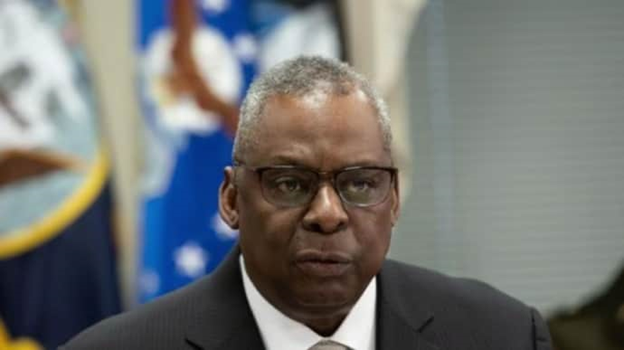
He specified that if Ukraine loses on the battlefield, the Baltic countries may be threatened.
“If you are a Baltic state, you are really worried about whether you are next. They know Putin. They know what he is capable of. And, frankly, if Ukraine falls, I really believe that NATO will be in a fight with Russia,” the official said.
The European Parliament firmly called on the EU to give Ukraine whatever it needs to defeat Russia.
It clarified that there should be no self-imposed restrictions on EU military assistance to Ukraine.
In the text of an EU parliamentary motion passed by 451 votes in favour and only 46 against, Members of the European Parliament (MEPs) took stock of the two years since Russia’s full-scale invasion of Ukraine on 24 February 2022. Having only one percent of the parliament vote against the motion was a very strong and positive signal.
Highlighting how the war has fundamentally changed the geopolitical situation in Europe and beyond, they point out that the main objective is for Ukraine to win the war, warning of serious consequences if that does not happen. MEPs say that other authoritarian regimes are watching how this develops to assess their own leeway for exerting aggressive foreign policies.
For Kyiv to win, there should be “no self-imposed restriction on military assistance to Ukraine”, they advised, with Parliament reaffirming the need to provide the country with whatever is needed to regain full control over its internationally recognised territory.
MEPs recognized that there are still huge differences in the level of military support provided by EU member states to Ukraine and call for the necessary investments to be made in the European defence industrial base. This is paramount to meet Ukrainian needs and replenish depleted stocks in the EU. This means that European support is being planned for a war that lasts for years. MEPs list sophisticated air-defence systems, long-range missiles such as TAURUS, Storm Shadow/SCALP, various types of artillery and ammunition (155 mm in particular) and drones and weapons to counter them, as particularly important for Ukraine.
They also urge EU countries to immediately enter into dialogue with defence companies, in order to ensure increased production and deliveries of ammunition, shells and missiles to Ukraine, which should be prioritised over orders from other third countries. In addition, they call on the U.S. House of Representatives to adopt its long-stalled military assistance package for Ukraine without any further delay.
The MEPS pushed to allow Russian state-owned assets frozen by the EU to be confiscated and used for reconstructing Ukraine and to compensate victims of the war. Russia must be obliged to pay reparations imposed on it to ensure that it contributes substantially to rebuilding Ukraine. Some $300-billion worth of assets could be transferred to Ukraine.
Alexei Navalny’s widow Yulia had made the same observation, calling in the name of her assassinated husband for the wealth of Russia’s oligarchs to be tracked down and seized. She said that the West cannot fight only through conventional diplomatic means, but must treat Russia as if it were run by gangs of criminals.
MEPs demanded that the EU maintain and extend its sanctions policy against Moscow and Russia’s ally Belarus. This includes banning Russian uranium and metallurgical imports to the EU, terminating nuclear cooperation with Russia and imposing a full embargo on EU imports of Russian agricultural and fishery products as well as fossil fuels and liquefied natural gas transported by sea through pipelines.
Finally, the European Parliament condemned all those countries, companies, associations and individuals that are helping Moscow circumvent EU restrictive measures, stating that these disruptive practices should be criminalised at EU level.
It sounds like Europe is getting very serious. They regard Russia as a state sponsor of terrorism.
General Philip Breedlove, Former Supreme Allied Commander of NATO, described why Russia keeps talking about the nuclear option. The objective is to reinforce fear in the West that Russia is capable of using its nukes at a moment’s notice. “We used to think that Russia’s military was ten feet tall; in fact, it is more like five feet. Putin counts on the West to lose backbone…to be deterred.”
We approached this wrong from the beginning, said Breedlove. We were at first in a head-long rush to tell Russia that there would be no boots on the ground…Telling Putin what we will not do is great for Putin.
He added that despite Trump, America’s commitment to NATO is iron-clad. NATO is stronger than it has ever been. The new militaries of Sweden and Finland are extremely capable. Sweden by itself could stop Russian expansion through the Northern Baltic area.
According to CNN, “Discussions have begun in the Pentagon regarding the transfer to Ukraine of reserve presidential funds (~$4 billion), which allows the Pentagon to use its own reserves to send military equipment to Kyiv”.
Biden could donate a great deal of equipment using the Excess Defense Articles and marking the value of the retired equipment at $0.00. This could include M1 Abrams tanks, M2A2 Bradley Infantry Fighting Vehicles, M109 self-propelled howitzers, and evenvF-16 jets.
The US also has gigantic amounts of military material, much of it mothballed, that could fairly be ascribed a low value and be transferred to Ukraine including missiles that the US would have to pay to decommission.
Preparing for a future of constant contact with the West instead of Russia, Ukraine has quietly begun changing the gauge of its railway to European standard track.
Russia and its colonies use rail track that is 60-inches wide (1,520 mm). Ukraine is switching to 56-inch track (1,435 mm). It is starting with the line connecting to Poland and the TEN-T network this year. The railway will run from Ukraine’s western city, Lviv, to the Polish border. The move is an indication that Ukraine is merging with Europe in material ways: specifically, roads of steel.
And now it looks like Europe is gradually inching up on the final commitment: soldiers for the new member of Europe.
And Ukraine has been European since the galleys of Greece and Rome traded from its shores thousands of years ago — long before there was anything in Moscow more sophisticated than groundhog colonies.
Ukraine is ours, and we look like we are getting ready to help defend it.
That would be the end for Putin.
And, once again, it will not go nuclear: Putin is no braver or more insane than Hitler, who did not order the nuclear equivalent of his day — massed aerial bombing with poison gas — because his enemies also had the same weapon and could wipe him out.
Putin is in fact a physical coward, scuttling off to his northern chateau as soon as Prighozin started to move Wagner Group on Moscow. He’s lucky that Prighozin made the mistake of trusting him with a peace settlement. Putin ended that in a mid-air course correction for Prighozin’s jet.
In fact, all of the opponents that Putin has eliminated have been killed by a spy’s devious tools: poison or assassination.
Now we are close to having his soldiers come up against European troops. And if the war is ended before that has to happen, so much the better.
But as least Putin will suddenly have a clear understanding that the West means what it says.
Back off Ukraine.
And I find it somewhat ironic that two of the European nations leading the push are France and England, whose soldiers once stood together on the Ukrainian field of Balaclava — famous for the “Charge of the Light Brigade”.
Russia’s humiliation in the Crimean War forced its educated elites to identify its problems and recognise the need for fundamental reforms. They saw rapid modernisation as the sole way to recover the empire’s status as a European power. The war thus became a catalyst for reforms of Russia’s social institutions, including the abolition of serfdom and overhauls in the justice system, local self-government, education and military service.
Perhaps the same reforms will happen again, when Putin loses Crimean War 2.0.
He always wanted to be a little Tsar, like Nicholas I.
It looks like Europe is getting ready to oblige him.