
Literary Impulse & Paper Poetry “Eudaimonia” Prompt Submission
Eudaimonia
An unauthorized biography
My voice is a gray albatross. I healed her wings. Now, I can’t hold her anymore. (from the diary of Eudaimonia)
Eudaimonia is born in Donoussa on December 21st at 2.45 am.
Two extraordinary events occur on the same night.
The first, it’s snowing. Flakes as big as white and soft loaves which disappear the following morning, in a sparkle of myriads of diamonds, leaving the few inhabitants of the island with the alienating impression of having only dreamed.
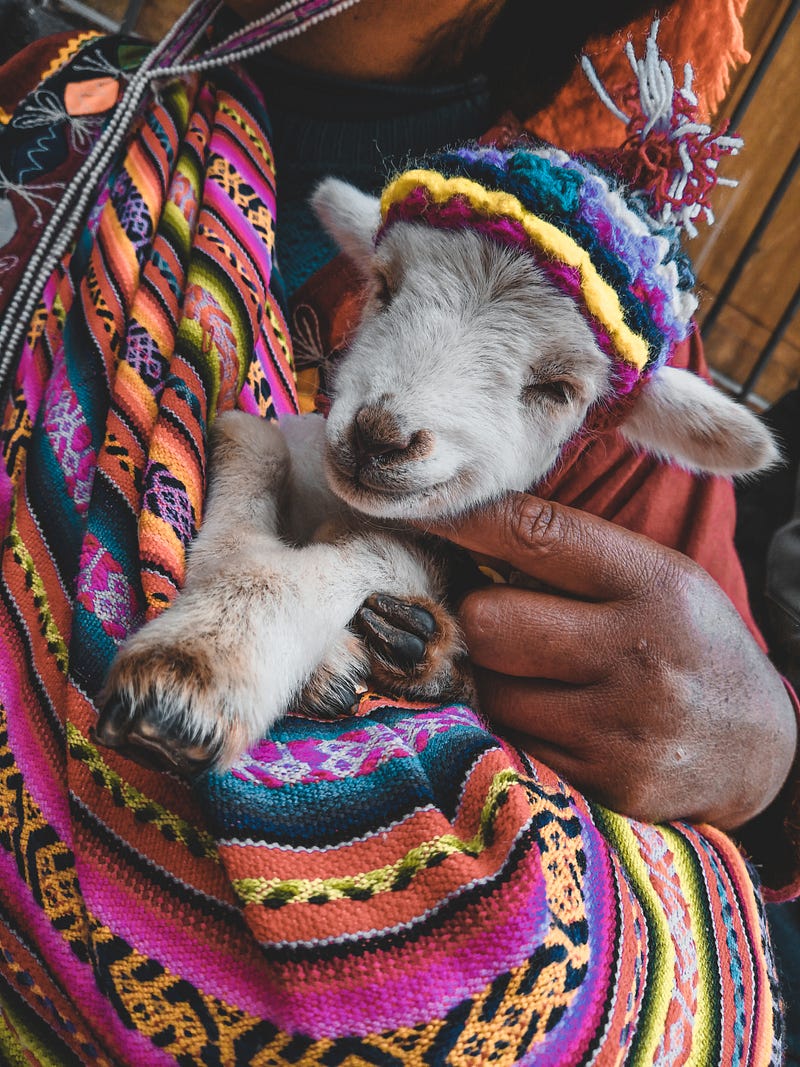
The second, Eudaimonia, curled up in the towel, does not look like a baby, but like a tender, curious, stubborn goat.
Donoussa is an island of the Small Cyclades archipelago. A balance of shades of blue. The sun shines in every season. Yet on December 21st, at 2.45 am, it starts to snow. Not even the oldest shepherds have ever admired the snow. They stand by the doors of the houses, lean against the door jambs, with woolen hats pulled down, arms crossed, hands under the armpits.
Eudaimonia spends a lonely childhood. She speaks to the stars, to trees, to ghosts, to flower-filled courtyards. Mom teaches her to read, so she devours the pages of all the books she can borrow from the small personal library of the elderly, long-bearded presbyter.
But the thing that makes her happier is climbing the paths, licking the salt off the rocks and discovering the caves where seals and pirates once found refuge. In one of those caves, it is said, Dionysus had hidden Ariadne after Theseus abandoned her in Naxos.
A train that looks like a carnival wagon, full of chatty people eating sandwiches, goes upstream along the Adriatic railway line, from Lecce to Ancona. Whenever she can, Eudaimonia looks out the window. She has already sprouted two tiny, delicious, backward-facing horns. The journey is interminable, like a badly written book.
The parents decided to move to Italy. In Ancona, all three are welcomed by the Center for the Poor. The nuns are kind. After a few days they find a damp apartment for them along via Cialdini.
When Eudaimonia goes out, she slips continuously on the cobblestones of the alleys. She is cast out every time she tries to taste florets from pots on the windowsills of the ground floors.
Of those years, she remembers above all an evening at the Teatro delle Muse. Nuns accompany her to see Carmen, by Georges Bizet. The next day Eudaimonia remembers all the musical notes and all the words. She sings the whole opera, while strolling among the stalls of the weekly market.
Mom works as a cleaning lady. She doubles her shifts, enrolls her little girl in a singing school. The teacher, with glitter in his hair, perfectly shaved, dressed in black and white, disappoints the woman’s expectations. Eudaimonia works hard, says the teacher, she is a goat that knows how to sing, remarkable fact, no doubt about it, but she has no personality.
Mediocre like art when it tries to resemble life too much. Mediocre like life when it tries to resemble art too much.
Eudaimonia does not mind. Happiness lies in licking the salt, and the rocks on which the waves break, they have salt in abundance.
During lunch breaks, port workers sit in a circle. Eudaimonia sings for them. Someone rocks their head, stamps their foot. Someone is homesick. Someone has bright eyes.
Love has no boundaries. Eudaimonia falls in love with the Sad Gypsy of the rides. She takes leave of her parents, follows the caravan of trailers and topaz-eyed children, warms up at bonfires and harmonicas, in desolate fields, on the edge of the metropolis.
They arrive at Saintes-Maries-de-la-Mer, in the Camargue, floating on the waters of the Rhone. Eudaimonia and the Sad Gypsy get lost in the festival, they become dance and earth, play and poetry, patience and bread. In the tent the fortune teller blows her nose, she reads the tracings of their destiny and remains silent.
In a whirlwind of blood, May 24, everything has to start over.
Eudaimonia follows the procession of Sara the Black, the patron saint. The procession winds towards the sea, where they all immerse themselves. The sunset is dense tempera color mixed on the canvas. The night is dirty water that glides over color. Caught in the middle of a brawl, Eudaimonia and the Sad Gypsy are stabbed.
Carmen. The father and the mother. Sara the Black. Ariadne’s cave. The flowery courtyards.
Eudaimonia awakens on the beach. The Sad Gypsy is as diaphanous as a worn-out shell. Nobody can wake him up. Eudaimonia is alone.
She has no more cheerful hooves, she has no more velvety horns to stroke. But long copper hair and flexible fingers like hazel twigs.
In a café in Paris, along Rue Froidevaux, behind the Cimetière du Montparnasse, Eudaimonia works as a waitress. Every day Eudaimonia takes a long walk. She often goes along Boulevard Raspail, reaches as far as Château Rouge, and then she just needs to close her eyes. Beyond the desert and the wind, spices, wax cotton fabrics, the Milky Way mother who feeds her cubs, the smile of children.
The heart is the drum of the sky. Everything that exists was created by dance.
Eudaimonia still hasn’t gotten used to crossing the eyes of passers-by, instead of knees. Sometimes she is tempted to drink milk lapping it with her tongue.
And one evening in April, a splendid, golden, languid April evening, Eudaimonia is setting the tables outside the cafe. She sings. Her voice is a boat on the Seine, a triumphal arch, the cat Sphinx in front of which the world is enchanted.
The wheel of providence. An almost honest businessman passes by on the sidewalk. A concert is proposed to her. Then another. Applause. Flowers in the dressing room. The adventure begins. Olympia. Scala. Royal Opera House. And then the big leap.
America is a huge salt rock.
The night is dark and still. The ocean liner is a large dog that swims placidly. On deck, a man in a tweed jacket plays a barrel organ.
Getting to your destination is just a detail.
Eudaimonia lives. Unable to feel envy. Looking at everyone from the bottom up. With her goat instinct. Stubborn. Joyful.
And when, several years later, she wakes up voiceless, in a Chicago hotel room, along East Lake Street, in her head a blues song, the metropolitan fog of November, the Loop train waiting to leave, on the diary page she writes:
My voice is a gray albatross. I healed her wings. Now, I can’t hold her anymore.
Eudaimonia retraces the path of success walking backwards. The wheel of providence.
People are hourglasses which cannot be turned upside down. The seventh color of the rainbow is just an invention. There are so many ways to happiness that even the gods got tired of counting them.
Elpis is a marine biologist. She does not dye her hair. The world is hers. She takes it gently, simply opening her eyes wide. She is Eudaimonia’s most faithful friend.
They are in Cuba. Centro de Rescate de Tortugas Marinas. Tomorrow, the eggs will hatch, they will run towards the sea. The small beach tavern is closing. Elpis and Eudaimonia are almost certainly sated, older in age, and drunk.
Sing for me, Elpis whispers. Eudaimonia begins to move her shoulders, alternating them, then turns her head left and right, slowly, with rhythm, then she waves her hands and Elpis can hear, can feel her friend’s invisible voice, voice of air, of electricity of the heart, like a theremin, like a shiver down the spine.
Time passes. Eudaimonia has a number of years that must be counted adding those of a singer, a gypsy, a waitress, a goat, a woman.
Elpis and Eudaimonia walk carefully. I don’t feel well, Eudaimonia says. And she leans on Elpis’ arm.
At the hospital they put her through all the emergency checks. She falls asleep. The operating room is ready. Upon awakening, next to her bed there is a nurse adjusting the drip’s flow. He is Black, and smiles. I’m thirsty, Eudaimonia whispers. You can’t drink now, Mama. You have to wait. Certainly these are the post-anesthesia effects. Eudaimonia has the impression of having spoken, to have found a faint voice. And the nurse is barefoot, wearing a gold caftan.
Days in the hospital are raindrops on the plexiglass of a shelter.
Eudaimonia gradually improves. She can stand up. Wears the dressing gown, walks down the hall, eats the baked apple. And sings. A clear rivulet voice. A voice that is the daughter that Eudaimonia never had.
Someone recognizes her, asks her for an autograph. An old woman asks Eudaimonia for an old song, she asks her to hold her hand as she prepares for the great journey and her eyes close and her breathing slows down. Nurses record Eudaimonia’s songs and pack CDs to give to patients who are discharged.
Eudaimonia is happy. Life has never been so free.
Madam, I don’t want to delude you. Your situation is compromised, you don’t have much time left. The doctor is young, willing, empathetic. Sunlight enters through the large window. Eudaimonia thanks him. She promises him that, next week, when she has to come back for the checkup, she will bring a tart made by her.
September. Exceptionally, it’s snowing outside. Elpis is waiting for her friend across the street, with a bunch of small flowers.
Eudaimonia takes off her shoes, stamps her feet on the ground, and the feet on the ground make a loud and hard noise. And the birds of the sky alight on the ledges to listen. And the withered flowers of the world lift their heads.
When you can’t sleep and the moon turns her face away and the worst nightmares come to you during the day and the way of love is lost somewhere there is a goat instinct stubborn joyful irreverent.
A gray albatross flies over our thoughts and takes them away and migrates to places that will welcome us.
Everywhere you can find salt and rocks.
And this story, you know well, it has no end.
Any references to historical events, real people, or real locales are used fictitiously. Other names, characters, places, and incidents are the product of the author’s imagination, and any resemblance to actual events or locales or persons, living or dead, is entirely coincidental.
Thanks to William J Spirdione for inviting me to this prompt. Thanks to Thomas Gaudex for encouraging me to participate. I share this prompt trying to guess who hasn’t arrived yet :-) Trisha Traughber, Salitha Nirmana Meththasinghe, Isak Dinesen, Georgia Lewitt, Viraji Ogodapola, Joanna Vang, Jessica Lee McMillan
For details check [What does Eudaimonia mean to you?]