
Ethics in AI or new challenges to humanity in the 21st century

The topic of ethics is one of the most controversial topics in principle.
I will not dwell on popular issues related to deepfake, data security, or the use of AI by criminals and hackers. Instead, I decided to touch on the prospects for the development of artificial intelligence.
How to teach morality to a strong artificial intelligence?
How do you avoid using people as a means to an end?
How to make AI safe?
All these issues are or will be faced by developers and states in one way or another over the next few years. I will not focus on the technical part of the issue, but rather on the most essential (fundamental) part, because this is where the solution vector lies.
Strong Artificial Intelligence and Super AI: new human or super machine?
AGI or artificial general intellegence is an intelligence very similar to a human being, possessing all human intellectual skills and having autonomy accordingly.
And this is not to mention Super AI that would surpass human capabilities (we are talking, for example, about "Laplace’s Demon", capable of calculating all positions of particles in the universe and predicting the future exaggeratedly). Such AI is capable of hypothetically solving the most complex tasks in the perspective of a small amount of time, including bypassing its own control.
For more than 50 years, with the advent of the first machine-coded computers, scientists and philosophers have been actively discussing in general the fundamental structure of the human brain and the possibility of recreating it at the machine level.
In general, there are three dominant worldviews on this issue today: materialism/physicalism (consciousness = physical processes), functionalism (consciousness as a result of computational processes), emergentism (consciousness as a side property of neuronal action).
And it all boils down to one question: can the brain be reduced to mathematical abstractions, logical expressions, and generally binary structures to replicate through neural networks?
For the ethics itself it is not so important. After all, if we understand AGI as a strong artificial intelligence of broad purpose and autonomy, then simply having at least some autonomy is enough.
There is such a popular "Chinese Room" experiment that postulates: any algorithm, given a set of instructions (the same distributed word linkage weights in LLM models) can simulate "understanding" questions.
In the presented situation of an imaginary Chinese room, a person who does not know Chinese is inside and processes incoming Chinese symbols according to instructions, also in Chinese. Despite the ability to process the characters and generate responses, the person in the room does not actually understand the language they are using to interact with the outside world.
And so we can never discern from speech behavior the mental, obligatory phenomenon of human consciousness as "understanding" or "comprehension."
The most straightforward approach to reconstructing human intelligence so far is observed in the Emergence method, on which, by the way, the OpenAI project is based, showing impressive results.
This approach does show some results: for example, a set of "neurons" can generate similar cognitive maps of orientation in space. But the truth is that this approach is not controllable at all, because it is not regulated in any way and depends rather on the "fed" data. Although there are bets being placed on this. Instead of architecturally striving to develop AGI, the conditions for its occurrence are created.
In the context of neural networks, the Emergent approach means that complex characteristics or behavioral features of the model emerge automatically during the learning process, without explicitly setting specific rules or patterns. This interaction of neurons and network layers leads to emergent properties that may not be obvious when analyzing individual components.
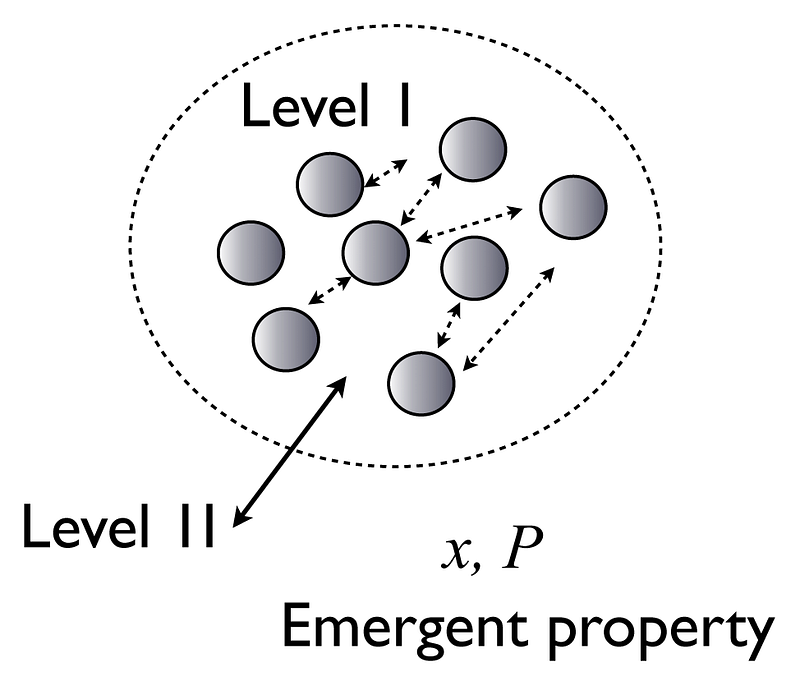
Rather than programming neural networks to perform specific tasks, with the Eemergent approach, the network learns from the data and adapts to the task conditions. For example, in reinforcement learning, where an agent interacts with the environment, emergent properties may involve the development of strategies that the agent independently develops as it interacts with the environment, optimizing its performance.
This approach can also be associated with the use of neural networks with a large number of layers and parameters, where training occurs at higher levels of abstraction. This allows the model to identify complex patterns in the data and create emergent structures that enable efficient problem solving.
This is why Nick Bostrom and Eliezer Yudkowsky make the case for decision trees (such as ID3) versus neural networks and genetic algorithms, because decision trees are subject to current social norms of transparency and predictability.
Today there is no understanding of the mechanisms of formation of abstract worldviews, beliefs, motives and morals in the brain. This means that there can be no predictions of the moment of their emergence when simulating the neural network of the brain.
Therefore, at the point of transition to AGI, when emergent ("accidentally arising") phenomena like morality are possible, there is no way we can control their content.
And therein lies the key problem with the ethics of strong artificial intelligence - there are no means or tools to stitch in instructions, prescriptions, or humane motivations.
But the problem here lies even deeper: there is nothing to prescribe. For any ethical prescription already presupposes a choice of some values over others.
Let’s assume that practically any universal good or good of a particular group of people often contradicts the good of a private individual. Therefore, a principled choice between one or the other is tantamount to mandatory damage to one of the subjects, be it a whole social class or an individual.
There are no absolutely well-intentioned principles of ethics, nor is there a clear and understandable ethical system that could somehow reduce the chances of a "non-moral" strong AI. So the lack of emotion in artificial intelligence is a definite plus. Perhaps empathy and recognizing a human being as "its own" forms the ground for the emergence of near-human values.

In this sense, AGI has two problems: due to the popularity of Emergence approach aimed at unpredictable results, the very unpredictability and impossibility to develop ethical rules at the philosophical level makes a strong AI dangerous. On the other hand, an immoral and nefarious AGI is not a problem, because it should not surpass humans in its functionality.
But what about the Super Artificial Intelligence that Eliezer Yudkowsky is so afraid of? The problem is that the emergence of SAI is more likely than the emergence of AGI because it is independent of human ability and is oriented conceptually more towards solving complex (computational) problems.

And since, again conceptually, it is a derivative of Narrow AI (highly specialized artificial intelligence), it presupposes a prescribed task and goal. And the emergence of a prescribed goal presupposes the selection of means, and with the presence of autonomy. And this autonomy can position artificial intelligence, for example, to use humans as a "means".
Narrow AI: weak artificial intelligence for military purposes
"If any major military power advances the development of AI weapons, a global arms race is almost inevitable, and autonomous weapons will eventually become the Kalashnikov of tomorrow."
In fact, the problem of AI in the military sector is not based on the principle of what if artificial intelligence destroys an ally. This problem is solvable, because it meets quite understandable tasks of cold calculation.
Countries are actively developing and deploying military technologies based on artificial intelligence in an attempt to strengthen their military superiority. This creates geopolitical tensions and may lead to an arms race in the field of artificial intelligence, and thus to an increase in lethality and weaponry.
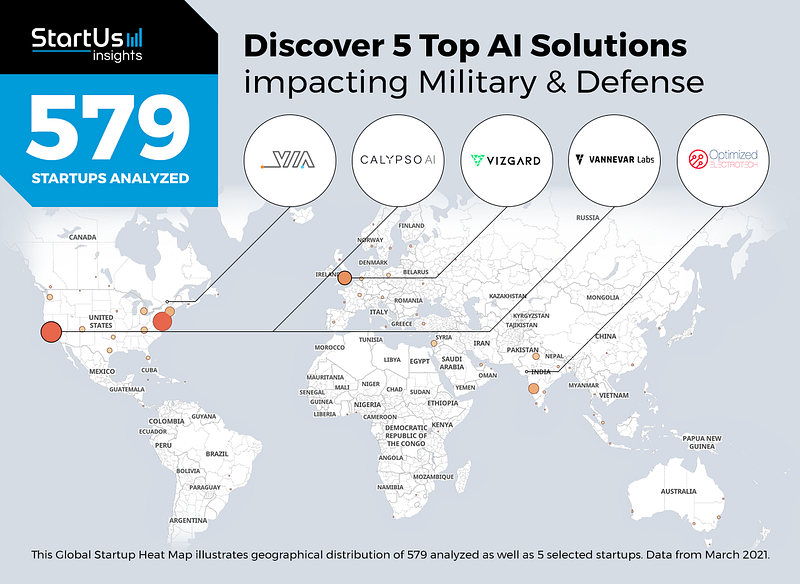
The AI arms race could lead to highly efficient and autonomous systems, which in turn increases the risk of errors, accidents, and even potential cyberattacks.
Unfortunately, the practice of warfare shows that international conventions are violated, and the development of nuclear weapons, for example, has formed a new era in the political life of the whole world.
On the other hand, the development of AI in the military sphere may lead to the impossibility of any armed conflict or delegation of armed clashes to drones. Just as nuclear weapons deter any wars to destroy nations and states, AI can "prohibit" wars, as its use would involve huge risks of destroying all of humanity.
But this is about wars between equal countries with artificial intelligence in their weaponry. What about conflicts between third world countries and highly developed nations? The main difference between nuclear weapons is the deterrent in major wars (since the atomic bomb has blind destructive power). Artificial intelligence that can recognize targets and destroy them privately gives a significant advantage on the battlefield and does not create a devastating effect.
Such a situation may become dangerous and lead to enslavement or overt political pressure from highly developed countries up to economic parasitism. Subsequently, the development of AI in the military sector may lead to the formation of new military alliances and coalitions.
Why do developers face serious ethical challenges that need to be addressed today?
Ethics in the military issues of using AI have been around for years. For example, drones have had no problem destroying terrorist groups, giving them virtually no chance of survival. Moreover, the UN has already recorded the destruction of terrorists without the use of a human operator.
When it comes to AGI and SAI, the issues here are centered on the development of a competent code of ethics and a way to control the Eemergent approach, which can lead to irreversible consequences up to the self-propagation of neural networks or the choice of humans as the means.
And this is only a small part of the ethical challenges that AI developers face. It is not for nothing that we have recently heard a lot of news related to this topic, both from large corporations like Google and OpenAI, and from governments.