

Ethereum — Upgrades, Standards & Futures
There is no doubt that Bitcoin is the pioneer of Cryptocurrencies which set the stage for Blockchain revolution, but Ethereum is the one that provided the platform for the exponential growth of the new digital tokens (ICOs), it also laid the foundation for finding practical solutions for amalgamating the Blockchain into the mainstream financial system with its smart contract functionality.
No wonder that it has been sitting strong as the second most valuable digital token/platform with its innovation, functionality, an efficient team & quest for continuous improvement. Just wanna quickly touch base with some of the recent developments in Ethereum.
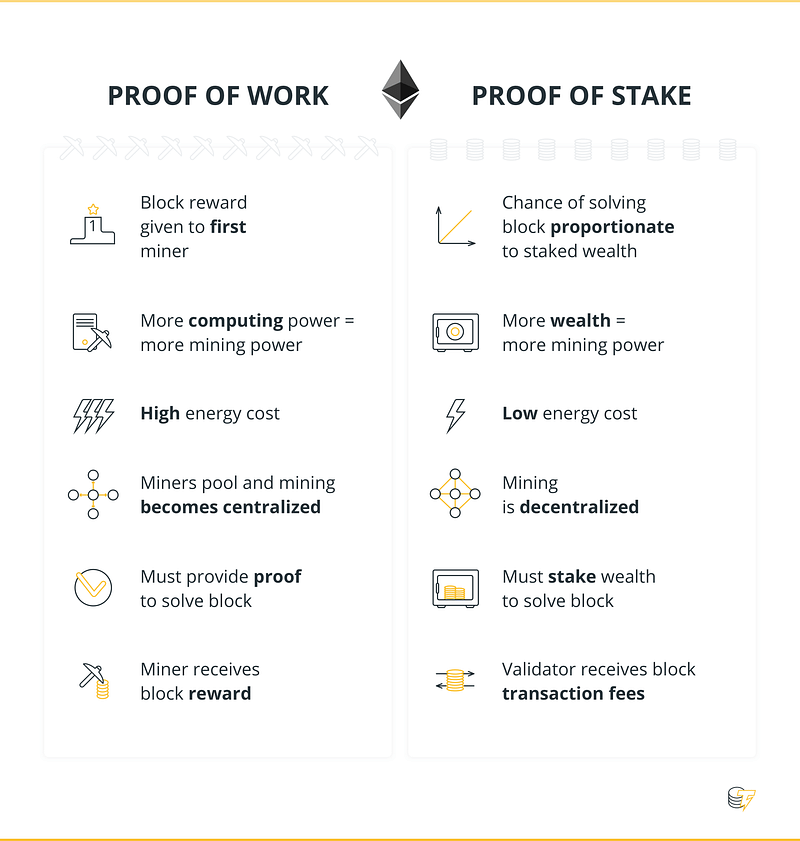
Casper & Sharding upgrades: In the recently concluded Ethereum developers meeting on June 15th, 2018 it was decided to combine the upcoming Casper & Sharding upgrades. Perhaps the most talked-about & most anticipated has been the Casper FFG (Friendly Finality Gadget) upgrade to Ethereum network ever since it was first published in October 2017. ETH intends to move to a much more efficient & less power consuming PoS (Proof of Stake) protocol from the current drag of PoW (Proof of Work) algorithm. The following infographic would simplify it for you.
Sharding, on the other hand, is going to help Ethereum tackle the scaling issue which has been haunting it for a while now. Basically sharding would enable the parallel processing of transactions by splitting the main Ethereum chain into smaller chains or shards. If you want to hear it from Ethereum’s founder Vitalik Buterin he explains it as:
“Imagine that Ethereum has been split into thousands of islands. Each island can do its own thing. Each of the islands has its own unique features and everyone belonging on that island, i.e. the accounts, can interact with each other and they can freely indulge in all its features. If they want to contact with other islands, they will have to use some sort of protocol.”
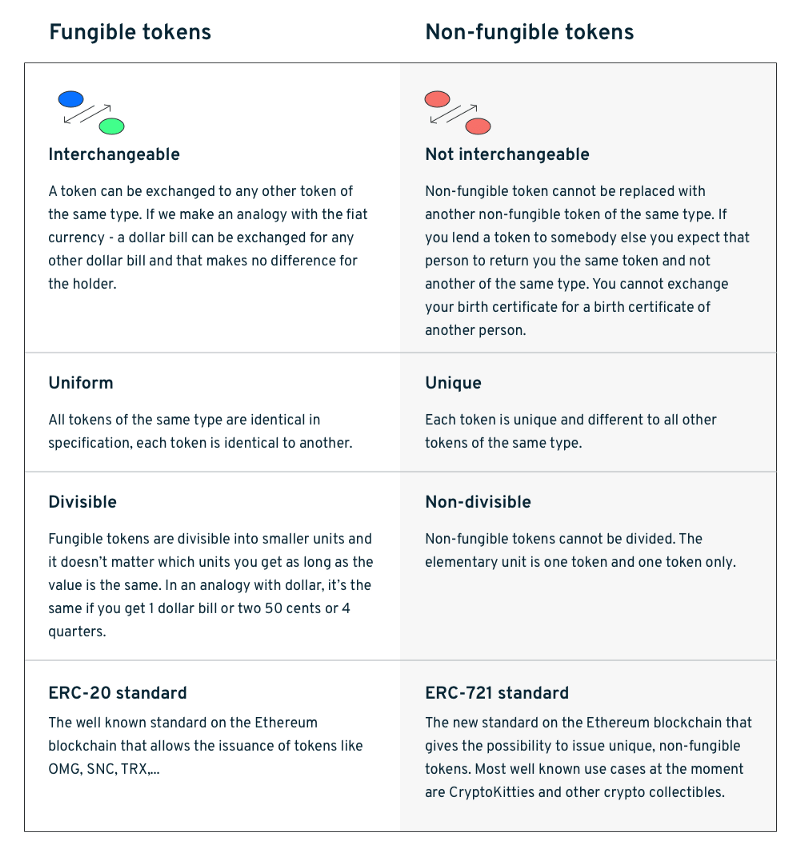
New Standards: ERC-20 is the standard Fungible token interface used on the Ethereum network as proposed originally by Vitalik Buterin and Fabian Vogelsteller in November 2015. ERC-721 was accepted as the second standard Non Fungible token (NFT) in March 2018 after being proposed by Dieter Shirley in September 2017. A comparison infographic below between the two standards explains the difference.
More recently Witek Radomski, co-founder and CTO of Enjin Coin, has developed & proposed ERC-1155 — a new standard for video game tokens on the Ethereum network. This new standard is deemed to have improved on the limitations presented in its predecessors ERC-20 & ERC-721. Witek claims the new standard would make faster, cheaper & lighter transactions. At the time of this writing ERC-1155 has been posted to Ethereum’s GitHub as a discussion thread waiting for users feedback before a “pull request”
Ethereum Futures: Another major milestone for Ethereum was the launch of ETH Futures on a regulated UK-based Crypto trading startup Crypto Facilities in May. This is a major headliner for Cryptocurrencies traders since the launch of Bitcoin futures by CME in December 2017. Having said that US launch of Ethereum futures may be one step closer since CME Group has announced a partnership with Crypto Facilities to list the price of Ethereum in real-time dollars.
This Cryptoverse Goliath ETH seems to be unfettered with an ever-increasing competition showing up on the horizon & continues to improve & evolve. Will it be able to hold on to its supremacy. Time will tell…
If you like what you read, here’s a link to some of my other article related to the topic:
- Mainnets… the new Revolution in Cryptos
- EOS — New superstar of the Crypto Elite Club
- USD backed Cryptos — An overview
Stay in touch: Twitter | StockTwits | LinkedIn | Telegram| Tradealike
Originally published at www.datadriveninvestor.com on July 4, 2018.


