
Ethereum Market Map — June 2017
An in-depth look at startups and opportunities built on Ethereum
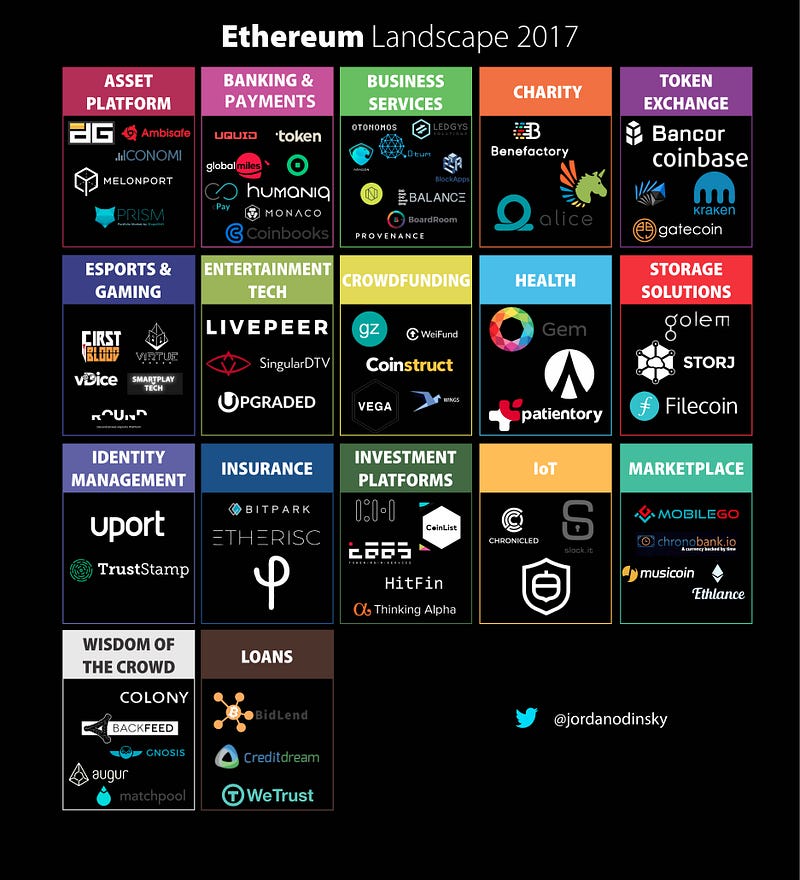
I‘ve always been fascinated by technology that changes the way people engage with the world. Facebook, Amazon, Airbnb, and Uber all played a role in shaping the way people view the world. They made it normal to share moments and thoughts online. They taught us that it’s okay to hop into a stranger’s car or even sleep in their spare bedroom. They forever changed the way we purchase goods and services from one another. And I believe that blockchain technology will be the next innovation that changes the way we think about and interact with the internet. Viewed as a revolution of cryptocurrency, technologists, venture capitalists, startup junkies, and even my Dad has come off the sidelines to learn more about this new wave of innovation.
Over the past few weeks, I’ve dived deep into blockchain technologies and its use cases. While the market map above is only a piece of the larger blockchain puzzle, I believe that Ethereum has the potential to overtake Bitcoin as the digital currency and framework of the future because of its strong developer ecosystem, coding simplicity, and the variety of applications that can utilize smart contracts.
What is Ethereum?
If you’re just beginning to learn about Ethereum, I’d suggest starting with this really well written post.
Tl;DR: Ethereum is a decentralized blockchain technology that allows users to develop and run smart contracts. A smart contract is a digital contract that allows users to exchange money, or anything of value, in a transparent, conflict-free way, while avoiding middlemen.
Ethereum’s Powerful Use Cases
Ethereum is radically different from Bitcoin. Built as a user-friendly platform for developers to make applications easily, Ethereum not only allows for peer-to-peer transactions but allows developers to program their applications to utilize smart contracts.
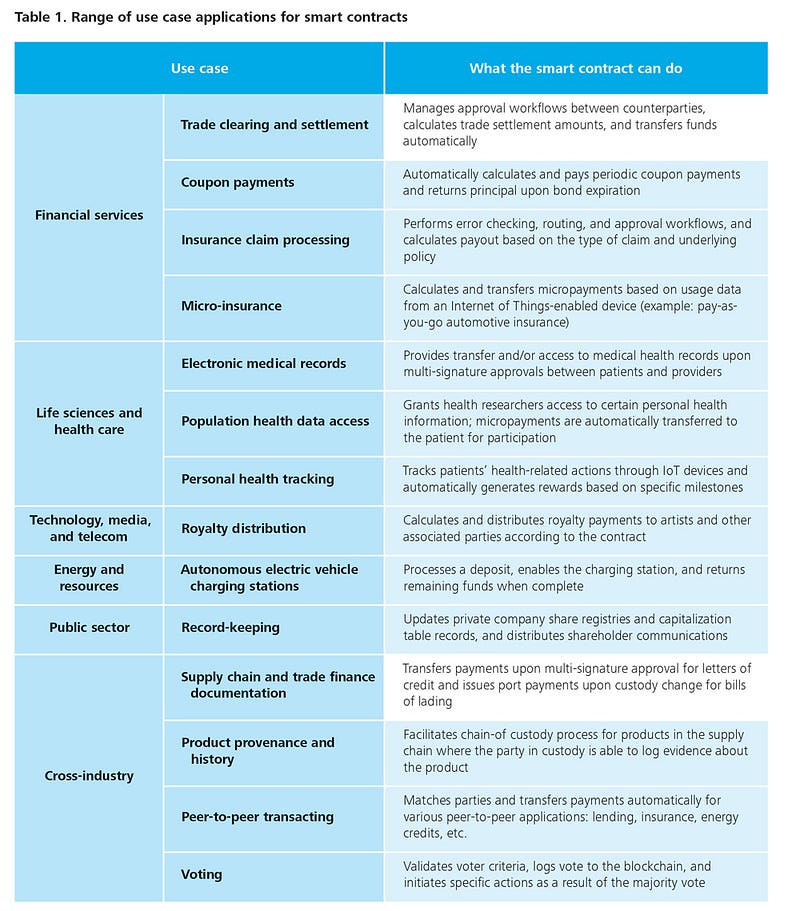
And this is only the tip of the iceberg! Additional use cases are being developed in healthcare, marketplaces, banking, token exchanges, eSports, gaming, entertainment, loans, identity management, file storage, business services, payments and more.
Being a passionate investor, I recently jumped into a conversation on Twitter with Semil Shah sharing an interesting use case that leverages smart contracts for investments. (Side note: if you’re not following Semil, you’re missing out.)
What does this all mean?
Ethereum has the potential to change the face of the internet, commerce, and the applications that we interact with on a daily basis. I see Ethereum as an ecosystem that has only begun to scratch the surface. Think of Apple pre the App Store or iOS. By providing developers with an easy language to build valuable applications that leverage smart contracts, cryptocurrencies, and protocols, Ethereum will pave the way for a new type of commerce. As new applications and use cases flood the market, consumers will naturally become more inclined to test out the technology — especially if it saves them money (see what Project Oaken is working on) — and many won’t turn back to their old systems and practices. I see this as a classic network effect. As application offerings increase, more individuals will adopt the new technologies, thus the making the Ethereum technology and various tokens more valuable.
As this new wave of innovation has surely been the talk of the town following the recent Token Summit and Consensus 2017 conferences, it’s become increasingly clear that this isn’t a fad, rather the beginning of something great.
If you are working on a company based on Ethereum technology or if I missed any companies, feel free to tweet me or email me. I’d love to hear from you!
Thank you Blake Robbins and Linda Xie for all of your help!
Up Next:
Hi! I’m Jordan, and I work for a global VC based in Israel. There’s a lot happening in the VC/startup scene and I figured I’d post my observations here. All opinions are my own. Feel free to follow on Twitter: @jordanodinsky.