
Ethereum Layer 2: Overpromise, Underdeliver
How optimism hack tells more story than what’s on surface
It’s not a day in crypto without drama, but today is particularly annoying. You may have heard now how Optimism, a layer 2, practically handed $20 million worth of $OP to a hacker. Rather than a sophisticated hack, you can say it was simply negligence. And something smells stinky around how it happened (and how the team proceed afterward.)
My annoyance wasn’t because of the hack itself. Hacks happen often in crypto that at one point, you are kinda desensitized. However, OP hacks were something more. For me, it feels like a nail in the coffin for my annoyance toward a particular crypto sector people tout as “Ethereum Layer 2.”
So much as I want to promote layer 2s because it’s “safer and secure” than any other “VC chains” because it is supposed to inherit the traits of Ethereum mainnet, in reality, what I experienced is not only a disappointment but also a reluctance to promote it as how an Ethereum maxi would. There has been so many… dishonesty that’s actually dangerous for anyone putting substantial money on these layer 2 chains.
If you can afford it, stay on the mainnet. If not, other L1 chains are way better than today’s Layer 2.
Layer 2s chains are prone to get halted, actually
Ethereum thought leaders would not tell you how most L2s today are still on their training wheels. Basically, a lot of aspect of the chain is still handled by the developers. On January 10, 2022, Arbitrum, a rollup-based layer 2, was halted for 7 hours because its main sequencer was down. During that time, no one could make any transactions. It wasn’t the first time Arbitrum was down.
For any chain, whichever ‘layer’ they are in, being halted never set a good precedent. In fact, hardcore crypto believers should never trust any chain that’s ever get halted even for once.
Sequencers on a rollup basically act like a validator. They produce blocks. That’s why it’s important for them to get decentralized instead of relying on one entity. Although according to their docs, Arbritum is planning to do so, currently there’s no solid deadline. You can expect the chain would experience sequencer-related halts again for as long as the decentralization issue isn’t fixed.
“ Research by a team at Cornell Tech, including Offchain Labs CEO and Co-founder Steven Goldfeder, developed the first-ever decentralized fair sequencing algorithm. With some improvements that are under development, these concepts will form the basis for our longer-term solution, of a fair decentralized sequencer.” — Offchain Labs Dev Center.
Optimism airdrop halt
During the airdrop claim event, Optimism — another Layer 2 — was also get halted due to high traffic. This time it wasn’t the sequencers to blame, but rather the RPC endpoint. Still, for 6 hours people couldn’t transact on the network. A transaction was either failed or delayed.
As someone who’s not unfamiliar with high-traffic degenism on various chains, an RPC problem usually is fixed by… switching to another RPC. I haven’t found anything particularly different with how rollups handle RPCs or how RPCs on rollup work, but the fact that users weren’t given the option for several RPCs meant the network wasn’t ready for widespread adoption. Its infrastructure isn’t varied enough to achieve at least a certain low level of decentralization.
To conclude, ETH layer 2s ecosystem can be called fragile until the unforeseeable future. It won’t be free from fundamental-related incidents nor does it look like it can handle high traffic. What’s ironic about the whole thing was how fans would point out Solana regular downtime as their superiority, while failing to acknowledge that other Layer 1s, such as Avalanche or Fantom, never had downtime even during the peak volatility moments repeatedly occurring in the past six months.
VC chains? Or Not?
One of the most prominent ‘propaganda’ an Ethereum maxi would tell you is that “Other chains are bad because of VCs.” They are very proud of this ‘holier-than-thou’ stance and never stop reminding people whenever there’s an incident with Solana, Avalanche, or the latest: Terra/UST.
Guess what. Not only that many Ethereum layer 2 solutions reeked with VCs stench, but many of them are basically textbook silicon valley startups with how their funding is conducted.
One of the most remarkable realizations regarding this fact, for me, was when finding out about dYdX — a decentralized trading platform running on Layer 2 Ethereum. I remember reading fine prints of their documentation and finding out their profit-sharing mechanism is only for equity holders instead of token holders. It was like, “why the heck would a project promising to be decentralized have equities?”. Why would a dapp protocol still needs equity when they also use token? dYdX is basically a silicon valley company masquerading as a decentralized Ethereum layer 2 solution. The fact that it’s headquartered in San Fransisco is another icing on the cake.
The equity was created to cater VCs around the US regulation. Not only that an Ethereum layer two reeks of VCs. But their business model is also designed to put them at advantage. How could ETH fans be so boastful over this.
Now let’s check other Layer 2 Solutions and their backers.
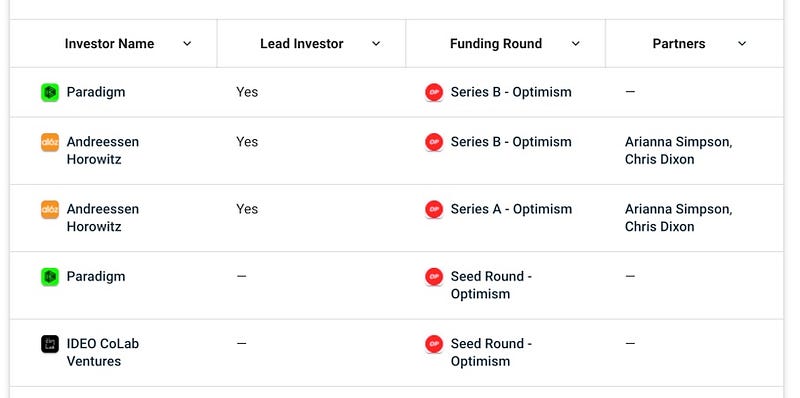
Optimism
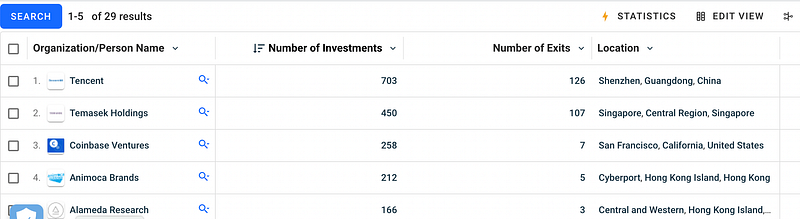
Immutable
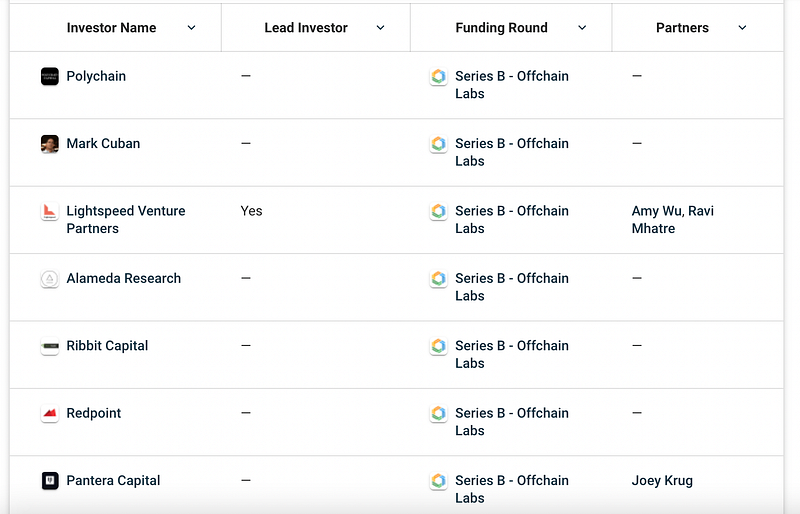
Offchain Labs/Arbitrum
Starkware
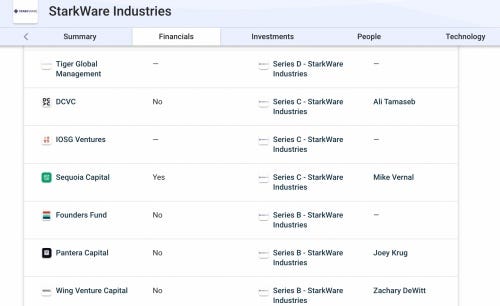
Raising from VCs isn’t a bad thing on its own. But just don’t say the projects are free of them then claim the moral high ground above everything else VC-funded. It’s not only dishonest but also laughable.
Overpromised, underdelivered, overvalued
I also have problems with Layer 2’s valuations, which most are horribly overvalued. For example, Optimism, a barely launched network that already reached a 6 billion FDV on their airdrop. It’s too expensive for a network with only several hundred million TVL. Starkware just recently raised $100 million at an 8 billion valuation. A lot of Layer 1s like Solana are still horribly overvalued, but for something that’s barely or only recently usable, many layer 2s haven’t earned those exorbitant valuations yet. Not to mention most of their tokens — or equities — are still in the hand of core investors and VCs, meaning the valuation would get expanded to a more insane level when these VCs are about to exit and look for retails for liquidity.
Basically just another chain
Multichain challenges apply in L2s too. Basically, as a pleb user you can see a Layer two network as “just another blockchain.”
Bridging assets would still need to use the lock-and-mint or burn-and-mint mechanism. A mainnet NFT is not automatically transferable to a Layer 2, for example. An Immutable X NFTs does not have the same prestige as mainnet NFTs. A smart contract executed on mainnet doesn’t automatically mean it is also executed on layer 2 (this is basically what happened with Optimism-Wintermute hack. They do multisig on mainnet assuming the Layer 2’s multisig is also properly configured.)
I would say that $ETH on layer 2 hasn’t achieved the canonical status $ETH enjoys in other EVM compatible chains. Dare a whale to put the majority of their $ETH on Arbitrum or Optimism, for example. I bet they’d rather park $ETH on Avalanche or Fantom or any reputable Layer 1 with no history of outages — and more liquidity.
There’s also another blunder of Layer 2. It’s their ‘being second’ nature. Ethereum mainnet would always be the chad chain, where liquidity congregates, the innovation happens, and where the whales would invest in projects long term. L2 users would only get the leftovers. Ethereum fans dream that one day, Ethereum would be a pure settlement layer-only chain, where only dapps and protocols using it instead of individuals. But that dream is impossible unless it is enforced at the tech level, which is technically impossible except we do another fork or something. You can’t just tell people to stop doing day-to-day transactions on the mainnet.
Building is hard, scaling is hard. If you ask me, as a former developer myself I have a high tolerance for fuckups when it comes to building tech products. Things take longer than expected. Deadlines grow. When everything looks like it’s finished, you’re bound to still mess up.
But it’s another matter when the fuckups are preceded by superfluous claims and overpromise. Perhaps it is just not the fault of Optimism or Arbitrum devs, but also the army of ‘evangelists’ behind them. The VCs. The influencers. Philosophical leaders. Ethereum maxis, led by the likes of Bankless, are overselling Layer 2.


