
Escaping Toxic Productivity to Reclaim My Mental Health
And you should be too before it’s too late
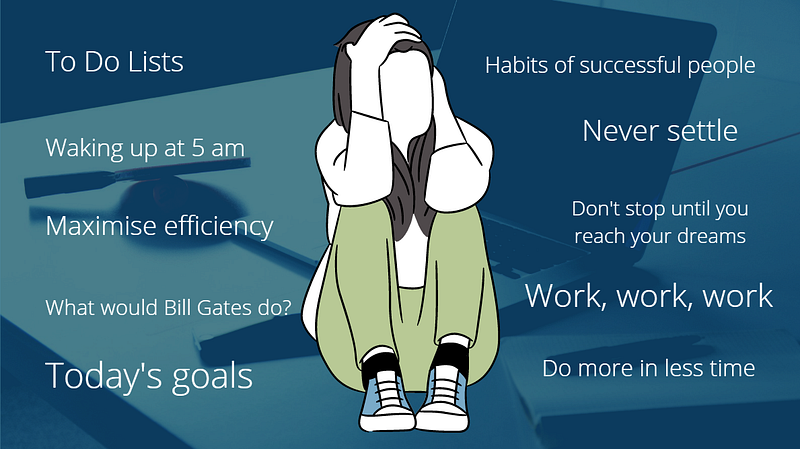
I’ve spent the past couple of weeks trying to get my mental health back on track after a particularly dark patch. A painful realisation hit me during this process: I can barely remember anything from around September 2020 until now. It’s like I was asleep and finally woke up a few days ago.
Sure, I remember some things. I remember all the interviews I took for my research thesis, then writing and struggling with it. I remember waking up in a fit of anxiety every morning, trying to mind map my priorities for the day which only seemed to pile up the more I worked. I remember the sadness in my parents’ eyes when I told them I’d forgotten Easter was two days away because I had no notion of what day it was anymore.
For everyone who knows me, I’m the productivity poster girl. I’m always at my desk, surrounded by to-do lists, working on a few tasks at a time all while expertly balancing an enormous cup of coffee in one hand. I’m the early bird. Responsibility in the flesh. Success in its prime. Everyone in my life has always said I’ll be successful because I have all the assets.
All I do is work. Work is everything to me and it has been like that since I was a child. With time, it has become my main method of validation. When people sigh with nostalgia, saying they wish they could be kids again, I always say no thank you, I don’t want to do all of that again.
But it wasn’t always like this. There was a time when I fully enjoyed other aspects of my life — spending time with my boyfriend, going out with friends, traveling — alongside work. There was a time when the sun shining would make me so happy I’d drop everything and go out to enjoy the weather. I used to spend hours on the sofa playing on my Nintendo, or reading, finding joy in the smallest things.
But all of that changed when I dove headfirst into productivity culture. A trend so all-consuming, so toxic, and so triggering, it drove me to several mental health issues, like sleep dread, anxiety, and neophobia, but most importantly, it took away my joy of living. And I’m ready to take it back.
Toxic Productivity Vs A Healthy Work Routine
My awakening moment happened when I downloaded the Forest app in an attempt to reduce my screen time. But the app was advertised as a productivity app, which triggered a strong reaction in me.
Break phone addiction, eliminate distractions, and maximise productivity easily
This is the tagline of the Forest app. And when I saw it, I felt sick. I felt like screaming that I didn’t want to be productive anymore. I just wanted to enjoy my life. My phone and computer are my main ways to stay in touch with my work, and if I want to escape workaholism, I need to stay away from them in my leisure time. I never thought I’d reach a point where the mere word productivity and all the unhealthy slogans that come with it would make me physically uncomfortable and scared like I’m facing withdrawal.
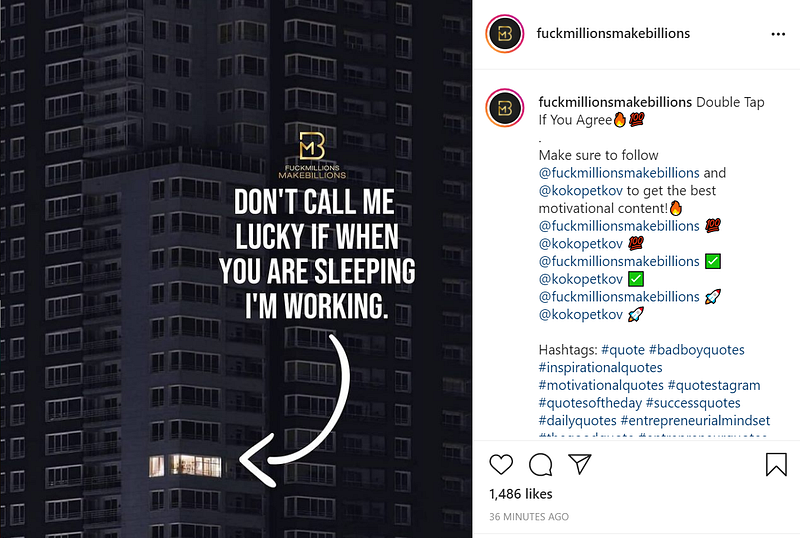
This kind of slogan is what toxic productivity is all about. This kind of attitude is what drove me to sleep dread and anxiety. This trend has taken hard-working people and turned them into machines while making less hard-working people feel guilty. Nothing about it is beneficial, nor healthy.
Being able to distinguish between the productivity culture and a healthy work schedule is essential because the purpose of this article is not to say I’ve now stopped working entirely. That’s of course unrealistic. But I’m done associating what I do with a toxic trend that promotes sleepless nights, inhumanely early mornings, and burnout.
How I’m Reclaiming My Life Back
Developing a healthy work routine is, ironically, the way out of toxic productivity. It’s the solution my therapist gave me when I told him I couldn’t stop working no matter what I did. Since I’m working from home, separating my personal and professional life is also challenging.
So my therapist suggested I wear something to indicate I’m “at work” from 9–5 every day. Then, once that item — in my case, a pair of earrings — is off, it’s leisure time. Finding something to physically separate my two lives proved surprisingly helpful, although at first, I struggled to stick to 9–5 and went for 8–7 instead, which is an insane amount of hours for anyone to work almost non-stop. But it eventually got easier. And healthier.
This weekend was my first fully free weekend since last summer. It was the first time I could finally say I was taking two full days to myself doing absolutely nothing work-related. It was so difficult. And so gratifying at the same time. I’ve decided to be more spontaneous and, instead of turning to my laptop when I felt bored, I took a walk, played a new video game, started new books, and got back into journaling.
I’ve started sleeping better, putting more effort into what I eat, and working out more. My relationship with my partner is flourishing again, as my unhealthy workaholism made him uncomfortable and feeling like he couldn’t reach me anymore. I’m excited about life, and much more relaxed even when I don’t get to complete my list of tasks.
In short, I’m back. Back from a months-long trance I had no idea I was in. Back to having days off. And lazy nights. Back to being excited about the future. And looking after myself.
The Takeaway
If, like me, you’re trapped in the vicious cycle of productivity culture, here’s a list of things for you to try:
- do not allow yourself to work more than 8 hours a day, with a lunch break at least
- have at least two days off when you engage fully with other aspects of your life, like relationships, hobbies, and wellness
- find a way to separate your personal and professional life: an outfit change, an accessory that indicates you’re working, or throw a blanket over your desk once you’re done
- do a random, unplanned activity each day
- whenever you feel the urge to return to your desk, do something you’ve stopped doing for lack of time. I used to love making bracelets and recently picked it up again
- call a friend once you’re finished working. Talk to them about anything but work
- uninstall any work-related apps from your phone. Have your work in one place only
No matter how you choose to navigate your work habits, remember that burnout and giving up your life to productivity are not the ways to success. They’re the ways to gliding through life like you’re sleepwalking. And believe me, realising that’s what you’ve done for 7 months is a painful blow.
Coming to terms with my harmful work habits has taught me to slow down and stop treating my job like it’s an all-or-nothing game. I’m now on my way to discovering healthier ways to be productive, and living has never felt better.


