
Movies
Escape with 10 Films Guaranteed to Make You Swoon
Fred MacMurray, that guy from “My Three Sons” and those old Disney movies hot? Oh, yeah, baby!
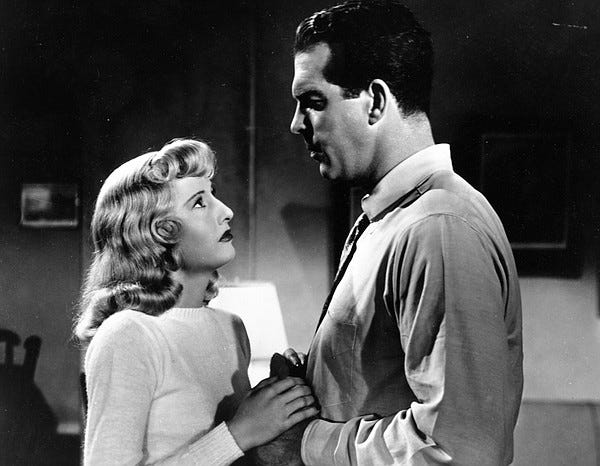
My education in film began at the age of 10 when my parents gave me a book about classic movie stars for my birthday. In the years since, I’ve seen countless movies and read many books and articles about the cinema. Here are ten films I think stand out as prime examples of on-screen sexual chemistry between the stars.
1. — Flesh and the Devil: Greta Garbo and John Gilbert, 1926
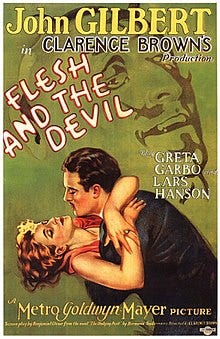
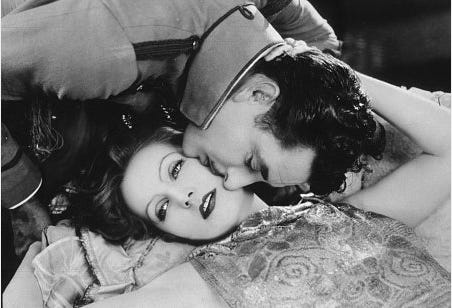
That “special something” is no more apparent than between Greta Garbo and John Gilbert, the stars of the 1926 film Flesh and the Devil. Because it’s a silent film, the actors have only their bodies and facial expressions to convey their feelings and boy, do they!
Garbo and Gilbert were deeply in love while filming the movie, and it’s breathtaking to watch. When the characters kiss for the first time in the garden scene, the use of light and shadow dramatically enhances the romantic effect, but the sparks are their’s alone.
In silent films, sparse dialog filmed on cards and interspersed throughout the footage helps tell the story. Much of it seems corny to today’s audiences, but in the clip below, it’s easy to ignore. If this scene from Flesh and the Devil doesn’t make your heart flutter, somebody needs to check you for a pulse.
2. — It Happened One Night: Clark Gable and Claudette Colbert, 1934
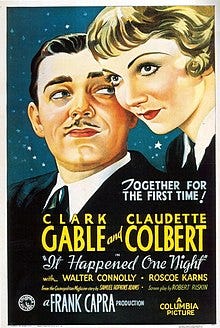
It Happened One Night was the first film ever to win all five major Academy Awards: Best Picture, Best Director, Best Actor, Best Actress, and Best Adapted Screenplay. There’s an excellent reason for this; it’s fantastic, and the chemistry between co-stars Clark Gable and Claudette Colbert is delightful.
It’s a classic Frank Capra screwball comedy about an heiress on the lam and a newspaper reporter hot on her trail. As they make their way cross-country, things get considerably hotter.
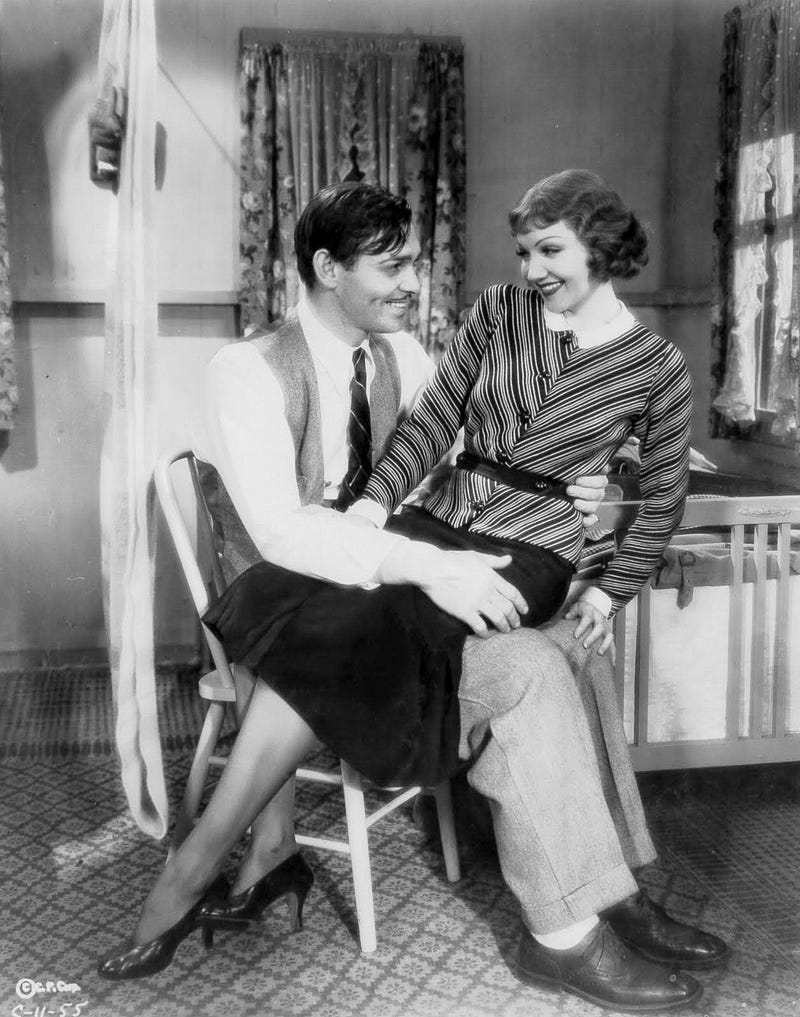
The release of It Happened One Night occurred just before changes to the Motion Picture Production Code went into effect. The Code (also known as the Hays Code) was a set of moral guidelines drawn up by the film industry for the self-censorship of content.
For this reason, movies made between 1934 and 1968 had strictly enforced guidelines about what they could and could not show on screen. The rules ran to the ridiculous, prohibiting even scripts that showed married couples in the same bed.
In the story, the two main characters share a motel room, although they’re unmarried. When Gable undresses for bed, he’s bare-chested, which shocked audiences when it first came out because, at that time, most men wore undershirts. A blanket hangs between the twin beds the stars occupy to preserve modesty. It’s a device referred to in the script as “The Walls of Jericho.” Under the Code, that kind of risque content, mild as it seems today, would not have been tolerated. Luckily, the Code went into effect a few months after It Happened One Night was released.
3. — The Philadelphia Story: Katharine Hepburn, Cary Grant, and James Stewart, 1940
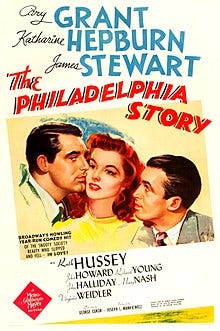
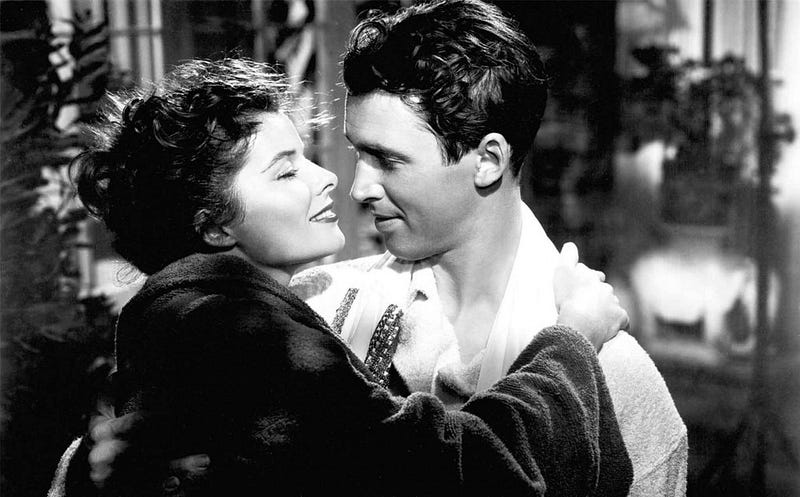
The Philadelphia Story gives us not one but two steamy pairings. Katharine Hepburn plays Tracy Lord, a spoiled rich girl whose ex-husband Dexter (Cary Grant) is hoping for a reconciliation even though she’s about to marry another man.
Things get complicated when a heavy flirtation blooms between Tracy and Mike Connor (James Stewart), a tabloid reporter assigned to cover her society wedding.
The film offers enchanting performances, witty dialog, and scintillating sexual tension. There’s only one problem. It’s hard to decide which man you want to get the girl, just so long as it isn’t her fiance, that is!
“(The film) has just about everything that a blue-chip comedy should have — a witty, romantic script derived by Donald Ogden Stewart out of Philip Barry’s successful play; the flavor of high-society elegance, in which the patrons invariably luxuriate; and a splendid cast of performers headed by Hepburn, Stewart, and Grant. If it doesn’t play out this year and well along into next, they should turn the Music Hall into a shooting gallery.” — Bosley Crowther in the New York Times
4. — Double Indemnity: Barbara Stanwyck and Fred MacMurray, 1944
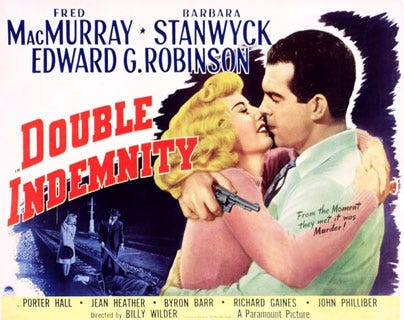
The romance between a slick insurance salesman and a woman looking to become a widow in Double Indemnity is a match made in Hell. Still, it’s no less electrifying than one destined for wedded bliss.
The screenplay by Billy Wilder and famed detective novelist Raymond Chandler is smart and sexy, and Fred MacMurray and Barbara Stanwyck make the most of it. In the scene below, a routine sales call quickly accelerates into full-blown dynamite.
5. — To Have and Have Not: Humphrey Bogart and Lauren Bacall, 1944
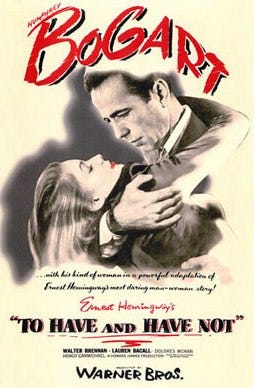
This screen adaptation of Ernest Hemingway’s novel was the screen debut of 19-year-old Lauren Bacall. Her on and off-screen pairing with Humphrey Bogart put the final nail in the coffin of Bogart’s booze-drenched and often violent 6-year marriage to actress Mayo Methot. Bogie and Bacall became the “it” couple of the decade.
The 24-year age difference between the co-stars, coupled with Bogart’s rocky history with women, made people skeptical about their future together, but this couple played for keeps.
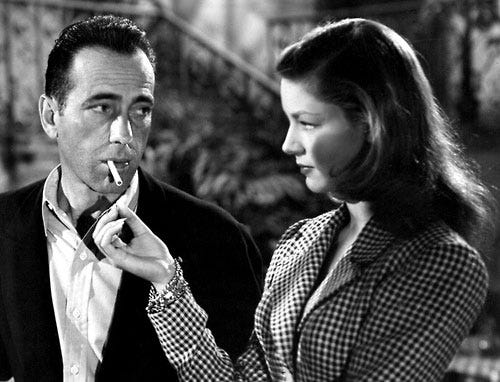
They married in 1945, co-stared in three more films, and had two children together. Many considered theirs to be Hollywood’s happiest marriage. Sadly, it ended prematurely with Bogart’s death from cancer in 1957.
The famous “whistle scene” from the movie shown below is one of Hollywood’s most celebrated. Watch it, and you’ll see why.
6. — Roman Holiday: Audrey Hepburn and Gregory Peck, 1953
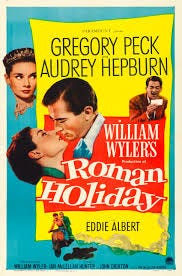
Roman Holiday is a light, romantic romp starring Audrey Hepburn as a princess from an unnamed country out to have a carefree day to herself in Rome, free of official obligations. She slips her security detail and ends up falling asleep on a bench.
Joe Bradley, a reporter (Gregory Peck), finds her and, thinking she’s drunk, let’s her “sleep it off” in his apartment. (Apparently, actors in classic romantic comedies were frequently called upon to play reporters!)
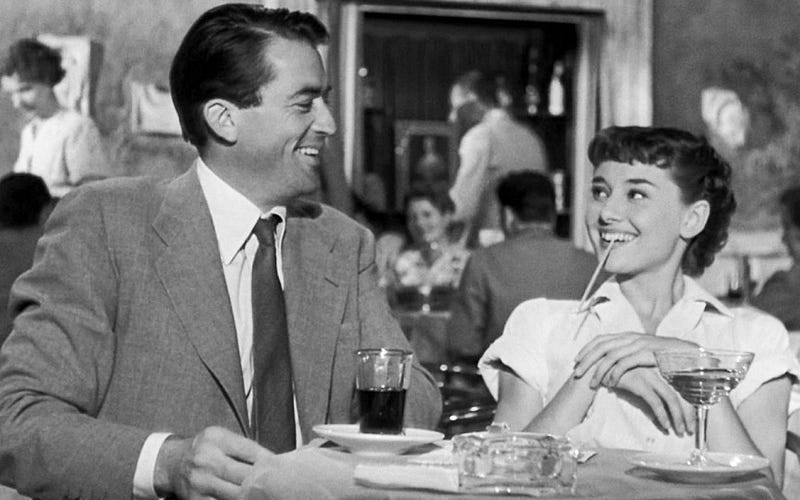
The next morning, Joe realizes who she is and convinces her to spend the day with him knowing that a story and photographs of the missing princess will make him a small fortune.
Along the way, they fall in love, but both face moral dilemmas. Does Joe write the story, and does the princess give up her title to be with Joe? I’ll let you figure that one out.
Much of Roman Holiday’s charm lies in the opportunity to see two wonderful actors, who, in real life, were both kind, compassionate human beings, spend some quality time in the Internal City. Roman Holiday introduced Audrey Hepburn to American audiences and made her a star. It also won her a Best Actress Academy Award. Not bad for a rookie.
7. — The Long Hot Summer: Paula Newman and Joanne Woodward, 1958
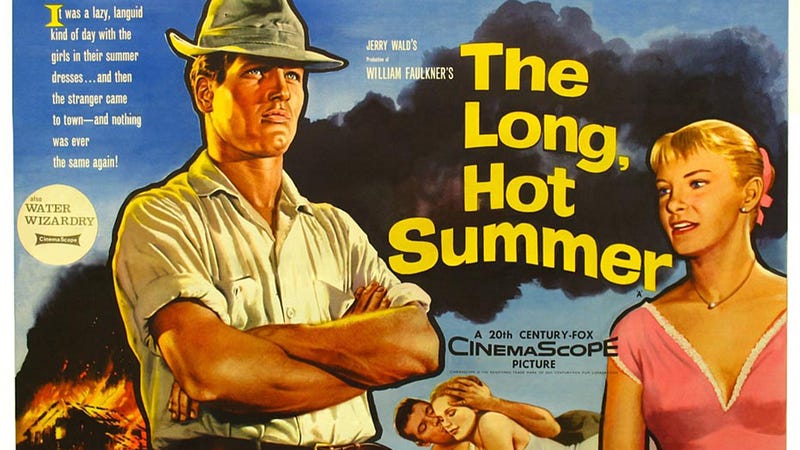
There’s no doubt that Paul Newman and Joanne Woodward had great screen chemistry. They starred in ten films together. The Long, Hot Summer was their first as co-stars, and they married soon after making it.
They went on to have three daughters together, raising them away from the glitz and glamour of Hollywood in Westport, Connecticut. Their marriage lasted for 50 years until Newman died in 2008.
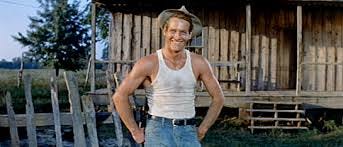
No disrespect to Miss Woodward, but Mr. Newman didn’t need a co-star to convey his potential as a red-hot sex-machine. His manner, physique, and startling blue eyes made him what my grandmother would have called “a dream walking.”
8. — Doctor Zhivago: Omar Sharif and Julie Christie, 1965
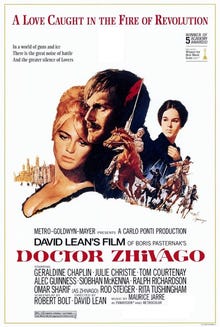
Doctor Zhivago is the screen adaptation of a novel by Nobel Prize-winning author Boris Pasternak. It’s an epic romantic drama set in Russia during the period before World War I and just after the Russian Civil War.
The film follows the story of Dr. Yuri Zhivago (Omar Sharif) and his hopeless yet enduring love for Lara (Julie Christie), a beautiful young woman he meets while attending to her mother’s attempt at suicide.
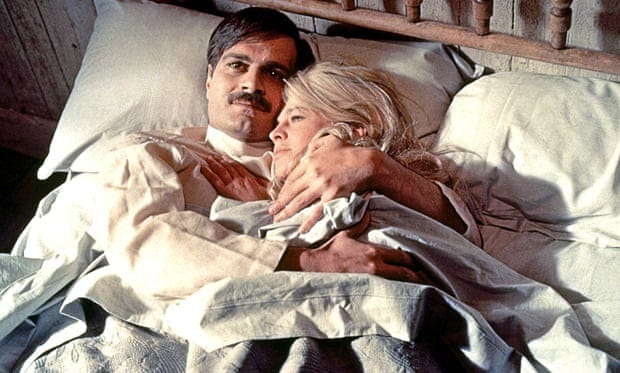
Yuri and Lara’s time together is brief, other relationships, wars, and political turmoil conspire to keep them apart. He eventually becomes famous for the poems he writes about her. One man’s passion for a woman he can never possess because of circumstances beyond his control makes Doctor Zhivago and tragic, yet somehow inspiring film.
The mood of the film is aided in large part by gorgeous cinematography and by the Oscar-winning score by Maurice Jarre, including the haunting “Lara’s Theme.”
“Literate, old-fashioned, soul-filling and thoroughly romantic” — Time magazine review of Doctor Zhivago, December 31, 1965
9. — The Big Easy: Dennis Quaid and Ellen Barkin, 1986
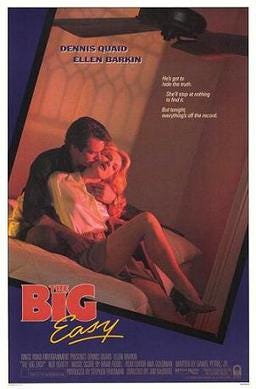
The Big Easy is a terrific romantic thriller about a crooked cop and a state district attorney who is investigating police corruption. It was initially going to be set in Chicago and called The Windy City. The producers’ decision to switch the locale to sultry, steamy New Orleans helped turn up the on-screen heat between co-stars Dennis Quaid and Ellen Barkin. The city of New Orleans is seductive in its charm, and this on-screen pairing will win you over as well. As the video below shows, there’s some great Cajun music to sweep you away as well.
“Loaded with atmosphere and drenched in the sizzling chemistry between Dennis Quaid and Ellen Barkin, The Big Easy remains one of the strongest — and steamiest — thrillers of the 1980s.” — Rotten Tomatoes
10. — A Star Is Born: Lady Gaga and Bradley Cooper, 2018
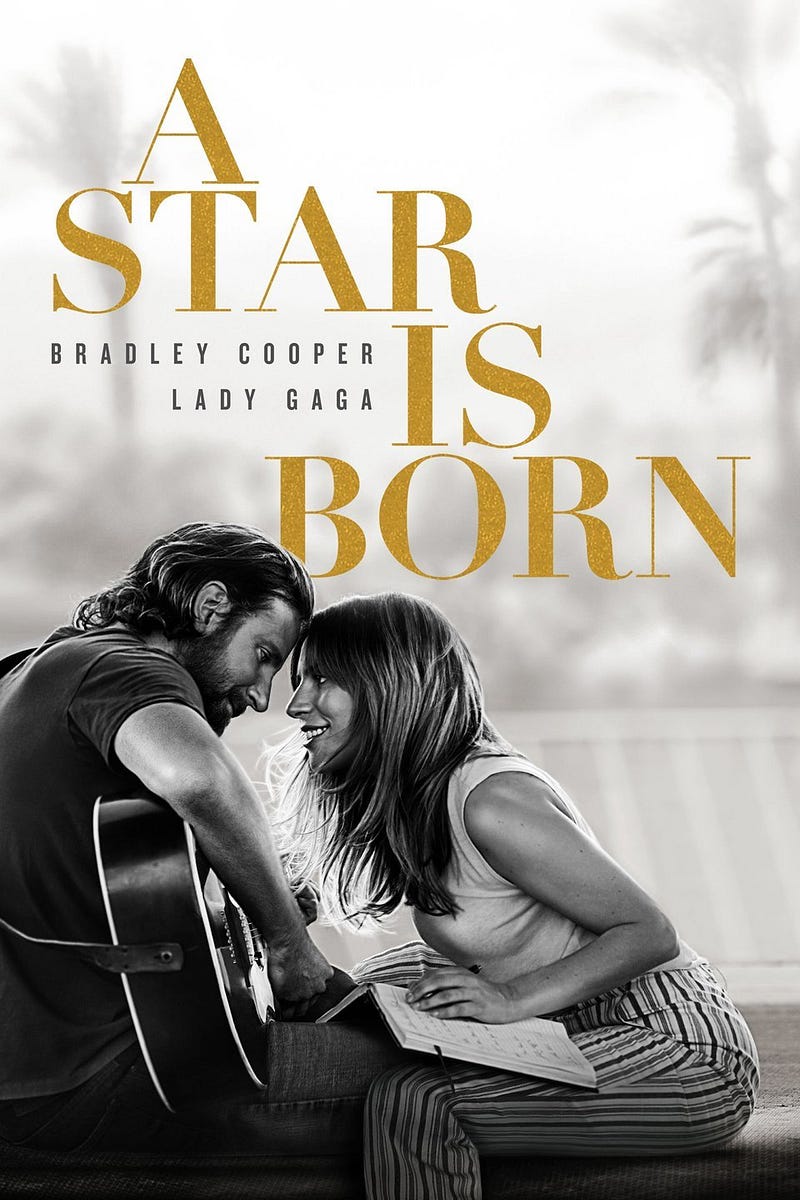
Contemporary examples of screen chemistry are harder to come by, but, I’m happy to say, still exist. An excellent example is the interplay between Bradley Cooper and Lady Gaga in 2018’s A Star Is Born.
There have been several versions of this Cinderella story with the not so happy ending, but, without a doubt, the on-screen sexual chemistry prize goes to Gaga and Cooper.
Their screen performance was followed up by an intense on-stage duet of the film’s Oscar-winning song “Shallow” at the 91st Academy Awards ceremony that set tongues a-wagging. “Did they or didn’t they?” They’re not talking, but it’s plain to see that, real-life lovers or just terrific actors, these two are a match made in cinematic heaven.
“Cooper and Lady Gaga are dynamite together; this is a story that lives and dies by the central relationship and the instant chemistry that must blossom between them, and these two have it in spades.” — Alonso Duralde of TheWrap
Other great films fall into this category. Maybe I’ll tell you about them someday, but these are certainly among my favorites. If you haven’t seen any or all of them, do yourself a favor and check them out.
Some of the stars of the films I’ve mentioned were in love, but there are other cases where the stars’ real-life passion for each other doesn’t register on camera. Then there are films whose co-stars who only felt scorn or indifference for each other, but still set the screen on fire. That’s one of the things about movie magic: real life is very much beside the point.
©2020, Denise Shelton. All rights reserved.
If you liked this, please visit my website. You can sign up for my monthly newsletter here. Thanks for reading!


