
The Calling
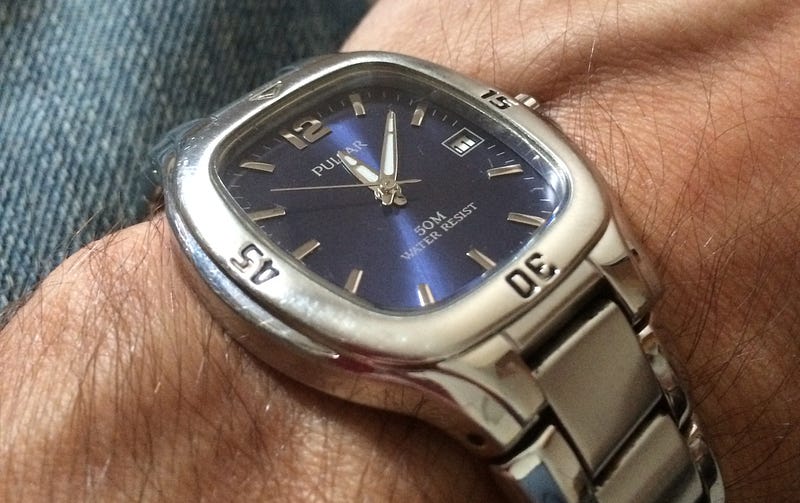
When he was a child, Spenser was fascinated by the idea of time travel. Not just Jetsons meet the Flintstones kind of stuff, but actual time travel. Could it really happen, and what might you do if it could? Would ask around about it, sheepishly or indirectly feel people out on the topic. He remembers his grandfather laughing in his face. “If it’s possible, then where the hell are all the people from the future?” Spenser had no answer for this, but he thought, why would they want to come here?
He read Jasper Tenpenny and the Time Machine War (London: Falconer Press, 1977) when he was 11. Got a reprint edition from the Young Adult section of the bookstore and couldn’t believe the cashier let him walk out with it. Heart pounding against his sternum like a fist as he laid his money on the counter. Hid it under his mattress and read it by headlamp late at night, covers pulled up around his head like a shroud, so no one would know. Over and over. Wore that book out. He had heard about the book’s scenes of brutal violence, which he found interesting, maybe even liked them in a way he didn’t understand, but it was Jasper leaving messages for himself to find as he jumped through time that sent Spenser’s brain into spirals of pleasure and awe. If cornered today, Spenser, after much blushing and averting of his gaze, could probably recite most of the opening page from memory:
You think these words are from the past. You are conditioned to believe that’s where stories come from. Someone sat down, tapped away at a keyboard or put pen to paper, cobbled together a story, and then transmitted that story into an unknown future. Maybe it traveled to the printer’s and then into bookstores. Maybe it circulated privately amongst friends and family members. Maybe it wasn’t written down at all, but was the kind of story that spread in whispers and shadows, like a virus. You believe that stories only work in one direction. Storyteller first, then the readers do their thing. Cause and effect. But what if I told you that stories don’t have to work that way? You see, these words come from the future. The story you are holding in your hands hasn’t been written yet.
Wore that book right out.
He read up on the temporal paradoxes that inevitably arise. Meeting your past self, parallel realities, killing your grandfather, stuff like that. If meeting another version of himself was impossible, he’d settle for a written note, like the ones Jasper Tenpenny left throughout the timestream. Spenser thought a lot about getting messages from the future. At night he lay in bed and tried to reach out to his yet-to-be, tried to contact him through sheer force of will and secret reserves of mental prowess. Can you hear me? he would mouth into the halfdark of his room, the silent words tumbling over murky sheaves of windowlight. A thin crack ran down one corner of the ceiling, black lightning streaking across a stucco starscape. In the first few months after Tristan drowned, what kept Spenser up at night wasn’t sadness or grief as much as disappointment that his future self had not intervened. Why didn’t you warn me? he would mouth. Where are you?
Tonight, the recent Hollywood adaptation of Jasper Tenpenny and the Time Machine War is on TV, and as Spenser is flipping past, he catches the snippet of a line: “…ere are you? When are you?” Just like that Spenser sees himself — his younger self— mouthing words at the ceiling, and he realizes that he can complete the circuit, collapse the potentialities, tie off the loop. He turns off the TV and goes to his desk, sits for a long time staring at a blank sheet of paper. He doesn’t think he has to actually send it or hide it anywhere — just writing something will be enough. As soon as he writes something down, he will, in essence, have answered the pleas he had made so many years ago. But what could he possibly write to his younger self to prepare him for what is to come, what is the one chronal transmission he should send to that boy waiting in the desperate quiet of his room to receive word from the future? Waiting forever, waiting still, waiting twenty seven years ago, waiting at that very moment.
Minutes pass. Eventually, Spenser writes this:
I’m here. Don’t give up.
Then he turns out the light and goes to bed.
He has some difficulty falling asleep. Around 1:00, 1:30, he gets up, has a drink of water from the kitchen sink and goes back to his desk.
He adds this:
I’m sorry.
←PREVIOUS EPISODE← →NEXT EPISODE→
_________