
Entrepreneurs Keeping an Eye on Climate Change
There are still plenty of opportunities to go green

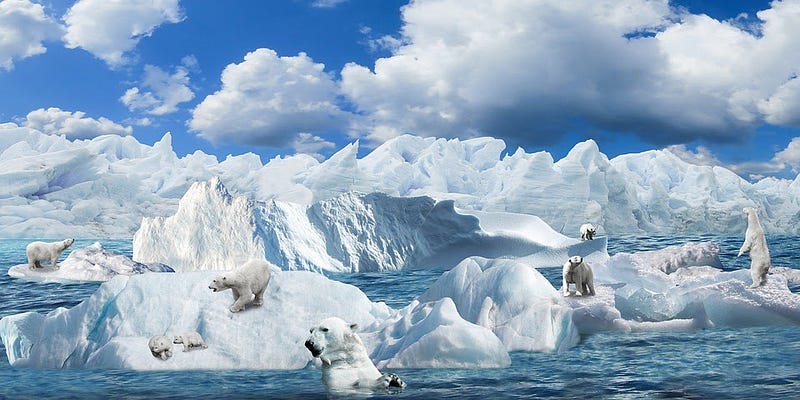
Are humans degrading the earth? If you watch television or scour the internet, you get a lot of information trying to convince you we are. There are charts, graphs, thermal tables, videos, photos, and even political movements to influence your thinking. We hear it so much. We believe it.
Problems on such a grand scale as the warming of the globe attract entrepreneurs, possibility thinkers, and even recording artists. Once creative thinkers and non-stop worriers get involved, things begin to happen.
Admittedly companies are getting more involved, and some have even made inroads. Tesla comes to mind. Amazon has a tv spot going stating a goal of zero carbon footprint in ten years. That is good.
Former Vice President Al Gore has reached the $300 million mark in net worth JUST BY TALKING about environmental issues. That is a pretty decent chunk of change. I would put $300 million in the generational wealth category. As we know, Gore was a career politician and would have never come close to amassing this impressive number as a public servant.
In marketing, there is an old saw that says the first to market during peak demand gains mind and market share that is never lost.
Want proof? Know the name MONSTER? They were once called MONSTERBOARD. It was one of the first big job search sites on the internet. Lots of others have come and gone, but MONSTER is still here. Somebody get me a KLEENEX.
I wonder how much of the $300M Al uses to go out and fight climate issues. I know the earth has been around a while, but exactly how long is up for argument. Do you think over the zillion years we have had earth, that the climate has changed little by little overtime?
Can you agree that it will continue to change over the next million years? C’mon, you gotta give me that one. It has and will continue to change.
So what is all the hub-bub?
Say the average guy lives 83 years. Drop in the bucket compared to one million years and nothing compared to 30 million or 75 million. Eighty-three years is too short of a time snapshot to determine if things are changing. You are telling me the world will end ten years from now if WE DO NOT DO SOMETHING now?
What do you mean, do something?
Eliminate all gas engine vehicles in ten years, or the world ends?
From the year I was born to the moment I graduated, well, ok, I eked out of high school, the world population doubled. There are now some 7 billion humans on earth today. You do not have to agree with me. I am not trying to make you upset, but eliminate gas-powered engines in ten years? Seriously?
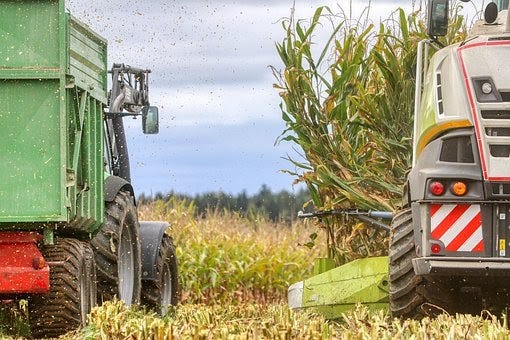
Let me share this with you. Over the summer, I drove from east to west for seven days. That was North Carolina to Oregon. A total of 2600 miles give or take. From the interstate, I saw corn growing in every direction. I didn’t just see corn. I saw what I characterize as hundreds of miles of corn.
Over days hundreds became thousands of miles of corn. Oh, and when it was not corn, it was the unmistakable lush green carpet of soybeans. We are talking a rich deep green as far as you could see. Think of it in terms of square miles, and the number of acres staggers the mind.
Have an idea of how much effort it takes farmers to prep the land, plant, water, and fertilize these crops? They grow for months and MUST be harvested according to schedule and sent to market.
If we eliminate gas, diesel, and LP powered machinery, how are we going to plant these crops? Let alone harvest them under time pressure?
According to research done at Colorado State University, a diesel tractor uses 7–8 gal/hr. A gas-powered tractor uses between 11 and 13 gallons an hour.
Yes, that is a lot of fuel. Ask yourself how many solar-powered combine harvesters it is going to take to get the job done. What are we going to do with the millions of dollars worth of equipment now being used? Don’t even think about how much financing these behemoths cost every year. It is an economy to itself.
Ok, enough about what I think.
Let’s look for entrepreneurial solutions to global warming.
Three things must happen for the capable climate change entrepreneur to make a mark.
First, the solution must be sustainable. We have far too many combines out there now to be retired then have a solution prove to be temporary or ineffective. The men and women who run farms are smart. They won’t go for that.
Problem two. Who is going to invest in a new solution? How much is it worth to an investor? How long will they wait for a return on their investment? The truth is, there is a ton of capital looking for something to do. Setting up a venture could not be easier. Even so, investing in a risky scheme is always a consideration.
Third, history will always remember Elon Musk and Frederick W. Smith. Smith, as you recall, needed to raise $100 million for the first day of business to make sure FedEx got off the ground.
How will we think of Larry the solar-powered combine maverick if he hits it out of the park? What if he doesn’t?
Entrepreneurs could find something to sink their teeth into by focusing on these five key areas.
Reuse, repurpose, recycle
The EPA put the number at 75 percent. That is the amount of what goes to the landfill in the United States that COULD be recycled. Yet only about 30 percent or so is recycled. Other countries aren’t even close to 30 percent. The solution here is to design recycling into the life cycle of the product. Coupled with educating the user, and you are on to something.
How about returning a tv or cell phone to the maker in 36 months for credit on something new. Hand down the returned unit and find a new life for it. We already do this with leased cars and other items. Find the unmet need and go for it.
Turn in unwanted items to be recycled for parts. There are scrap gold, silver, and other valuable materials in electronic items. Again, we are already doing this to a degree, so there is room to improve or innovate.
Reduce waste during manufacturing
Find new ways to reduce waste from the products we manufacture. Are we wasting energy, materials, or water resources? Is it possible to reduce or eliminate re-working? Once we push a product out, are we managing inventory efficiently?
Can we improve packaging? Can we use fewer hazardous materials? We made the water bottle cap smaller to use less plastic and petroleum resources. It was a tremendous saving in plastics. We run cars on waste vegetable oil, hydrogen for buses, and electricity for hybrid cars. The question is, can we do better?
Find substitute materials
Wind, solar, and hydro are supporting more traditional energy forms. What composite materials can reduce the weight we are used to in aluminum or steel components?
Share assets to improve utilization
Big rigs sit idle more than 12 hours a day. Some family cars move once or twice a week. Using manufactured assets more efficiently is a must. Offices are used 9 to 5 and maybe never on weekends. That is a lot of downtimes. Conference rooms, warehouses, and malls have open spaces. My bank allows customers to use their conference rooms free of change
Solutions like this are carefully planned and should be built into future designs. We see progress with Uber and Lyft, Airbnb, and some others. There is still a lot of room for creative improvement.
Get the idea man and pitchman busy on some new concepts.
Drivers are working on Uber AND Lyft at the same time. That should inspire. Nice!
Go Digital
Sorry to Fuji Film and Kodak, but there is a huge reduction in physical-waste by moving traditional film to digits. Look at the value added to the photographer who can take as many as she wants.
Progress? Wireless home security is a win, so is online everything instead of paper forms and snail-mail. Technicians took a day and a half to install a security system in my house. Now, you pop it out of the box and stick it where you want. It even moves if you do.
Years ago, my clients were too shy to get on a Skype call with me. We even have a newly launched camera-ready men’s clothing line designed to make the WAH exec look like a million bucks.
Savvy climate-focused entrepreneurs are a precious resource not to be wasted or misused. The holy grail, the unmet need, is out there waiting to be discovered and turned into a business.
*** *** ***
Portland-based writer/journalist. Covering luxury goods, exotic cars, CJ-CX, horology, lifestyle, & workplace issues. Comments welcome! [email protected]. Follow on Twitter — @dpatlarge
*** *** ***
Copyright © 2020 AstonBell Media
*** *** ***