
Enrich Your Life by Volunteering
How volunteering can boost your mental health and physical health
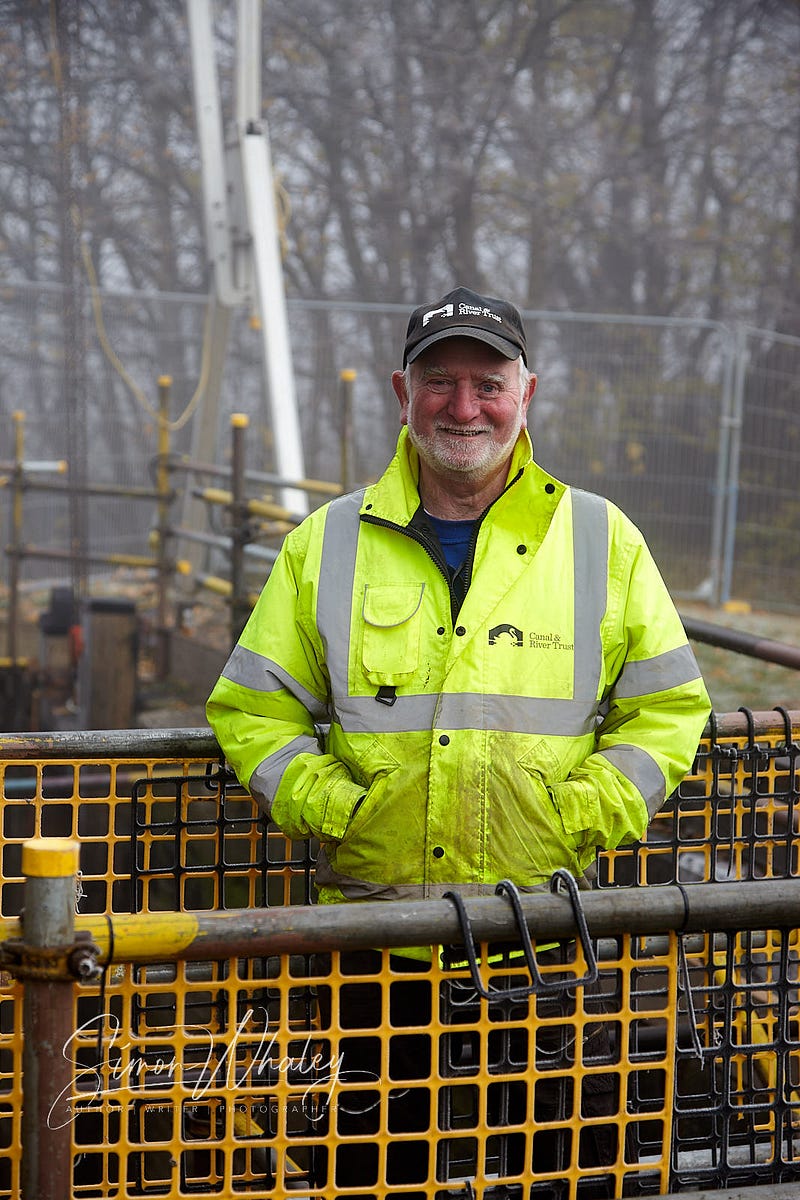
When 70-year-old John Sidley heard the Canal & River Trust (CRT) was looking for volunteers, he realized it was just what he was looking for. “I sat at home one morning and heard it on the local radio, and I thought I fancy that! I started off just meeting and greeting people, and then I trained up as a lock keeper. Now I come out and help with things like this.”
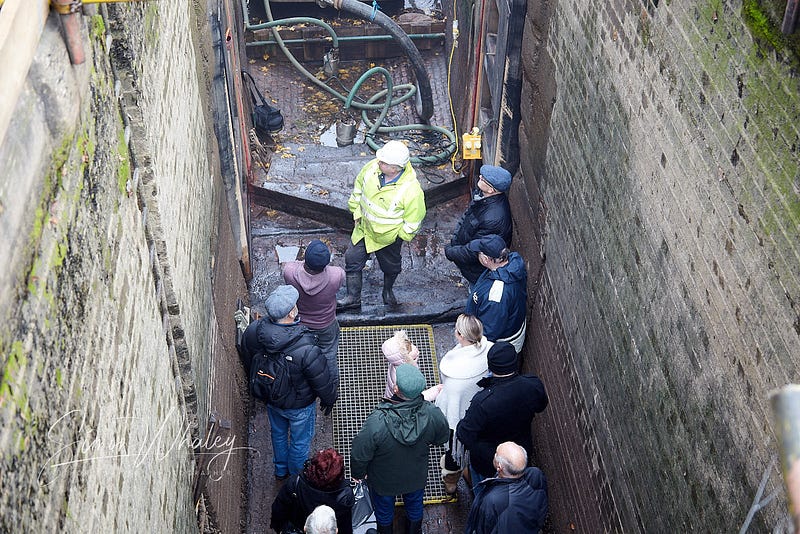
We’re standing beside Lock 72 on the Trent and Mersey Canal in Middlewich, Cheshire, UK, on one of the Trust’s Open Days. Below us, a couple of the Trust’s engineers show members of the public around the drained lock. They’ve been repairing the lock gates, as part of their annual winter maintenance program, and are using the opportunity to show the public what’s involved when you refurbish two 1591kg wooden doors that hold back over 40,000 gallons of water.
Without volunteers like John, the Canal and River Trust wouldn’t be able to operate in the way that it does. “Our volunteers have dramatically changed the charity in terms of delivery and the way we work,” says Ed Moss, the Trust’s National Volunteering Manager. “They help us to work with and see local communities differently. They share ideas, they help us share information, and they help us place canals and rivers at the very heart of many urban and rural communities. In return, many of our volunteers appreciate they get the opportunity to be outdoors and keep active.”
The outdoor activity was one of John’s main motivations for volunteering. In addition to these public events, he helps out, on average, two days a week. “I go out with the chap who looks after all the reservoirs in the Manchester and Pennine area. I usually leave home about half-past six and get back about half-past three. It’s good. You’re walking the moors, checking the reservoirs. My blood pressure has gone right down since I’ve been doing it,” he grins.
Although John gets out and about on the waterway network, he does have a regular volunteering spot, as a lock keeper on the Trent and Mersey Canal. “I’m based at Red Bull, near Kidsgrove, and I usually work on Lock 43. But I also move up and down, because there are about six locks on the stretch there.”
It’s meeting new people that gives John the most joy from his lock-keeping volunteering activities. “You meet some lovely people — especially in summer, because they come from all over the world. Last year I met people from South Africa, Australia, New Zealand, Canada. They love the canal’s history, and that the technology is 200 years old, yet it still works well today. The Americans are fascinated because they’ve got nothing like this.”
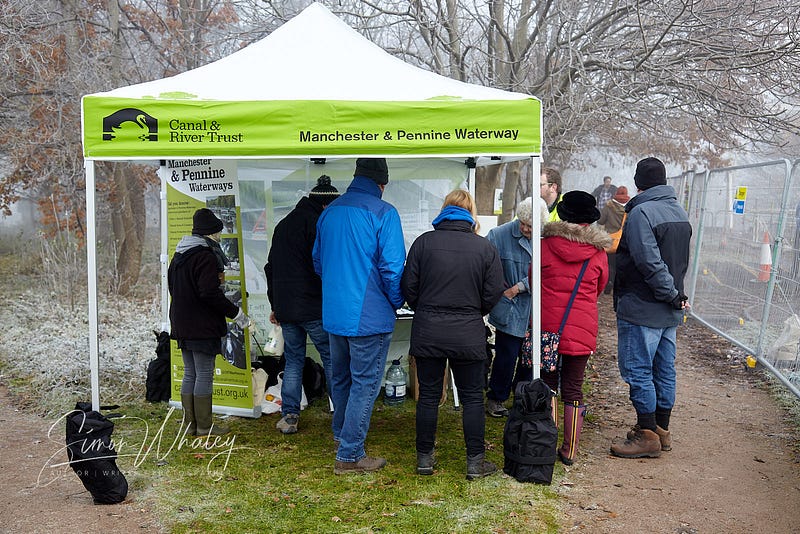
There are a variety of volunteering opportunities with the Trust, in addition to the lock-keeping role that John does. The Towpath Taskforce deal with general maintenance such as weeding, painting, and planting. There are Waterway Adoption Groups, people who get together and adopt a stretch of local canal that they look after, and there are also Explorer Education Volunteers, who enjoy sharing their knowledge about the canals’ history and wildlife with school children.
Volunteering is one of those areas where every little helps. Giving a couple of hours a month might not sound a lot, but last year, the Trust’s 2,500 individual volunteers contributed a total of 482,000 hours of their time. That’s worth an equivalent of £7.6 million, vital for a charitable organization like this. “However, it’s not just the hours of work our volunteers generously donate,” says Ed Moss, “it’s also about sharing their positivity, their humor, and their sense of achievement and joy when they try something new, or when they’ve finished a job.”
John smiles. Helping out holidaymakers regularly allows him to make some interesting observations. “What you find is,” he says, “more often than not, it’s the man who’s doing the driving, the steering, and the woman’s working on the locks. I say, ‘Why don’t you steer?’ but a lot of them don’t like being in the lock and enclosed in a tight space when the boat drops to the lower level. When you look at the depth, it’s quite intimidating.”
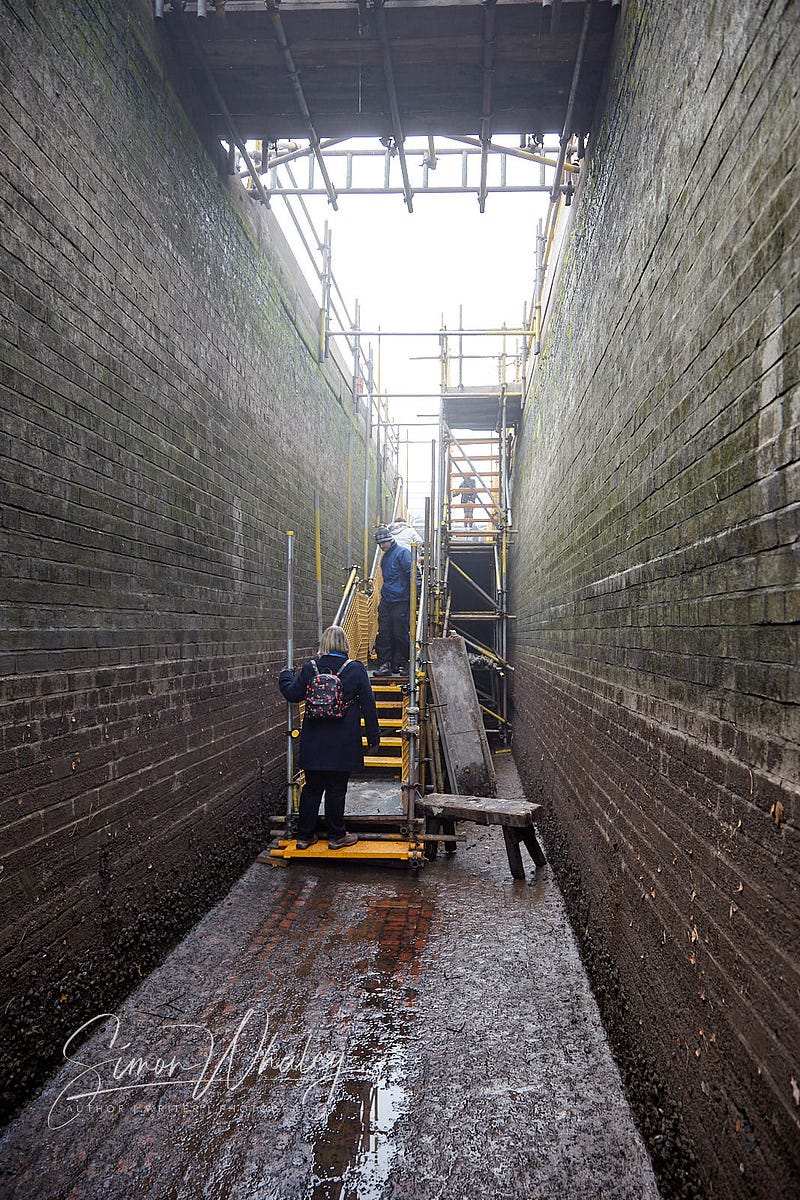
Peering down into Lock 72, where an engineer is explaining why they use red paint when fitting new lock gates, I can appreciate that intimidation. It looks even more daunting down there without any water in it.
Naturally, there’s an induction program for new volunteers, and all the basic safety regulations are explained, including what to do should you accidentally fall in. “When we have our induction,” explains John, “they tell us that if someone falls in, don’t go in after them, just tell them to stand up. Most people panic when they fall in, but more often than not they can just stand up, touch the bottom and walk to the side and climb out.“
John giggles and recounts a tale of when he fell into a canal once, but it was when he was on holiday and it probably had something to do with the liquid lunch in which he’d just partaken.
He first appreciated the joy of canal holidays over 40 years ago. “The very first holiday we had on the canal was about 1976. We tried to get to Stratford, but we didn’t make it. But at one time, we were going through Spaghetti Junction. We were chugging along at a mile an hour and an express train came through at around 80 to 100 miles an hour. And then the M6 had just been built and I looked around and I thought, ‘I know where I’d rather be’.”
It seems canals flow through John’s veins, so perhaps it was inevitable that he’d end up volunteering for the Canal and River Trust. As John says, “It gets me out of the house and it enriches my life.”