
Please shut up about San Francisco
Because there’s a big wide world out there, Medium
Is anyone else bored of reading about San Francisco? The city, whose inhabitants constitute 0.012% of the globe’s population (I worked that out) seems to have been hogging around 96% of the Medium universe since the turn of the year:
“Look at what this man/woman has to say about San Francisco…” says one.
“That’s an outrage!” screeches another.
“I agree!” shout many.
“We don’t!” yell some more.
“Let us subject them to trial-by-internet!” clamors the internet.
And so on ad nauseam…
“Medium is built for everyone,” chirped Ev Williams when he founded the platform back in 2012. Little did we know that ‘everyone’ would come to denote a dense agglomeration of zip-codes on America’s west coast.
But if you, like me, want some light relief from all the navel-gazing — all the interminable debates about over-opinionated entrepreneurs, over-priced housing and over-entitled millennials — I’ve got something else to offer. For what better way to escape the familiar than to visit a spectacular place you’ve probably never heard of — a volcano that harbors a lake of fire, in one of the most turbulent corners of central Africa…
Out of the frying-pan and up to the fire
also by Henry Wismayer
Surprisingly, my cell-phone had signal. For one giddy instant, I considered calling home: “Hi Mum, you’ll never guess where I am…”, then thought better of it.
For if there was one thing sure to put mother’s nose out of joint, one thing guaranteed to catapult her into a torment of parental panic, it would be the revelation that her son was currently standing on top of a hyper-active volcano in the Democratic Republic of Congo.
Plundered by its Belgian colonial masters, bedeviled by fifty years of kleptocratic misrule, theatre of the most deadly conflict since the Second World War — DRC has languished pretty low on mummy’s vicarious holiday wish-list for the last hundred years. Only a couple of days before, I hadn’t been sure whether to go at all.

“But the Hutu militia are 200 kilometers north,” Kennedy had insisted with a broad salesman’s grin. “They won’t come near the border, because that would give Rwanda the excuse to cross into DRC to crush them.”
This, I imagine, was how most people had been arriving at their decision to defy the travel advisories. You’re sitting in Gisenyi, perhaps a little underwhelmed by the sanitized Rwandan resort town on the shores of Lake Kivu. You know that Goma, the gateway to DRC, is a mile down the road. Then one of Gisenyi’s émigré travel agents — a little grasping, but full of Congolese charm — gets wind of your interest, and tries to offer some reassurance.
“The route is safe,” Kennedy lent forward insistently, and I sorely wanted to believe him, for there was one glowing reason to cross the border. Yesterday evening, as yet another power-cut snuffed out the lights of Goma, I had seen that reason casting an orange incandescence in the northern sky.
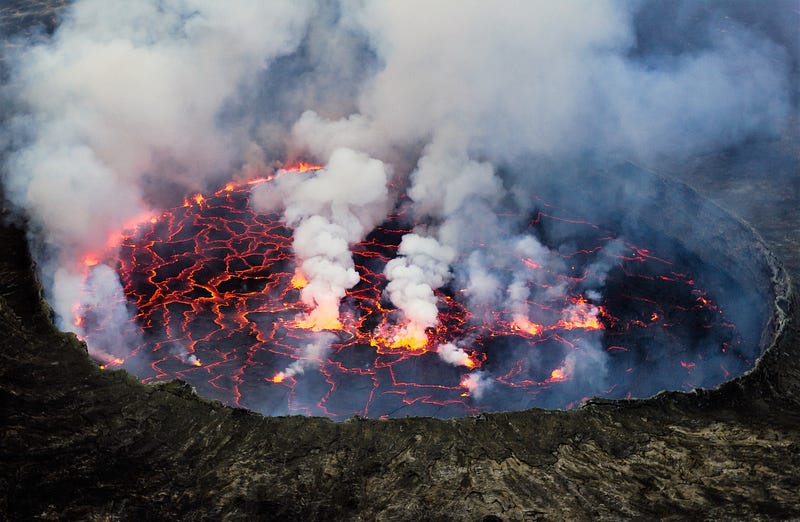
At 11,382 feet, Mount Nyiragongo — the mountain Kennedy was cajoling me to climb — isn’t the largest of the volcanoes that stud the borders between DRC, Rwanda and Uganda. But deep within its crater there broods a special treasure: a giant lava lake 800 feet broad, one of the most spectacular natural marvels in all Africa.
I had arrived in the region during a fortunate window. Since mid-1994, when the Hutu-Tutsi divisions that precipitated the Rwandan genocide spilled over into the Congolese interior, the province of Nord-Kivu has been at the epicenter of Central Africa’s Great War, the desultory and shamefully under-reported conflict that has claimed an estimated five million lives and displaced millions more. But I’d reached Gisenyi during a lull in the fighting; curious tourists were now crossing the border daily.
The peace was to be short-lived. Within months of my climb, the paraffin soaked touch-paper would ignite again, as a ragtag of militiamen calling themselves M23 launched an offensive against the combined forces of DRC’s national army and MONUSCO, the UN’s 17,000-strong peacekeeping mission.
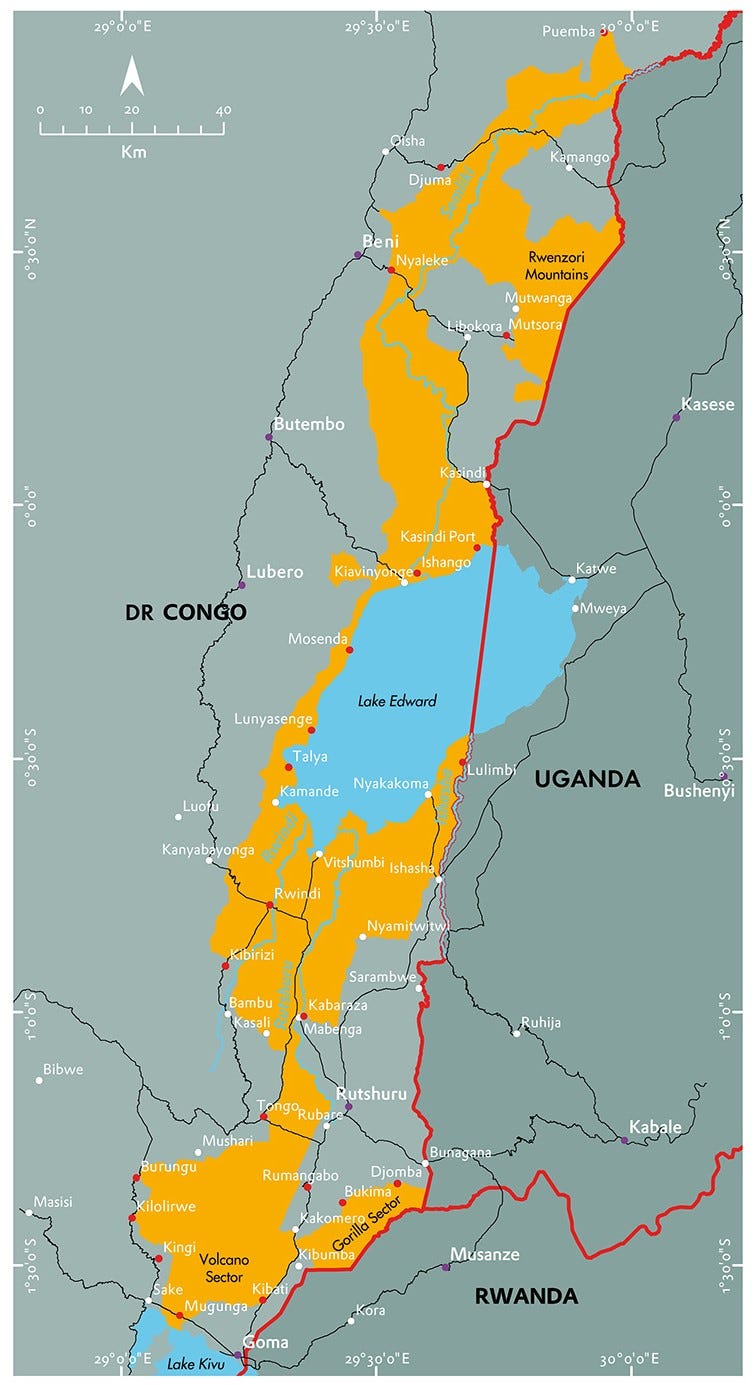
As Nord-Kivu’s latest chapter of misery unfolded and fighting raged anew, the Virunga National Park, the 3,000 square-mile tract of verdant highlands, equatorial forest and Rift Valley lakes in which Nyiragongo resides, was closed indefinitely. However, in March 2014, following a truce between insurgents and security forces, the park — Africa’s oldest protected area, twice the size of the Serengeti — finally reopened to visitors.
This rare piece of good news came at what appeared to be a critical juncture in the battle to save the region from threats both at home and abroad. In April 2014, a feature-length documentary about the park, entitled ‘Virunga’, premiered at the Tribeca film festival in New York. Widespread critical acclaim and an Oscar nomination followed, and the accompanying campaign to halt the activities of the British oil company SOCO, whose alleged explorations around Lake Edward are exposed in the film, resulted in the firm pulling out of the park following a public outcry. As celebrities and conservationists piled in to highlight the park’s vulnerability and unique importance, this vital cradle of biodiversity, home to a quarter of the world’s mountain gorillas, finally started to receive the attention it deserves.
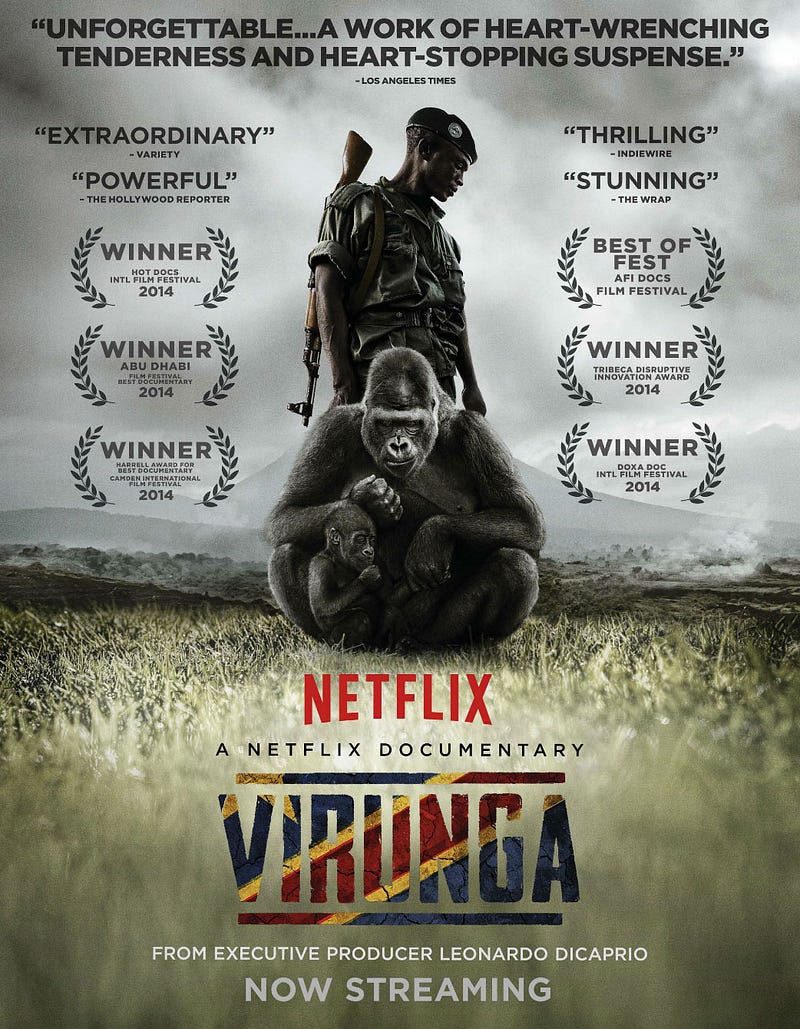
For those championing the park’s conservation, it is tourism, not oil, which holds the key to the region’s future stability. As ranger Andre Bauma, whose refusal to abandon the orphan gorillas in his care in the face of approaching gunfire provides one of Virunga’s most poignant moments, puts it: “The population is really optimistic that one day, the park will make things better”.
And so, with the park unlocking its embattled gates to visitors, the mists have once again begun to lift on Nyiragongo and its extraordinary lava lake. After a two-year hiatus, park officials opened the trail to the volcano’s summit in late 2014.
That footpath, Kennedy explained, started 12 miles north of Goma along a heavily UN-fortified road. I would be in, up, down, and out within 36 hours — hardly penetrating the Heart of Darkness, just taking a quick foray along a peripheral capillary. My mind was made up.
At 11am the next day, I stood at the Kibati Ranger-Post accompanied by four more victims of Kennedy’s reassuring smile: two fearless young women from London and a pair of perspiring Finnnish physicists, who looked like they were anticipating a rabid, tourist-slaying horde to jump out of the bushes at any moment.
Looking north from here, the flank of the volcano we would soon be ascending could be seen tumbling out of the cloud. The morning haze concealed the wider picture, but Nyiragongo doesn’t stand alone. It’s one of eight volcanoes that together form the Virungas, Central Africa’s most fabled landscape. In 1925, the volcanic chain formed the spine of the continent’s first national park, an enormous, undulating tract of equatorial forest stretching from the Lake Kivu basin in the south to the snowfields of the high Ruwenzori Mountains in the north.
When Belgium’s rapacious colonial rule ended, the original area was divvied up along the tri-partite borders of the newly independent states of DRC, Rwanda and Uganda. The DRC portion, still a huge 7,900 square kilometres, became the Parc National des Virunga, but the sign at the Kibati still bears the original name, “PARC NATIONAL ALBERT”, on a metal disc peppered with bullet holes, collateral damage in a military engagement or perhaps strafed by a drunk with an AK47. Disconcerting, either way.
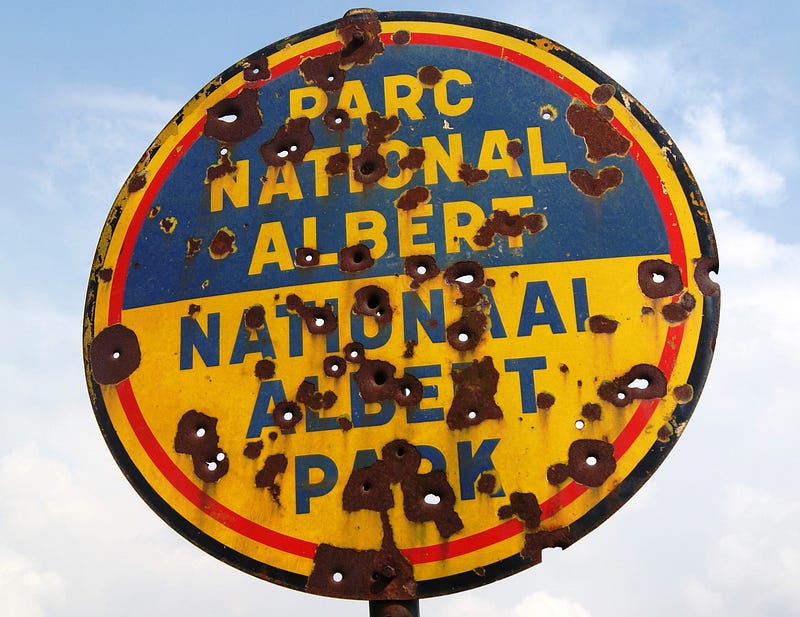
After some formalities and a security briefing from a soldier, most memorable for the jovial injunction, “Don’t fall in the crater!”, we were introduced to Mwendo, a park-ranger in threadbare camo-green fatigues, an antique Kalashnikov he would later introduce as ‘Anastasie’ slung over his shoulder. Mwendo’s job was to take tourists to the summit and back again, and to provide the post-chief down here with hourly updates of our progress and welfare. With an economy of words that would become characteristic over the coming hours, he led the way into the trees.
Our five-hour climb began in much the same landscape that had filled the taxi window as we’d driven out of Goma: a mess of makeshift homesteads and slash-and-burn agriculture. Volcanoes aren’t the only destructive force to have shaped these lowlands. Over the course of two days in mid-July 1994, Goma played host to an exodus of biblical proportions, as Rwanda’s routed Hutus poured across the border from Gisenyi at a rate of 10,000 an hour. Suddenly home to 1.5 million refugees, the Virungas National Park was plundered, with poaching and deforestation on an enormous scale — it has been on UNESCO’s List of World Heritage Sites in Danger ever since.
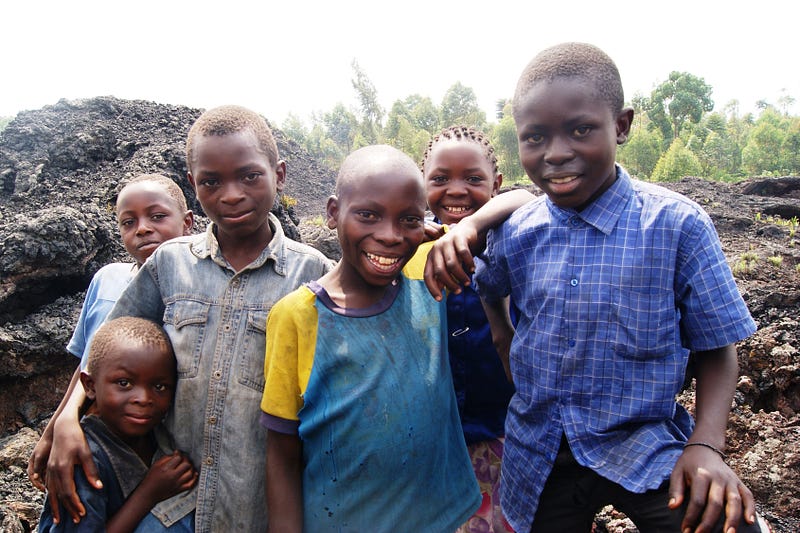
Even now, in times of relative quiet, the park’s more northerly reaches suffer frequent incursions from poachers and the various motley rebel armies that evolved out of Rwanda’s ‘genocidaires’. For rangers like Mwendo the fight has been long and perilous. Outnumbered and often outgunned, the past decade has seen more than 140 of his colleagues killed in the line of duty.
It was half an hour before the open wounds of the refugee crisis receded behind the foliage of more virgin jungle, and not long thereafter we caught a first glimpse of our destination: a great featureless dome, bloated and swollen by forces underground.
It was a fearsome sight, if not quite the picture-postcard cliché I was expecting. Compared to Rwanda’s Mount Karisimbi, whose perfect cone can be seen rearing up across a swathe of green veld, our summit wasn’t much of a looker. In local mythology, inactive Karisimbi’s summit represents heaven; Nyiragongo is hell.
The metaphor seemed almost salient, for Rwanda’s wedge of the Virungas now stands as the shining example of what its Congolese neighbour aspires to be. Eighteen years on from the genocide, the Parc National des Volcans, with its iconic landscape and mountain gorillas, has become the cornerstone of a tourism industry that contributes US$220million per year to the Rwandan economy — six per cent of the country’s GDP.
The Virunga National Park is no less full of promise. There would be no impromptu encounters with mountain gorillas today — the animals are absent this far south– but the region is home to a quarter of the global population, alongside a supporting cast of lowland gorillas, chimpanzees, okapi, forest elephants and buffalo. The varied topography we experienced over the course of the afternoon — where the rapid gain in altitude is accompanied by constant shifts in terrain, from claustrophobic cloud forest to tracts of open moorland — provided just a hint of the diverse spectrum of environments that lie further afield.
Amidst it all, it’s this unprepossessing volcano that’s being heralded as the park’s headline act. “The gorillas are a major attraction,” explains former tourism director, Cai Tjeenk Willink, “but they can be visited in Rwanda or Uganda as well. The volcano, on the other hand, is unique to DRC. There are only five active lava lakes on Earth, and none is more accessible than Nyiragongo.”
But for Nyiragongo, I knew, as we continued out long trudge uphill over open lava fields, the line between being an asset and an enemy is thin.
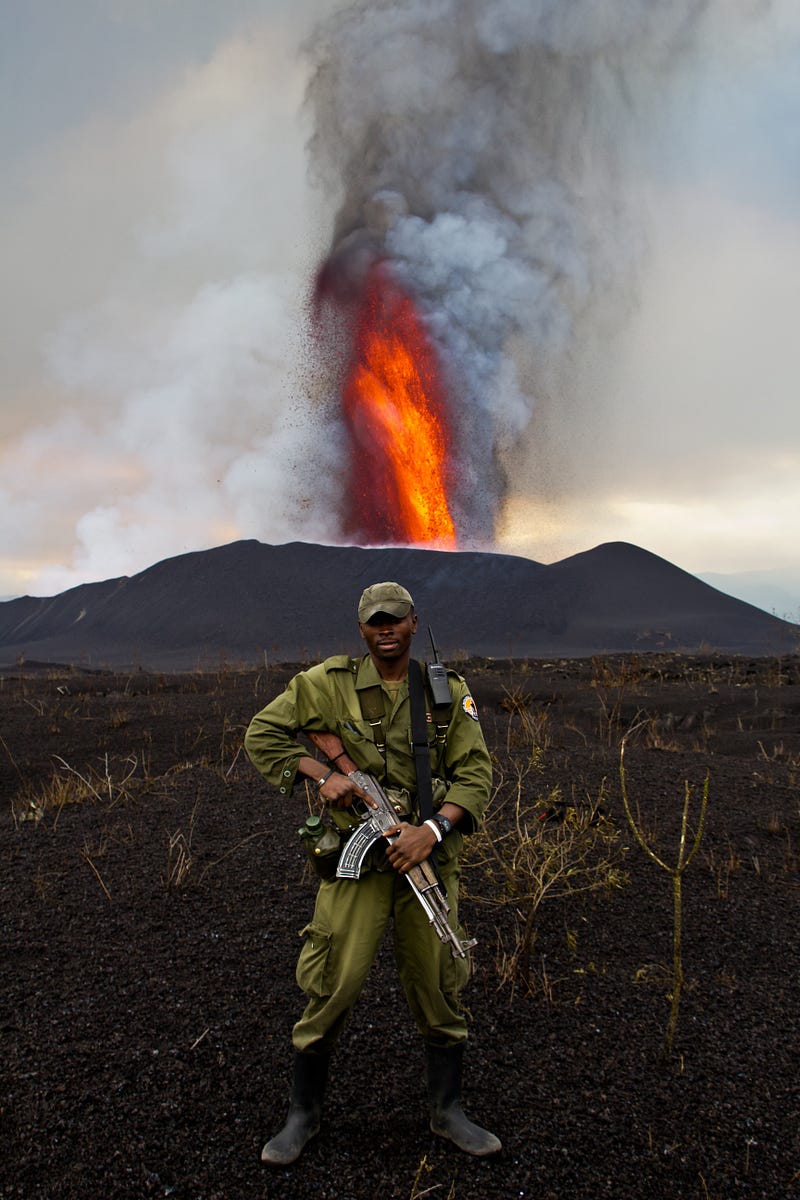
For the duration of our climb, barely a minute passed without some reminder of the fearsome power that simmered beneath our feet. The tsunamis of craggy rock that loomed behind the makeshift homesteads along the Goma road, the chink of ankle-twisting rocks under our boots, the charred stumps of incinerated trees: all were remnants of the events of 2002, the last time Nyiragongo awoke from its slumber.
In January that year, an eruption ruptured the volcano’s flank, issuing a river of the deadly lava that, owing to its low silica-content, is among the most fluid in the world. The torrent hit speeds of 100km/h as it cascaded downhill to Goma, engulfing 14,000 homes and forcing 350,000 people to flee the city — piling a thousand degrees centigrade of devastation onto desperation. The previous eruption, in 1977, was more catastrophic still, leaving more than 1,000 dead. But some fear that both could be little more than hiccups compared to the apocalyptic fury Nyiragongo may be capable of unleashing.
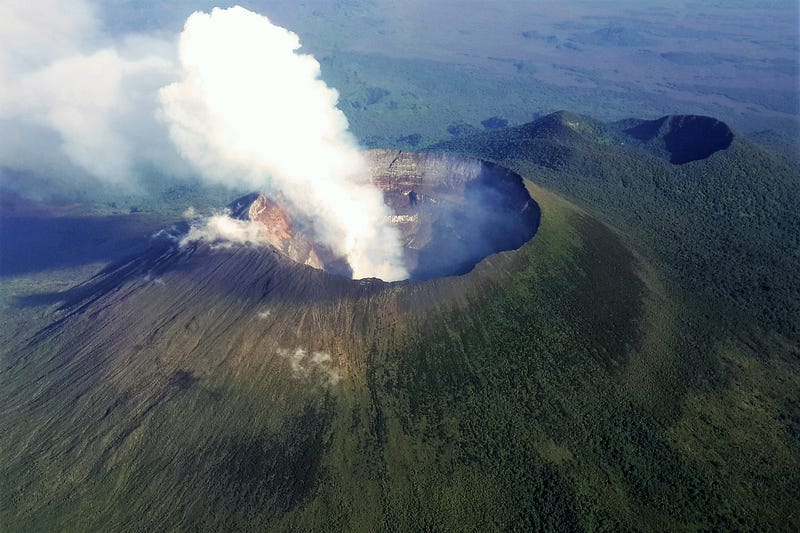
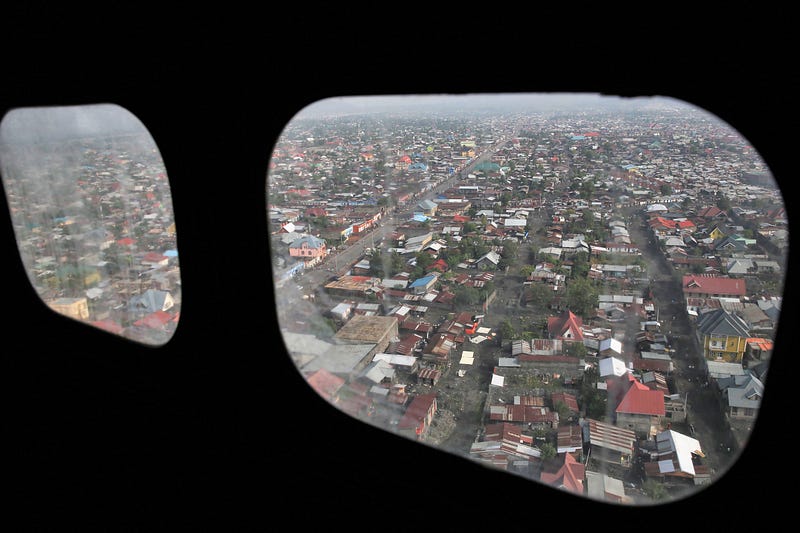
For the scientists trying to predict when the next eruption might occur, the ready access to the mountain permitted by improved security has brought its own benefit: an unprecedented opportunity to study Nyiragongo first-hand. Italian volcanologist Dario Tedesco has spent 15 years struggling to increase the capacity of the Goma Observatory to interpret Nyiragongo’s capricious behaviour. As the manager of a UN project that aims to strengthen Nord-Kivu’s contingency planning for future natural disasters, he has consistently gone on record to describe Goma — now home to more than one million people — as “the most dangerous city in the world.”
“Nyiragongo is special from a scientific point of view, but its proximity to a large civilian population is what makes our work important,” he says. “The next time the rift moves and the most fluid lavas on the planet start flowing, there is a real danger that Goma could be transformed into a new Pompeii.”
In July 2010, Tedesco led an international expedition to find out more about what makes this monstrous time-bomb tick. From their makeshift field laboratory, camped on a shelf deep within the crater, the team spent three weeks ankle-deep in volcanic ash, measuring gases and analysing rock samples in what amounted to the most comprehensive survey of the volcano ever undertaken. Tedesco’s US counterpart, Ken Sims, donned a silver thermal suit and ventured down to the lake itself to pluck a sample right from the monster’s turbulent shore.
They came back with an unprecedented reservoir of data, but it was just the beginning. Only with the added perspective of regular studies, Tedesco says, will there be any hope of forecasting the next eruption. ‘For now,’ he cautions, ‘Nyiragongo remains a mystery.’
Back on the trail we stopped to rest our aching legs as ‘le troisieme repose’, a clearing at around 9,000 feet, where Mwendo pointed out fists of scoria rock lodged high in the branches of charcoaled trees, spat out when that 2002 eruption broke.
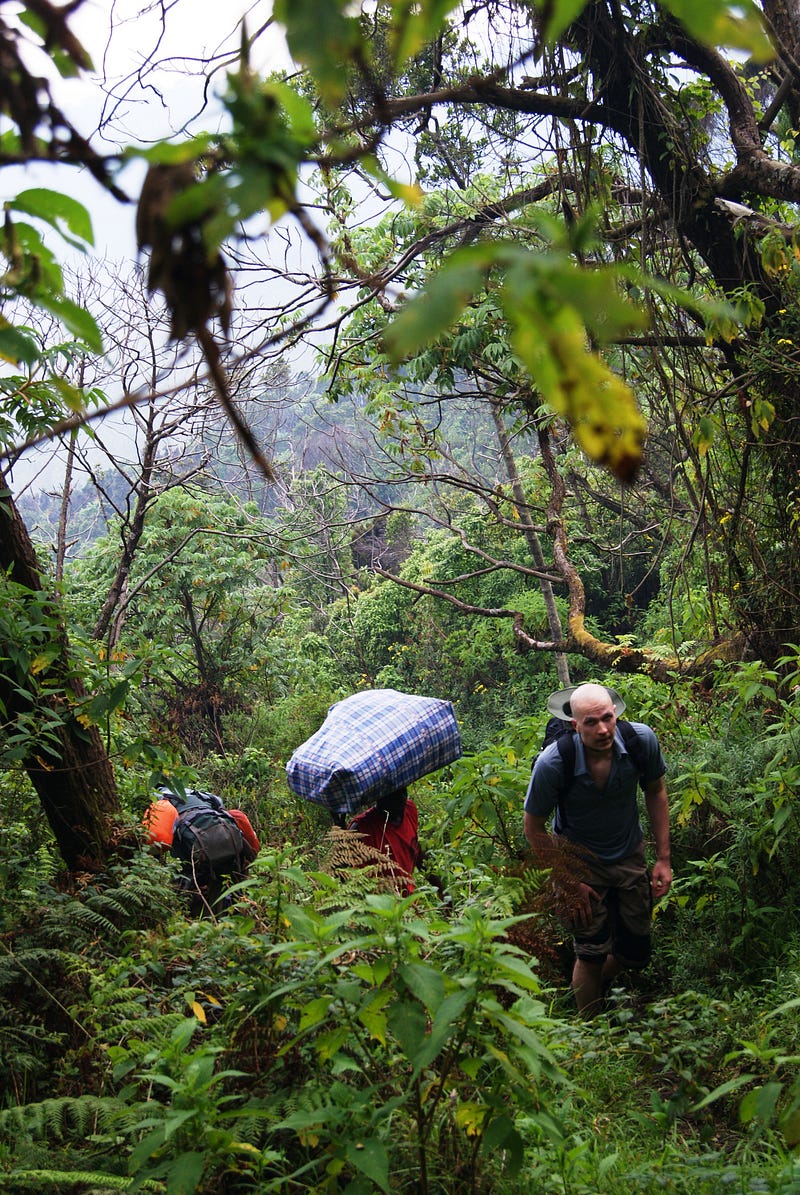
More ominous still were the plumes of gas that could be seen billowing up from moss-rimmed fissures, mere metres from where we sat, part of the volcano’s unmapped plumbing system, which spread beneath our feet like the roots of a tree.
“Most people think the lava came out the top,” remarked porter Yassin, relishing the opportunity to drop the burlap wash-bag full of tents and sleeping bags he had been balancing on his head for several uphill hours. “Actually, it came out from here. From here on up we are safe!”
Minimally reassured, we ploughed on through the final band of jungle, until the trees gave way to a bleaker environment of giant lobelia and musenze bushes. With a thick mist reducing visibility to a few yards, and our trekking group strung out in various stages of exhaustion by the steepening slope, it almost came as a surprise when the trail finally petered out, and a multilingual sign bid us bienvenue, karibuni and welcome to the summit of Nyiragongo.
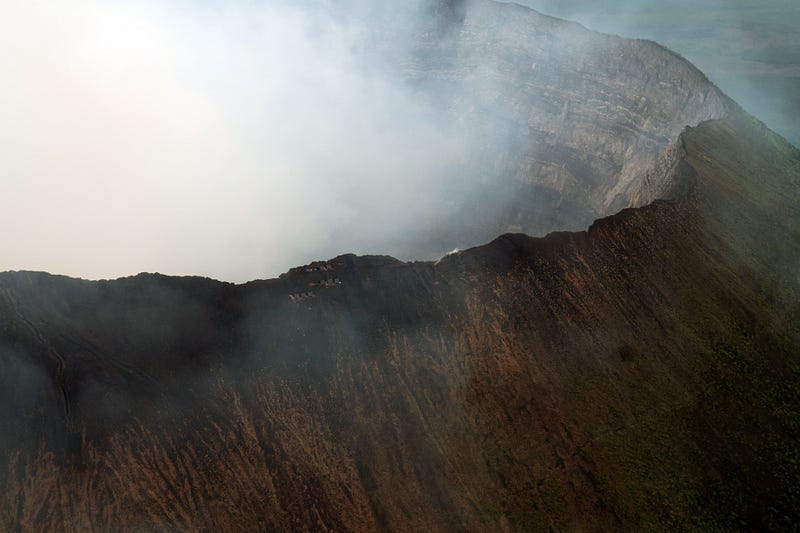
It could hardly have been described as a welcoming place. Up here the mountain was desolate — a cold and lifeless jumble of carnelian-coloured lava terminating at the serrated lip of the crater-rim. At first, all we got was a hint of what lay within. Standing at the brink of a great void inundated with swirling cloud, we only had the heat on our faces and the sulphurous smell to go by. That together with the sound — a churning, roiling monotone — of something very restless down below.
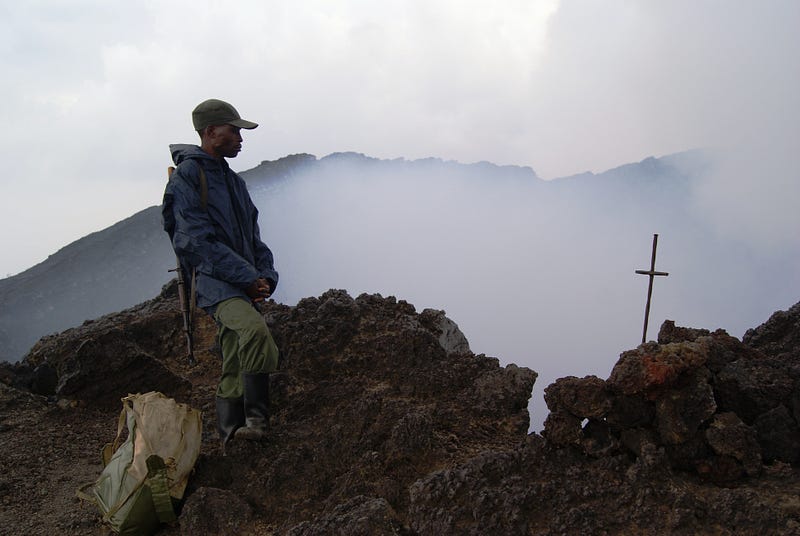
Only at the onset of dusk — with our three dome tents all perched on an exposed rock-shelf and a charcoal fire burning to counter the plummeting temperature — was Nyiragongo’s secret finally revealed. On Mwendo’s beckoning we gathered along the razor-back, around a foot-high crucifix crudely welded from iron bars, raised in memory of ‘Le Chinoise’, a Chinese man who fell — some say threw himself — into the crater in 2007, and didn’t come out alive. The view beyond his humble memorial showed that he didn’t have a prayer either way.
Beyond the rim, the ground dropped away sheer into a giant soup-bowl 500 meters deep. At its base, a flat miasma of glossy black lava rose into the lip of a spatter cone, like the raised edge of a boil. Within that boil sizzled the eight million cubic metres of molten rock we’d trekked all day to see.
The picture sharpened as the light dwindled. By nightfall we were looking at the lava lake in full cry: a giant disc of molten rock 800 feet broad, surfaced with a mosaic of crusty plates that you could watch harden and tremble under the mighty pressure before imploding back into the roiling cauldron. The whole scene seemed to breathe, each exhalation spitting out coronas of liquid fire that faded from orange to black as they cooled. It was a window into the forces that shaped the world — our inanimate planet at its most alive.
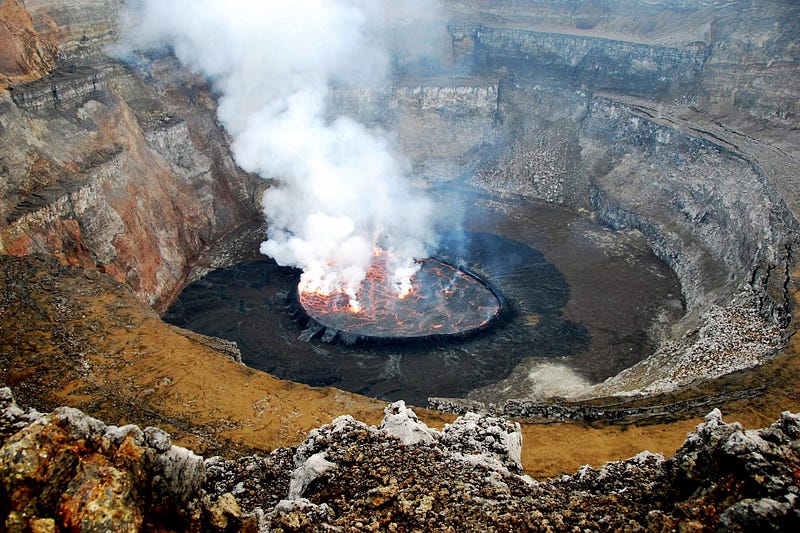
For hours everyone stood there dumbstruck, listening to the lake’s purr in between the thunder-cracks of an electrical storm breaking somewhere far away. Even our Congolese companions seemed cowed, the familiarity of many expeditions having done little to quash inherited superstitions. While we balanced cameras on rocky nooks to take photos through the dark, they stood and pondered a crucible of evil spirits, each fiery belch a symbol of an ancestor’s torment.
“We say that people who are evil in life must come here when they die,” murmured Mwendo. “The angrier the spirits become, the more the volcano burns.” And this evening, it was burning bright, for the mountain has had lots of ammunition in the Democratic Republic of Congo, where bad spirits have been particularly busy.
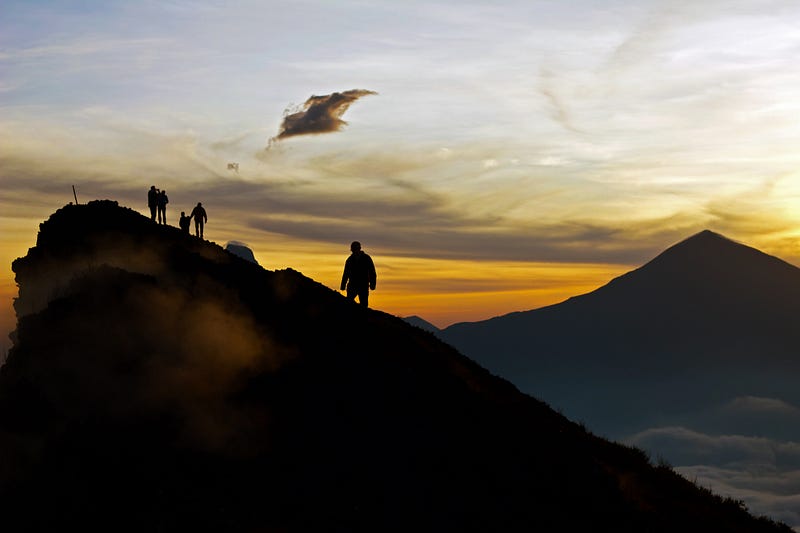
It wasn’t the sort of place where sleep came easy, and by lunch the next day our foray up the volcano was done. A whistle-stop trip indeed, but I was glad to get down, if only to re-validate my insurance policy and for the sanity of my mum.
While true stability remains elusive, few but the most intrepid are about to make a habit of holidaying in the Congo. But later that afternoon, clinking bottles of Primus with new friends on Kivu’s lakeshore, I couldn’t help but wonder, as people have since the days of Stanley and Livingstone, what other marvels this great green blank on the tourist map might hold.
Find out more about the Virunga National Park at www.visitvirunga.org.
Get updates on new stories published here and elsewhere by following me here: https://twitter.com/henrywismayer. Thanks for reading.