avatarMadeleine McDonald

Free AI web copilot to create summaries, insights and extended knowledge, download it at here

3491

Abstract

mprisonment, transportation or the gallows.<a href="https://readmedium.com/englandss-national-trust-report-on-historic-links-to-slavery-ignores-historic-poverty-at-home-5ed34666a4a9#_ftn2">[2]</a></p><p id="5c97">Much later and more cruel than England’s enclosures, Scotland’s highland clearances in the late 18th and early 19th centuries saw people evicted from their ancestral villages to make way for sheep. The clearances wiped out inefficient, subsistence-level peasant farming, and made fortunes for a few aristocratic landowners. They also destroyed the mutual support offered by the old clan system, where the local warlord sometimes lived in conditions not so very different from his clansmen.</p><figure id="a410"><img src="https://cdn-images-1.readmedium.com/v2/resize:fit:800/1*zOpVazIsnc4oXs9mHTPpuA.jpeg"><figcaption>Image by Robert Gogan from Pixabay</figcaption></figure><p id="3612">The population of Britain is estimated to have been around 5 million in 1700. By 1800 it had increased to around 9 million.<a href="https://readmedium.com/englandss-national-trust-report-on-historic-links-to-slavery-ignores-historic-poverty-at-home-5ed34666a4a9#_ftn3">[3]</a> Come the industrial revolution, millions who could no longer make a living on the land flooded the towns and cities. Early census returns show entire families living in one room within a multi-occupied house. Sanitation was primitive, and the small rivers which flowed into London’s Thames river were open sewers.</p><p id="83e0">The artist and satirist William Hogarth depicted an urban society in which prostitution was rife, and gin dulled discontent. Executions and bare-knuckle boxing offered public entertainment.</p><figure id="0e4d"><img src="https://cdn-images-1.readmedium.com/v2/resize:fit:800/1*7ow32tn2lP7OmjWToRlU5g.jpeg"><figcaption>Hogarth, Gin Lane, public domain</figcaption></figure><p id="596b">Concern for the plight of the urban poor emerged slowly, in parallel with support for the abolition of slavery. Demands for reform were prompted in part by the 18th century philosophical debates on the Rights of Man, and in part by the threat posed to the established order by the spread of egalitarian Methodism as a religion of the poor.</p><p id="c07d">Only in 1819 was it made illegal to employ children under the age of 9 in weaving mills.<a href="https://readmedium.com/englandss-national-trust-report-on-historic-links-to-slavery-ignores-historic-poverty-at-home-5ed34666a4a9#_ftn4">[4]</a> Before that, little ones could be sent to crawl under moving machinery and clean up the floor. Only in 1842 — 35 years after the abolition of the slave trade and 9 years after the abolition of slavery — was it made illegal for children under the age of 10 to work underground in coal mines.<a href="https://readmedium.com/englandss-national-trust-report-on-historic-links-to-slavery-ignores-historic-poverty-at-home-5ed34666a4a9#_ftn5">[5]</a></p><figure id="6f3b"><img src="https://cdn-images-1.readmedium.com/v2/resize:fit:800/1*F61-mqH4cnWHEz1srl-Oeg.png"><figcaption>Image <a href="http://www.victorianweb.or">www.victorianweb.or</a> / Wikipedia commons</figcaption></figure><p id="87d7">The early loss of common land was not the sole trigger for poverty. Henry VIII smashed the power of the Catholic church in England, and confiscated its massive wealth. In so doing, he destroyed the rudimentary social welfare system it offered. Under his daughter Elizabeth I, the English government was then ob

Options

liged to introduce the first Poor Laws to provide a minimum of relief from hunger and sickness. As the population grew, workhouses were built, the first in 1722. By the 1770s, 90 separate workhouses operated in London alone, housing around 15,000 inmates.<a href="https://readmedium.com/englandss-national-trust-report-on-historic-links-to-slavery-ignores-historic-poverty-at-home-5ed34666a4a9#_ftn6">[6]</a></p><p id="1704">Dread of the workhouse was justified. In order to discourage ‘idleness’, the inmates were given unpleasant work such as unpicking hemp ropes, and some workhouses were fitted with punishment treadmills, where a person who could not keep pace could easily injure a foot or an ankle.</p><p id="afe4">One of Queen Victoria’s prime ministers, Benjamin Disraeli compared the rich and the poor to ‘inhabitants of different planets,’ describing them as ‘two nations between whom there is no intercourse and no sympathy.’<a href="https://readmedium.com/englandss-national-trust-report-on-historic-links-to-slavery-ignores-historic-poverty-at-home-5ed34666a4a9#_ftn7">[7]</a></p><p id="296b">None of this lessens the evil of slavery and the slave trade. But it goes some way to explaining, as the National Trust report does not, why few people in Britain worried about injustice and misery far away when there was so much of it on their doorstep.</p><p id="2bdc">It should also come as no surprise that there was little popular support for the abolitionist cause back then, when we in the comfortable West shut our eyes to modern slavery today, updating our smartphones without worrying about how or where lithium is mined, or buying three T-shirts for a tenner without wondering how the workers who sew them exist on the pennies they are paid.</p><figure id="b7b4"><img src="https://cdn-images-1.readmedium.com/v2/resize:fit:800/1*9x2yOqZcfDYXRtGPwuXJtg.jpeg"><figcaption>Image by Free Photos from Pixabay</figcaption></figure><p id="fad3"><a href="https://readmedium.com/englandss-national-trust-report-on-historic-links-to-slavery-ignores-historic-poverty-at-home-5ed34666a4a9#_ftnref1">[1]</a> <i>Rose, My Life in Service</i>, Rosina Harrison, Cassell, 1975</p><p id="18c8"><a href="https://readmedium.com/englandss-national-trust-report-on-historic-links-to-slavery-ignores-historic-poverty-at-home-5ed34666a4a9#_ftnref2">[2]</a> Game Act, 1671</p><p id="c3a3"><a href="https://readmedium.com/englandss-national-trust-report-on-historic-links-to-slavery-ignores-historic-poverty-at-home-5ed34666a4a9#_ftnref3">[3]</a> British Library, <a href="http://www.bl.uk/">www.bl.uk</a></p><p id="6ae5"><a href="https://readmedium.com/englandss-national-trust-report-on-historic-links-to-slavery-ignores-historic-poverty-at-home-5ed34666a4a9#_ftnref4">[4]</a> Cotton Factories Regulation Act 1819</p><p id="2618"><a href="https://readmedium.com/englandss-national-trust-report-on-historic-links-to-slavery-ignores-historic-poverty-at-home-5ed34666a4a9#_ftnref5">[5]</a> Mines Act 1842</p><p id="c0d7"><a href="https://readmedium.com/englandss-national-trust-report-on-historic-links-to-slavery-ignores-historic-poverty-at-home-5ed34666a4a9#_ftnref6">[6]</a> British Library, Georgian Britain (Matthew White), <a href="http://www.bl.uk/">www.bl.uk</a></p><p id="7299"><a href="https://readmedium.com/englandss-national-trust-report-on-historic-links-to-slavery-ignores-historic-poverty-at-home-5ed34666a4a9#_ftnref7">[7]</a> <i>Sybil</i>, Benjamin Disraeli, 1845</p></article></body>

England’s National Trust Report on Links with Historic Slavery Ignores Historic Poverty at Home

For the Poor, Life Was Brutal
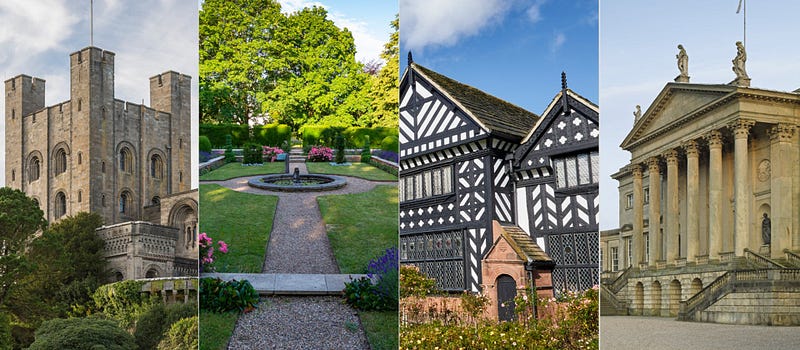
Image National Trust press release on report, 16 September 2020

In 2020 England’s National Trust attracted controversy with a report addressing the ‘histories of colonialism and historic slavery’ linked to some properties in its care.

It is true that many grand houses and their estates were purchased with money from a vile trade. It is true that the treasures they contain were paid for with the blood of the enslaved.

They were also paid for by the toil of a hidden army of the poor at home.

I imagine 18th century England to have been something like India today, where a minority of wealthy people, and the professional classes who serve them, enjoy a life of ease while shutting their eyes to the reality of millions of men, women and children trapped in a lifetime of scavenging, bonded labour, or the hidden quasi-slavery of domestic servants imported from even poorer lands.

Image of Mumbai by A MH from Pixabay

TV costume dramas in elegant surroundings are perennially popular, and give us a sanitised view of history. We all love to snoop round a stately home, and gawp at carved furniture, elegant clocks or silk wallpaper. Few of us think of the labour required to run them. A glimpse into just how many worker ants kept the grand houses going is provided by a chart dating from as late as 1928.[1] The Astor family, of Cliveden in England, had immense American wealth and could afford to live in the grand style of previous centuries. The chart shows that 43 indoor servants plus 27 chauffeurs, gamekeepers, gardeners and stable hands were employed to pamper one family. That’s without counting accountants, secretaries and estate management staff.

Yet in the past, to be ‘in service’ was a desirable occupation, providing food and shelter in an uncertain world.

Before the industrial revolution, the poor in Britain lived a precarious life in a largely rural economy, at the mercy of bad harvests and periods of civil war.

Beginning as far back as the 1500s, the successive enclosures of England’s common land rationalised agriculture. Better land management provided more crops per acre, and earned the owners of enclosed lands more money. However, this benefited the few as opposed to the many. As the old song said, ‘They hang the man and flog the woman who steals the goose from off the common, but leave the greater villain loose who steals the common from the goose.

Agricultural labourers lived in cottages with straw laid on beaten earth floors, or lived one storey above the animals, in order to share animal warmth. There was no heating or lighting apart from the kitchen fire, which relied on whatever wood families could scavenge locally. Poachers, even those taking a rabbit for the pot, risked imprisonment, transportation or the gallows.[2]

Much later and more cruel than England’s enclosures, Scotland’s highland clearances in the late 18th and early 19th centuries saw people evicted from their ancestral villages to make way for sheep. The clearances wiped out inefficient, subsistence-level peasant farming, and made fortunes for a few aristocratic landowners. They also destroyed the mutual support offered by the old clan system, where the local warlord sometimes lived in conditions not so very different from his clansmen.
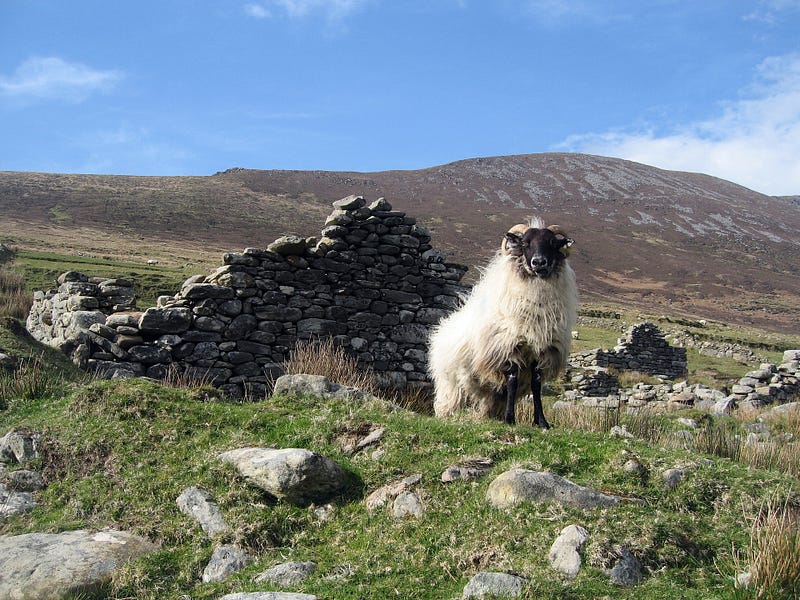
Image by Robert Gogan from Pixabay

The population of Britain is estimated to have been around 5 million in 1700. By 1800 it had increased to around 9 million.[3] Come the industrial revolution, millions who could no longer make a living on the land flooded the towns and cities. Early census returns show entire families living in one room within a multi-occupied house. Sanitation was primitive, and the small rivers which flowed into London’s Thames river were open sewers.

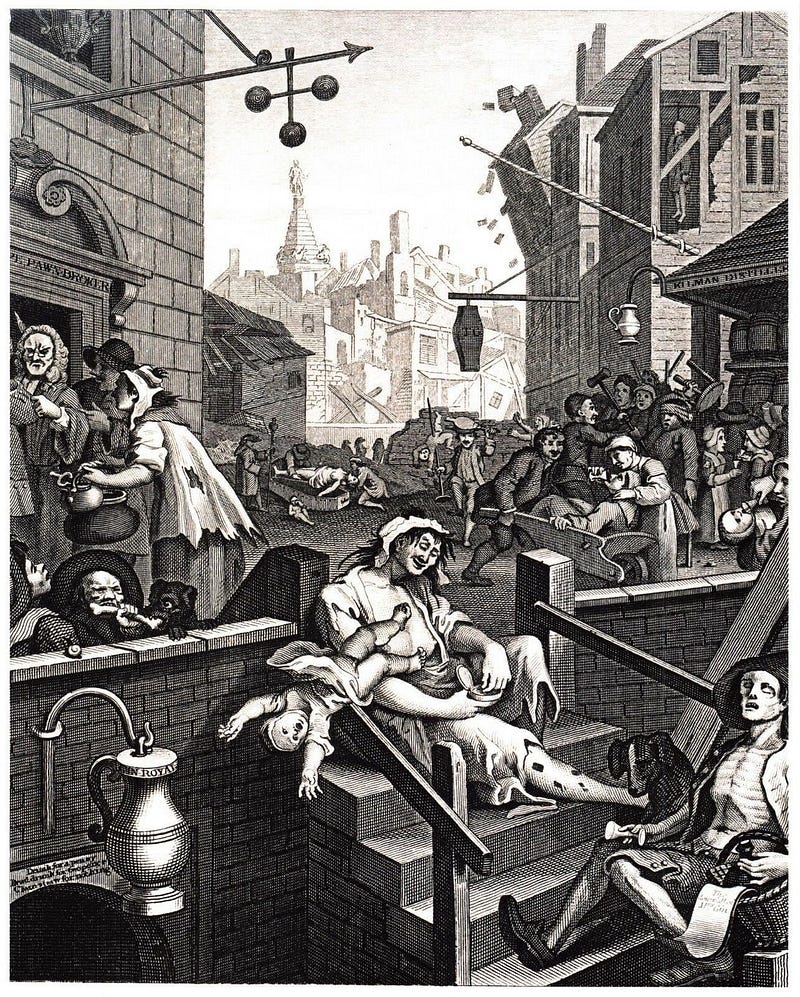
The artist and satirist William Hogarth depicted an urban society in which prostitution was rife, and gin dulled discontent. Executions and bare-knuckle boxing offered public entertainment.
Hogarth, Gin Lane, public domain

Concern for the plight of the urban poor emerged slowly, in parallel with support for the abolition of slavery. Demands for reform were prompted in part by the 18th century philosophical debates on the Rights of Man, and in part by the threat posed to the established order by the spread of egalitarian Methodism as a religion of the poor.

Only in 1819 was it made illegal to employ children under the age of 9 in weaving mills.[4] Before that, little ones could be sent to crawl under moving machinery and clean up the floor. Only in 1842 — 35 years after the abolition of the slave trade and 9 years after the abolition of slavery — was it made illegal for children under the age of 10 to work underground in coal mines.[5]
Image www.victorianweb.or / Wikipedia commons

The early loss of common land was not the sole trigger for poverty. Henry VIII smashed the power of the Catholic church in England, and confiscated its massive wealth. In so doing, he destroyed the rudimentary social welfare system it offered. Under his daughter Elizabeth I, the English government was then obliged to introduce the first Poor Laws to provide a minimum of relief from hunger and sickness. As the population grew, workhouses were built, the first in 1722. By the 1770s, 90 separate workhouses operated in London alone, housing around 15,000 inmates.[6]

Dread of the workhouse was justified. In order to discourage ‘idleness’, the inmates were given unpleasant work such as unpicking hemp ropes, and some workhouses were fitted with punishment treadmills, where a person who could not keep pace could easily injure a foot or an ankle.

One of Queen Victoria’s prime ministers, Benjamin Disraeli compared the rich and the poor to ‘inhabitants of different planets,’ describing them as ‘two nations between whom there is no intercourse and no sympathy.’[7]

None of this lessens the evil of slavery and the slave trade. But it goes some way to explaining, as the National Trust report does not, why few people in Britain worried about injustice and misery far away when there was so much of it on their doorstep.

It should also come as no surprise that there was little popular support for the abolitionist cause back then, when we in the comfortable West shut our eyes to modern slavery today, updating our smartphones without worrying about how or where lithium is mined, or buying three T-shirts for a tenner without wondering how the workers who sew them exist on the pennies they are paid.

Image by Free Photos from Pixabay

[1] Rose, My Life in Service, Rosina Harrison, Cassell, 1975

[2] Game Act, 1671

[3] British Library, www.bl.uk

[4] Cotton Factories Regulation Act 1819

[5] Mines Act 1842

[6] British Library, Georgian Britain (Matthew White), www.bl.uk

[7] Sybil, Benjamin Disraeli, 1845

History
Poverty
Slavery
Diversity
Slavery And Capitalism
Recommended from ReadMedium