
Engineering Marvels: Evolution of Dome Construction Techniques
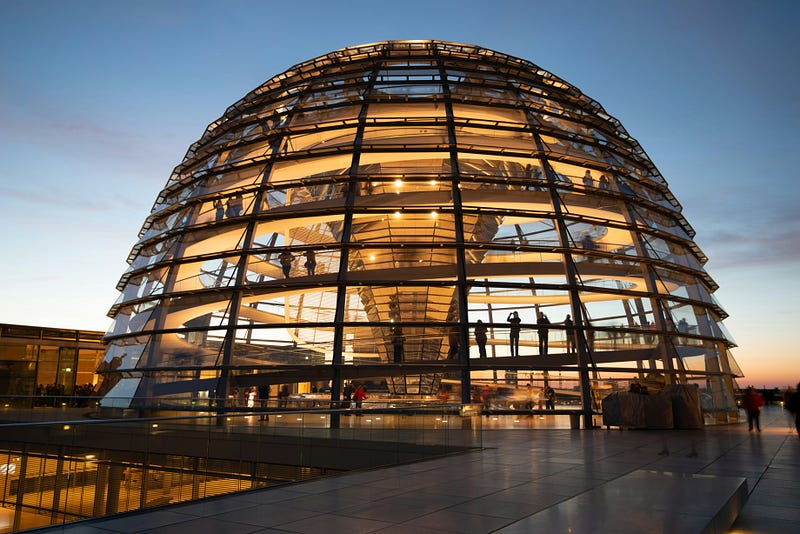
More than 2,000 years ago, the ancient Romans built a circular dome that posed a unique engineering challenge due to its immense weight. The use of concrete alone would have resulted in a roof weighing over 20,000 tons, risking foundation displacement and collapse. To mitigate this, engineers devised methods to reduce concrete usage. They began by thinning the dome’s walls and hollowing out the ceiling panels, effectively halving the dome’s weight. Additionally, to counter the risk of outward expansion, seven concrete rings were installed around the base, leading to the creation of the Pantheon, boasting the largest unreinforced concrete dome.
Subsequent construction employed bricklaying techniques. However, a challenge arose when workers reached the top, as the walls needed to incline inward. Engineers solved this by constructing a support scaffold after each row of bricks, filling gaps with cement to prevent displacement. To scale up dome construction further, engineers adopted bridge-building methods, stabilizing six truss bridges around a central axis to support a dome composed of tiles and glass.
Yet, a critical weakness emerged: direct fixation of the dome onto the masonry risked thermal expansion causing roof and pillar fractures in hot weather. Engineers addressed this by installing wheels at the base of each transverse frame, mitigating thermal expansion and contraction.

As industrial capabilities advanced, engineers aimed to create expansive indoor sports venues with vast domes. To ensure ample natural light, lightweight and transparent wind-resistant glass was used. However, this led to severe shading issues within the venue. To counter this, engineers added miniature prisms to the glass, dispersing light evenly throughout the stadium.
The presence of steel frameworks resulted in relative dimness within the stadium, causing glare for athletes looking towards skylights. To combat this, engineers utilized resilient glass fiber membranes coated with a special fluorine layer, precisely controlling light intake to ensure optimal transparency and brightness.
As stadiums grew larger, their roofs weighed thousands of tons, risking collapse if directly placed on the ground. Engineers opted to excavate foundations, utilizing surrounding bedrock for support. They constructed seven bridge-like hollow trusses and secured them together with a steel ring. A colossal main truss then pierced the entire roof, creating a sturdy steel frame. Fifty mechanical pulleys were installed on each truss, enabling load-bearing and independent opening and closing.

With the popularity of these mega-stadiums rising, so did the number of spectators, raising concerns about fire safety. Traditional smoke detectors primarily monitored smoke levels, risking uncontrollable fires by the time smoke reached sensors. To address this, engineers deployed state-of-the-art fire detectors capable of detecting unique heat signatures generated by burning carbon dioxide. These sensors immediately triggered fully automated fire suppression systems, ensuring the safety of tens of thousands of spectators.
Through iterative technological breakthroughs, a modern mega-stadium emerged, showcasing the ingenuity and evolution of dome construction techniques.
- Follow me for more
- Subscribe Here for email updates