
Energy transition is speeding up, like it or not: let’s talk about greenflation
We have reached a point where we don’t have many options left.
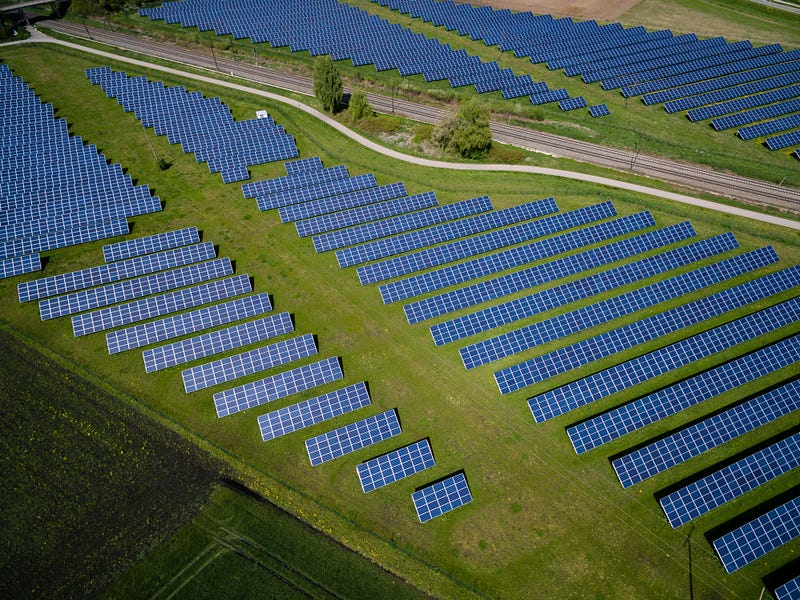
Energy constraints due to conflicts (disrupting supply chains and having a significant impact on the price of commodities), sustained growth in demand after a quieter period, and a long-awaited need for a profound energy model transition, are putting us finally in front of the mirror. As Financial Times published, “The battle to cool down the planet appears, ironically, to be heating up the economy.” We’ve seen what happens when the last 50 years of fossil fuels are used up: wars, migration, and millions of people hungry. Now we are entering the second major phase of this war: once all our remaining fossil fuels are being used, conflict will subside, and global warming will continue until a new energy economy is developed to reduce greenhouse gases (GHGs).
According to the International Energy Agency, the number of electric vehicles (EVs) is set to rise to 145m by 2030, from 11m today. Even that is only a fraction of the roughly 1.2 billion combustion engine vehicles currently on the road — so the demand for batteries will remain huge for years to come. And the lithium-ion battery in most electric vehicles (EVs) requires around 25 pounds of lithium and 30 pounds of cobalt, as well as quantities of nickel, copper, graphite, steel, and aluminum. Embedded in the burning of coal, oil and gas, these elements leave a heavy carbon footprint. Mining lithium and cobalt, in particular, is dirty — both for the environment and for the miners.
For this reason, a huge amount of capital has been invested into projects that try to reduce ‘the distance from mine to plug’ as much as possible. BMW former Chief Executive, Harald Krueger, said that the question is where do you get your materials from. This is, unsurprisingly, fuelling a commodity boom. Yet despite mindboggling increases in prices lately, minerals such as copper, nickel, lithium, and cobalt are in short supply.
Isabel Schnabel, a member of the ECB Executive Board, argued that “While in the past energy prices often fell as quickly as they rose, the need to step up the fight against climate change may imply that fossil fuel prices will now not only have to stay elevated but even have to keep rising if we are to meet the goals of the Paris climate agreement.”
As Schnabel also put it, and Bloomberg reported: “At present, renewable energy has not yet proven sufficiently scalable to meet rapidly rising demand… The combination of insufficient production capacity of renewable energies in the short run, subdued investments in fossil fuels, and rising carbon prices mean that we risk facing a possibly protracted transition period during which the energy bill will be rising. Gas prices are a case in point.”
In developed countries, energy prices have increased several times over the years because they have reached sustainable limits set by economic growth and technologies already existing. But it’s not just commodity prices that are up. The economy shows evidence of a new and more inflationary regime caused not only by climate change but by the fight over how to respond to it. And as the world has begun to transition away from fossil fuels, it has created imbalances in the energy system.
Therefore, greenflation is very real. Not only is it not transitory, it’s likely to get worse. Central banks will need to react to it. Not only is greenflation a non negligible part of the higher wholesale and consumer prices that, since spring 2021, have been rapidly spreading from commodity and energy costs to electricity bills, food, and even rent. It is also proving to be sticky, meaning that inflation as a whole is turning out to be less transitory than first hoped.
Greenflation is not a threat to the inflation rate. On the contrary, it is an important part of the story. It is very likely to remain so for a long time due to its benefits and, first and foremost, due to its negative consequences. Unchecked, greenflation will deliver profoundly negative implications on public finances.
Besides, COVID didn’t help, as International Energy Agency (IEA) explains. Even if renewables maintain their rapid growth, and if access and efficiency improvements recover to their pre-pandemic pace, these measures will still lag the progress rate needed to achieve universal energy access by 2030 and net zero emissions by 2050. Still, governments are pushing in the right direction. “Countries where clean energy is at the heart of recovery plans are keeping alive the possibility of reaching net-zero emissions by 2050, but challenging financial and economic conditions have undermined public resources in much of the rest of the world,” said Fatih Birol, the IEA Executive Director. “International cooperation will be essential to change these clean energy investment trends, especially in emerging and developing economies where the need is greatest.” Global energy leaders met in Paris this week for the International Energy Agency’s 2022 Ministerial Meeting, sending a strong message of unity on the need to strengthen energy security, reduce market volatility, and accelerate clean energy transitions worldwide. According to IEA, a new EUR 20 million annual funding stream will boost work on policy advice, training, and development of net-zero roadmaps with major emerging economies worldwide.
Action is indeed needed. The Atlantic said that for years, scientists and economists have warned that climate change could cause massive shortages of major commodities, such as wine, chocolate, and cereals. Financial regulators have cautioned against a “disorderly transition,” in which the world commits only haphazardly to leaving fossil fuels, so it does not invest enough in its zero-carbon replacements. In an economy as prosperous and powerful as America’s, those problems are likely to show up — at least at first — not as empty grocery shelves or bankrupt gas stations but as price increases. That phenomenon, long hypothesized, may be starting actually to arrive.