
How to Make Your Enemy Love You
He boots you out and steals your heart
The GPS hiccupped and told me to turn left off the motorway. I glanced at my companion sleeping beside me. It had been a long day taking the dawn flight out of Heathrow, picking up the car at Ataturk Airport in Istanbul, and then braving the roads crowded with Turks and truck drivers from all over, none of them generous with the right of way to a couple of tourists on the wrong side of the road.
We had stopped for lunch and he had faded away, handing me the driving and sinking into almost immediate slumber. “Just follow the GPS,” he said.
And I did. Even when it led me astray.
To be accurate, there was a huge dogleg in our route, and the GPS had just cut the corner onto local roads.
Rolling through the rural
Naturally, the motion of our rental car changed from the fast and straight motorway, albeit with more potholes than I was used to on a major highway, and I was swooping up and down hills, racing round country corners, and generally having a wonderful time amongst the hills and fields.
Say what you like about America’s Interstates, but motorway driving is divorced from reality. It’s boring.
This was the real thing!
I crested a rise, and there in a scene from some contemporary Constable, was a tractor pulling a wagon full of animals on a gravel lane.
I wrestled the car to a stop and my companion awoke and looked around with an air of disbelief.
“What happened to the highway?” he said, engaging the moustached gaze of the tractor driver, who like everybody else in the land, was unwilling to yield the road.
I pointed to the GPS display, which showed a blue line taking us through Turkey.
He had as little idea as I did of getting back onto tourist tracks, so we trusted in the GPS gods and enjoyed the ride together.
There were little villages scattered through the rolling hills. We’d round a corner and find ourselves for a minute in some tiny square, dogs and chickens scattering ahead of us, old men drinking coffee at tables in the shade.
And every square in every village had a statue of the nation’s founding father: Kemal Ataturk.
An old enemy on a hilltop
We were in Turkey to see the battlefields of Gallipoli. In 1915, during the First World War, the British and French had invaded Turkey, hoping to force a passage through to Constantinople (as Istanbul was then called) and push Turkey out of the war, allowing a new front of attack against the Germans and Austro-Hungarians.
The British had landed at the tip of the Helles peninsula, not too far from Ancient Troy, and the Australia and New Zealand Army Corps had been assigned a secondary landing at what was to become Anzac Cove.
It went well to begin with, but the Turkish opposition grew and grew and eventually the Anzacs were left with a thin beach-head while the defending Turks occupied the high ground.
Mustafa Kemal — he had a different name then — was a junior officer in charge of that sector, and when he appreciated the danger, called in reinforcements from every direction, and when the Australians started making advances up the main ridgeline, he personally led a handful of soldiers to delay the attack until fresh troops arrived.
He sent his soldiers off, saying:
I don’t order you to fight, I order you to die. In the time it takes us to die, other troops and commanders can come and take our places.
The gamble worked, the invaders were pushed back and spent three months cooped up in narrow and dangerous trenches while the Turks made their lives hell.
Eventually, enough British Empire troops were assembled to mount a fresh offensive around the side to capture the high ground, and again Kemal personally led his troops against a dug-in enemy. Again he succeeded, and the British Empire failed to make any headway and finally withdrew.
Father of the Turks
Kemal went on to become the supreme leader of Turkey, turning it from a mouldering old remnant of the Ottomans into a modern nation. He changed the status of the ancient Ayasofya mosque — it had been the Byzantine cathedral Hagia Sophia until the Ottomans captured it in 1453, and it was nine centuries old even then — into a secular museum.
In Australia, the Gallipolli campaign was seen as a significant event in the history of the new nation, which had come into existence with the federation of the six Australian colonies in 1901. The date of the landing — 25 April — has ever since been observed as a day of national commemoration of the losses of the campaign, that war and all wars since.
In what has become a tradition, Anzac Day is also observed in Turkey on the old battlefield, where young Australians and New Zealanders gather to be maudlin and get drunk together.
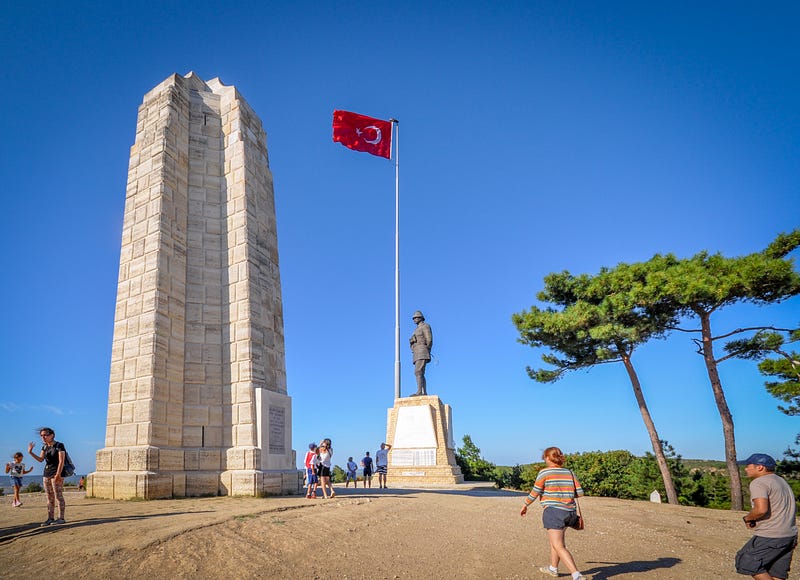
We drove to the battlefields, walked among the cemeteries, and climbed to the strategic heights of Chunuk Bair, where the New Zealand Memorial stands tall, remembering the successful attack there in August 1915.
There is also a statue of Kemal Ataturk, holding the riding crop with which he signaled the counterattack a day later, reclaiming the summit for the Turks and sealing the British defeat.
So many Australians, New Zealanders, British and French lie buried in the old cemeteries there, along with equally extensive Turkish cemeteries.
It is sobering to think of all these young men sent to what is quite a remote part of the world. and buried in foreign soil.
And here’s where the enemy becomes a lover
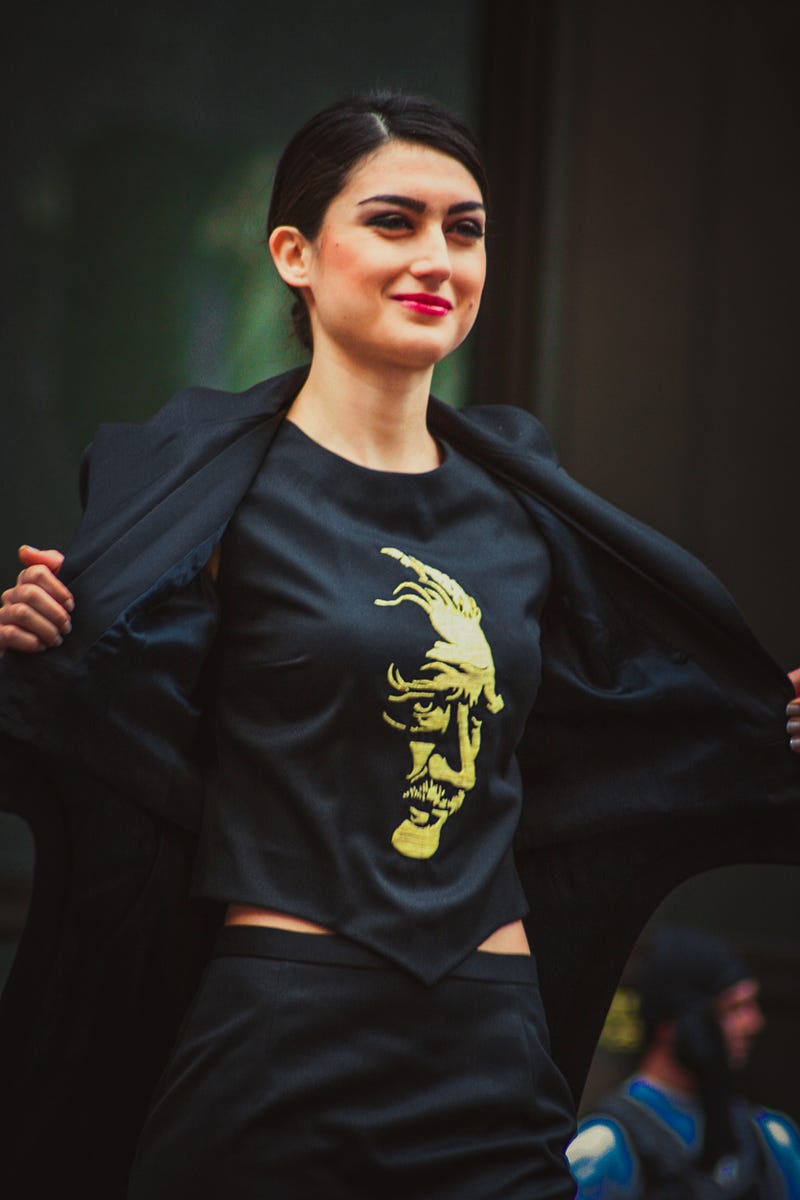
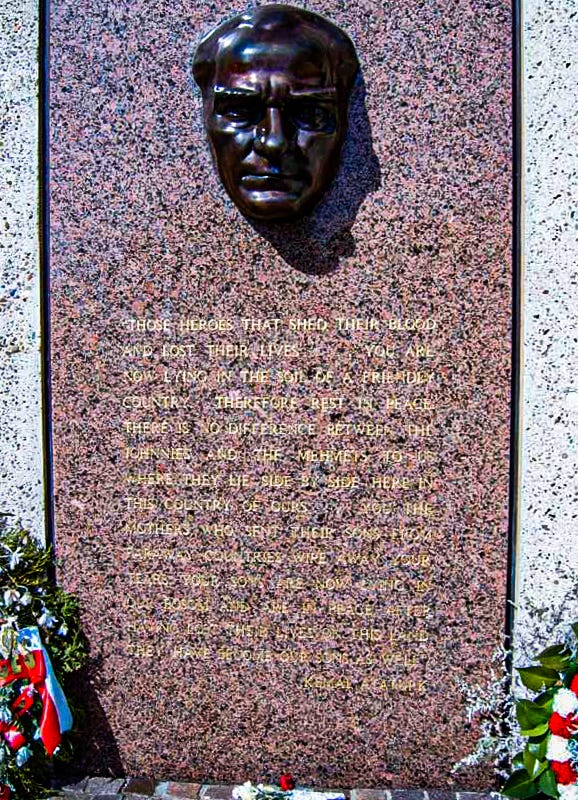
Kemal Ataturk, the indomitable Turkish commander who defeated the invasion and out-manouevred the victorious Allied powers after the war to safeguard Turkish sovereignty, had some words for those who had sent their soldiers to die there:
Those heroes that shed their blood and lost their lives … You are now lying in the soil of a friendly country. Therefore rest in peace. There is no difference between the Johnnies and the Mehmets to us where they lie side by side in this country of ours. You, the mothers, who sent their sons from faraway countries, wipe away your tears. Your sons are now lying in our bosom and are in peace. After having lost their lives on this land, they have become our sons as well.
Although there is some doubt that Ataturk actually wrote those words himself, they have since been taken up and engraved on memorials throughout Australia, New Zealand, and Turkey, and today there is an astonishing bond of brotherhood between the descendants of the warriors on both sides.

Respect for bold and brave fighters, and if we Australians did not win, we can understand the spirit of those who fought against us in defending their homeland.
The way to win a hostile heart
Ataturk’s words above resonated strongly. They went directly to the heart of those reading or listening. An acknowledgment of the heroism and sacrifice. A recognition of the distance between those who fell and their loved ones, unlikely to travel so far to mourn in person. And a statement of love, peace, and comfort.
How extraordinary that the invaders should be seen as the fallen sons of those who defended Turkey! Side by side the soldiers now lie in carefully tended war graves.
We looked through a few of the Turkish cemeteries. Even today, coachloads of Turks come down to look through the old battlefields, read the stories on the memorials, and mingle with the descendants of the old enemies, looking upon each other with friendship and respect.
Ataturk is seen as a national hero, and with his wise vision and outward-looking leadership, he is a man whom the world may rank amongst the most notable statesmen in history.
In Australia, he is honoured for his courage, his leadership, his grace, and his friendship.
He is an example to us all.
Britni
More travel: