
Endless Creativity
Tap into this ever-expanding bottomless pit
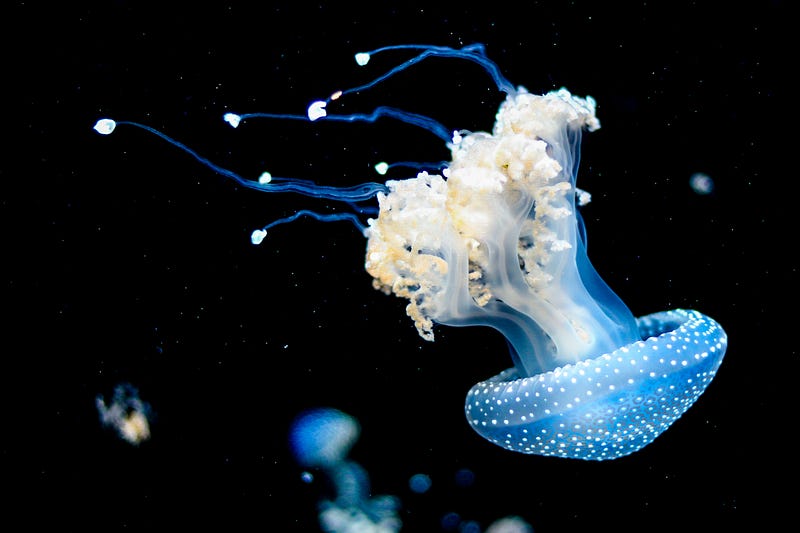
After thousands of years of human exploration, we continue to discover new species of animals and plants — every day. According to scientists, millions of creatures are yet to be discovered. Nature (or, for some, God) has an endless imagination, it’s a blueprint we can harness to create our own abundance of creativity.
Some of us wait for the muse, the capricious goddess of inspiration and fresh ideas, that may or may not smile upon us, allowing the creative genius to flow. Others take on a variety of approaches ranging from staring at a blank page to researching ideas, to picking the brain of others or just going for a walk.
I’d like to state that this article isn’t exclusively aimed at writers. The points I’m going to explore in the next few paragraphs apply to any other discipline.
Creativity is the foundation of any worthwhile endeavour, it’s vital in designing objects and ideas as well as solving problems. For the longest time, humanity has looked to nature to help us in our design process and to create solutions. Now we can use it to expand our own creativity. Here are a few points on how this can be accomplished;
Focus on categories All species are grouped into families, they are categorised by their traits or unique abilities. On a larger scale, all animals are either mammals, fish, amphibians, reptiles, or birds. This gets broken down into smaller categories or species etc.
We can mimic this blueprint to jump-start our own creative process, to first focus on larger groups of problems, existing solutions, objects, and ideas. It also helps if we’re interested in the theme we’re trying to focus on.
I once listened to an interview with Seth Godin (I cannot remember which one); the interviewer asked him where he gets all his ideas from. He said that if you spend enough time reading and exploring a specific subject (in his case, marketing), your brain does the thing it was designed to do — it starts to identify trends, common problems, ideas, and novelties.
You don’t even have to do the heavy lifting, your brain does it for you. The weird (and wonderful) thing is that it doesn’t just point things out; it also goes into overdrive to identify patterns, create solutions, and highlight new points of view for you to explore.
Time and relevance Next, consider the timing of what you’re thinking about. Is it a novel idea or a trend that has been done to death by others? Is it relevant to your audience, your readers, and your target market?
Just like nature evolves and adapts to the environment — some, like the chameleon, at a moment’s notice. We also can pivot a dying trend with a new spin-off, making it relevant and attractive again. And remember that adaptation is (almost always) triggered by challenges (like a predator) and problems (disease or climate change).
Contrast Most feel intimidated or scared of losing customers, readers etc., taking a strong position on something. But the whole concept of attraction is based on contrast. For example, the males of many bird species are significantly more flamboyant than their female counterparts.
If there’s a large number of people following a certain idea or movement that you don’t agree with (or a style trend you don’t like), go against it! Go against it hard with all the evidence, logic, grace and beauty you can master. Many ideas (positive and negative) have been built on contrast and controversy. If it doesn’t inspire strong emotions, it won’t get noticed.
Change your view Some animals travel far and wide, mostly in search of food or for mating purposes. Depending on your situation, it might pay to look for inspiration in places you haven’t explored before. Sometimes, all it takes is stepping outside your front door and taking in a deep breath, but the possibilities are endless.
You can sit in a cafe and ‘people-watch’ — it’s amazing how much you can learn about human behaviour just by observing others do their thing. Or, you can be a little more adventurous and travel to a different country; everyone I have ever spoken to who has travelled mentions how the experience has expanded their perspective on life.
Learn about different cultures and how they approach problems. You could also look at other sectors and check if a new trend they have adopted might also work in your discipline. For example, the subscription business model started with the tech sector, which in turn was adopted by the electronics industry, then the car industry, I could go on, but as I said, the list IS endless…
Sylvia Dziuba is a Freelance Writer. She is currently pursuing her Bachelor’s degree in Professional Writing & Publishing. She can often be found on Twitter joining interesting conversations. You can support her by Buying Her Coffee. To get regular updates, sign up for her newsletter.


