
Ending Systemic Racism Requires Black Power. Can the Progressive Movement Stomach It?
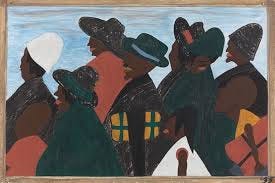
“It is ludicrous for the society to believe that these temporary measures can long contain the tempers of an oppressed people. And when the dynamite does go off, pious pronouncements of patience should not go forth. Blame should not be placed on ‘outside agitators’ or on ‘Communist influence’ or on advocates of Black Power. That dynamite was placed there by white racism and it was ignited by white racist indifference and unwillingness to act justly.”
Kwame Ture & Charles V. Hamilton, Black Power: The Politics of Liberation
In The Devil You Know: A Manifesto for Black Power, Charles Blow challenges us to imagine a future where Black people exert unyielding political power to secure the social, economic, and political advancement long denied us. The pathway to this future lies in a strategic, reverse migration — or return — to southern states with the “moral and political intentionality” to move, act, and, most importantly, vote as a collective. In proposing a reverse migration, Blow argues that the sheer density and swelling of Black populations in these areas will shift the functional and political calculus in our favor where Black votes, and presumably Black people, will control state assemblies. This control, he believes, will create a “responsive, race-conscious accountability” that will lead to dramatic improvements in the lives of the majority of Black people in this country, and not just a few.
For the past 15 years, I have lived in the Washington, DC metropolitan area with fanciful aspirations of somehow, someday returning home. Although I have established myself here, my home — my roots — will always be in Memphis, Tennessee. My parents were born in Mississippi like their parents and grandparents before them. All but two of my mother’s seven brothers moved to Michigan in their twenties, each pursuing opportunity within the safety that a band of brothers offers. On the other side, seven of my father’s ten siblings remain in and around Olive Branch, Mississippi. My children, now 15 and almost 12, have spent every summer of their lives (save the last three) “down South” as much for the relief from daycare payments as for the deep connection with their family that those visits promised.
My memories of home are childlike in their simplicity because I never lived as an adult in the city that raised me. At 16, I left to attend a New England boarding school — an experience that shifted not only my scope of options for higher education, but also my expectations of what I believed I and, more broadly, Black people deserved. When I visit home, my arrival is blessed with feelings of acceptance and familiarity only to be quickly replaced by betrayal, abandonment, and envy the moment Interstate-40 stretches beyond Millington heading back to Maryland. Although the envy is fleeting, the betrayal endures. The truth is, it is rare that I truly contemplate returning home. I have not allowed the city to mature in my mind beyond its image in my adolescence and I wonder if the life I could create there would be as good as the one I have here. Blow calls on us to do two things: 1) determine with radical honesty whether life in non-Southern cities is indeed “good”, and 2) look beyond the South that we remember or the one we have studied or observed to answer its beckon to return home.
With time, I believe this future is plausible and will require the fortitude of thousands to achieve. Blow’s proposal is a thoughtful contribution to a necessary slate of strategies for Black liberation. This country has given us many reasons to be skeptical of such a bold proposition; I am not inclined to examine them here. Instead, I invite us to reconsider how we envision parallel action. Is it not possible to exert the same political force to realize a vision of emotional, physical, and spiritual safety that knows no geographical bounds?
The answer to that question is also within the pages of The Devil You Know: A Manifesto for Black Power and underscores the purpose of an organization like Our Black Party. Our Black Party was established to create the type of accountability that Blow believes will result from mass reverse migration. Not only that, but Our Black Party also confronts the failure of multiracial coalitions to boldly reject the anti-Blackness that never fails to reveal the limits of progressives, their party affiliations, and their policy. Black leadership of this Black-centered political organization is by design to ensure there is no room to “diverge on the issue of Black Power.”
Blow discusses this very real dynamic of our political reality, the same one that James Baldwin so deftly exposed in his essay, Journey to Atlanta. It is true that the work to improve the everyday lives of Black people will require a coalition. That coalition, though, must sing in unison with music written and arranged by Black people without cooption or appropriation. I find myself as skeptical as Blow that organizations powered by White liberals and those who call themselves allies are best positioned to fuel Black Power. The quest for Black Power, whether it results from encouraging hundreds of thousands of Black people to organize and protest for community self-determination, to move South, or to join and help build a new political party, must be Black-centered, Black-led, and originate with Black people.
I agree that a return to the land of our roots has the potential to be restorative for our souls and transformative for our political futures. There is something to be said and done, though, for those of us who find ourselves caught between desire and ability. Black life is political, but the Black experience is so much more than how we relate to oppressive systems. So, while we hope for the sweet spot where population density meets political opportunity, we must acknowledge the reality that in non-Southern cities there is a steadily growing population of Black people that, in some cases, outpaces other groups. In our disconnection from the South, we have become backbones of communities and new extensions of our families’ trees. For many, leaving may not feel as damned if you do, damned if you don’t as it did for our ancestors. Black people who cannot or choose not to leave deserve to be nurtured right where they are, too. There is power not just through what is achieved in the elevating of a few select people to office but also in the realization that we can bend systems to our will if we choose. In communities like mine in Maryland, that means living with the same strategic moral, political, and economic intentionality that would be required to migrate. It means creating consequences so great that there is no room for white supremacy to thrive.
We can do that. Of course, the devil is in the details, but we must first put our faith in the audacious, and in Black people and our organizations.
No matter what we do we must remember that it is not the Black South that needs to be saved. It is the Black South and her progeny that will save us.