
Encore to the max: Entertainment in the time of Corona
A song, a game, a film, a melody or a picture can have true healing power. That’s why there still is no business like show business. Not least because the services it provides help the human soul to ease into dealing with so many of the challenges life might provide us with. And where there is an audience, there is a business. So, while COVID-19 continues to tighten its grip on many parts of the entertainment business, most digital entertainment-universes currently do experience not just one but many shifts in power. With some new developments indicating potentials to become powerful game-changers. Below, I discuss some thrilling developments within the entertainment industry, based on a POV circa four to six weeks into lockdown of most of the western world.
This post was first published via https://www.linkedin.com/in/saschaseifert/ on April 26, 2020
Is Fortnite the stadium of the future? 12 Mio Travis Scott fans say: “YEAAAHHHS!”
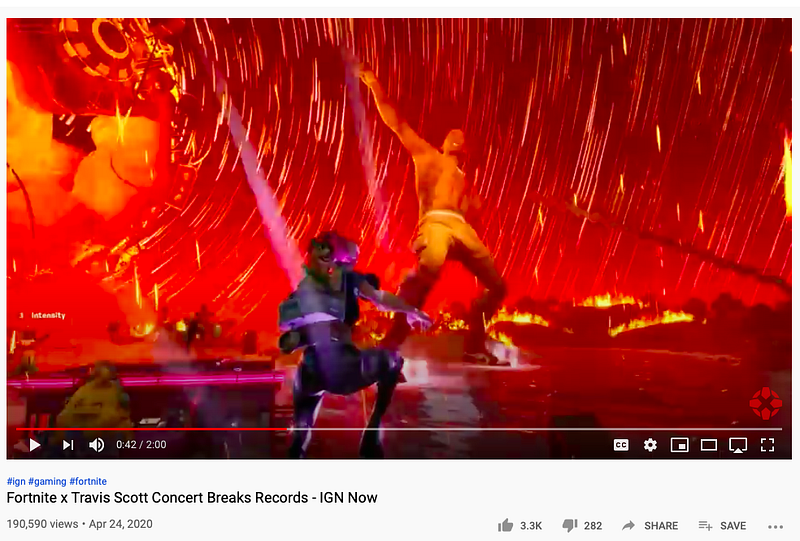
Superstar rapper, singer, songwriter, and record producer Travis Scott wasn’t the first artist to use Epic Games’ Fortnite as a platform to showcase a spectacle serving mostly the purpose to materialize ones very own idea of truly mindblowing showmanship. But Scott’s April 23rd, 2020, online performance of circa ten minutes set a new benchmark for this kind of events. A reportedly 12,3 Mio people watched and interacted with the artist during his virtual stadium gig (including 100% social distance rules obeyed). Have a look at a spectacle here. And: Remember the groundbreaking moment when 2Pac was put back on the Coachella stage post-mortem via a Hologram in 2012? Now, let’s combine elements of these two milestones. And, on top of things, take into consideration the fact that the “real world” Coachella got cancelled this spring. Will live shows disappear completely? Not at all. Will they become even more exclusive? Probably. Will the get more competition? Yes. — There are so many implications for the future of entertainment in all this, I could write a book about the upcoming changes right away. The only thing that remains steady for sure: The brand. The IP.
Mixed media social platforms need to admit they are publishers
Facebook (ca. 2,45 Bio users globally) just got two steps closer to becoming what it tried to avoid the most for a decade: a full-blown publishing house. Why? Because step one: “Facebook will notify users who engaged with coronavirus misinformation.” headlines Axios. Why that matters? It’s a drastic shift from the previous policy on content curation, Zuckerberg established once and tried to defend so hard ever since. To do something of the sort, you need to identify what is right/wrong (or at least what you consider it to be). A classy editorial job by all means. And, if you edit content, you are not “just a distribution platform” anymore. Welcome to the world of editorial content, Facebook. This might be just the beginning of all this. Their original concept of providing space for otherwise not managed content has failed. There will be no other way for Facebook but to intervene to handle all the news- and chat storms surrounding the big scale global challenges that reflect into the platform. Creating a lot of news and fake news and opinion and attempts to influence opinion (the latter, also known as lobbying).
And, because, step two: April 20, 2020, Australia’s government got en route to become one of the first countries to require digital platforms to pay for content they use; to share data; to split advertisement revenue out of the A$9 billion (US$5.72 billion) a year market. The move is part of a plan to establish a future proof code of conduct between media outlets and digital platforms. Targets on the frontlines of attention for such new law: Google and Facebook. Again, welcome to the world of editorial content, Facebook.
From this, it might just be a small step to figure out: Why not produce more content on our own? (And, wait, until they truly realise: Apple is doing this already!)
And, also: Welcome to content curation Google. The companies video- / video-channel platform YouTube (ca. 2 Bio. users globally) just announced, that, related to Corona, it bans ‘medically unsubstantiated’ content from now on.
Btw.: In a follow up to a 2019 launch of efforts to fight Fake News, Twitter (ca. 330 Mio users globally) announced to keep an eye on posts related to everything 5G from now on. As, while 5G got blamed for almost anything imaginable since the on-air data transfer standard came into the world, attempts to connect 5G to the Corona outbreak run wild on Twitter. Especially just recently. Again: welcome to the world of editorial content, Twitter.
While, as I stated before many times already, these steps taken by the (Social Media) platform networks have been long overdue and are necessary to protect their respective content landscapes from becoming gigantic hotbeds of all sorts of audiovisual garbage. Also, from the business perspective, these steps are super relevant to maintain more stable, content surroundings that attract big buck advertisement clients. Nevertheless, it would be great to be able to learn more about the foundations all these decisions are made on as a user and citizen. Until Big Tech practices more transparency to explain in further detail, based on what code of conduct they take things off their platforms, it has to remain unclear if it is a good thing in general that the same tech giants controlling the communication pipelines as well do decide on their own about what is considered unsubstantiated or what isn’t.
Short-form video only? — Like a rock thrown into a lake … — at least so far.
Short-form only video platform Quibi entered the market beginning of April. What happened? Basically: Not exactly something relevant. Besides the fact that the big question remains: How on earth will they make themselves useful to the customer? Or, to name the Pink Elephant in the room straight away: How to compete with YouTube? — Ever since Hollywood and Entertainment uber persona Jeffry Katzenberg announced this project as his new multi-billion dollar success story to be, the media world is looking for an answer to those questions. And hasn’t gotten one. Sadly, the begin of April release of the companies proposed only distribution channel, it’s mobile App, didn’t help either. Like probably everyone else, I’m on the 3-months-lure-me-in-freemium-trial right now … Looking around the App again and again to find interesting things I would like to watch. Leaving empty-handed all the time. Looks like I’m not to only one? As the company tried to sell a meagre 1,7 Mio. App downloads within the first week after release as a success (*). During a time when “being home” was the thing of the hour all over its predominant market, the US of A. Especially, and after all, given they raised 1 Bio USD in investments. And reports last year said they had 150 Mio USD in advertisement budget in place already before they even published anything. And, with all this, they didn’t manage to create a single piece of content that manages to become the talk of the global Social Media town for at least a couple of days? Never before, it was so hard to trust in Katzenberg’s instincts. (* Remember, also, see above: Travis Scott got 12,3 Mio. users behind his ten-minute gig … — It was “short”, it was online but it wasn’t on Quibi …)
Hollywood ⚭ Bollywood / Bollywood ⚭ Hollywood
Certainly, it’s not the first time that a flirt between US West Coast and (Far) East Entertainment players eventually leads to marriage. Only that, so far, such unions were rather executed Investment-flagged. With financing/dealmaking in forms of investing, selling, buying, distribution deals or co-production deals. Now, there is this full merger between US mini-studio STX and Eros International, one of Bollywood’s long-standing studio giants and among Indias most prominent players on the global content market. To form one true international entity. An interesting move, that could mean a lot of great opportunity for the future of selling content under an “Independent” banner in two of the most relevant global markets by numbers. It will also be interesting to see how cultural dynamics play out in the new marriage. I’m sure, the prenup is solid. As well as I’m sure that there is huge potential to sell more “Hollywood Style” content to parts of India. What remains open is the question about a further appetite for Bollywood content beyond the borders of India’s territory. But, no matter how everything “taste” will play out in the long run, there are still tons of possibilities and already very real synergies to make use of to create an interesting truly continent-bridging venture. Nice move.
All onboard the Netflix train — Chased e.g. by HBOMax release date
News, so obvious to come in, they aren’t even new anymore the moment of the publication: To no surprise, Netflix reported outstanding subscription gains for its Q1/2020: plus ca. 16 Mio. new accounts got purchased within Q1/20, bringing the streamers customers base close to 183 Mio. globally. To finance more content, the “big red N” also announced to raise another one billion USD loan to bankroll its’ upcoming content acquisitions. Yep, that’s a lot of debt. Again. But, also, there is a lot of cash flow as well. Coming in from 183 Million clients, hungry for distraction. Plus: More competition is on the way: HBO just confirmed to open the virtual gates on its’ streaming platform HBOMax in the US on May 27th 2020. The platform will include many of the last decades household names we all loved and might still love to binge: From The Sopranos to GOT or Larry Davids “curbed” adventures. Good for Netflix: there do not seem to be any plans yet for bringing HBOMax to other territories. At least publicly. Yet.
No magic. No kingdom. AR/VR suffers. Again.
As I predicted already pre-virus, at the begin of 2020, AR/VR does continue to not deliver on its once given promise to revolutionise home entertainment. Most recent backlash: Once (over!)hyped Florida based Magic Leap just announced to cut 1000 jobs. Plus: the company also announced to move its future focus of activity from consumer to corporate clients. A move I also predicted to happen for most players within the AR/VR industry before, so I do not see this playing out related to the Corona situation especially. (Maybe the virus did speed things up here, but that’s it). It’s always sad to see Media-Tech innovation not being able to conquer enough market share to bear up to the great visions once projected. Saying that, allow me to repeat as always, what I have to say when it comes to AR/VR: “Where is the AR/VR killer App?” — Thought: Maybe the ability of AR/VR to make virtual meetings more “real” and “one on one” might bring a break thru? First in the B2B space, with more to come B2C?
Moreover, the Travis Scott event proved once more: competition is strong. And, yes, such a concert experience might have been even more attractive within the fantastic world of Fortnite. But what about the anti-social effect of wearing heavily anti-social, “helmet-like” googles — especially in anti-social “virus-times” … ?!
“Play peaceful games that you can’t win …” :-)
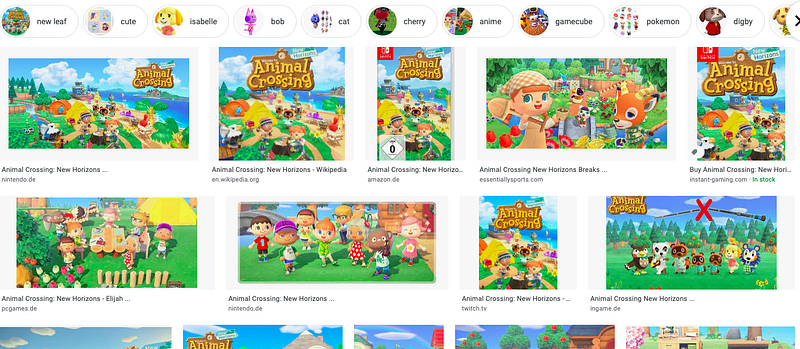
“When the Going Gets Tough, the Tough Get Going.” So far, so good. But, also, escapism can be a beautiful thing once things become more complex. In times of health-related social distancing requirements, all-digital entertainment that’s supposed to be consumed locally comes with a natural advantage. Add the human need for social interaction to it and you end up with computer games that can be played via networks. Or — bonus! — that can form a homy feeling network themselves. A good example of such is Animal Crossing. Established in 2001 by Nintendo, its’ 5th, most recent, update came to market March 20. Just in time when all relevant free markets got hit massively by the Corona pandemic. Paving the way for the game to finally became a massive success. Not for its graphics, not for the most outstanding gamification, not for any special surprises or for its most brilliant design worlds. But just for the fact that it can make the human mind forget all the worlds misery for a wee bit. By keeping us busy with sending funny digital animals to cute tiny islands, visiting our friends’ avatars hosting cosy little gatherings. Why it matters? The more complex life on planet earth seems to become outside of our windows, the more relevant truly family entertainment content seems to become. No teachings, no hidden messages, no fighting. Just good, plain fun. Entertainment of its purest form. We need this now. We might need more of it in the future.
And, last but not least: become your very own tycoon!
If becoming a true Ace Of Spades is more about what you are up to even while moonlighting over playing a game or two, “FestivalTycoon” might be your dream come true. Currently, in development out of a Vienna based developer studio, the game seems to be on its way to become the perfect simulation of how to build, organise, run and monetise a music festival. Including your chance to finally build the mosh pit of your dreams. Or have the headliner performing just for you and your best friends (with virtual money invoiced only, you might even be able to foot the bill for the private gig.) And, who knows, maybe one day you will be able to host your very own Travis Scott ** LIVE show out in the real worlds’ green, based on what you learned from this game while self-isolating. (**Alt.: put name of your favourite artiste here :-) )