avatarShubha Apte

Summary

The article describes a tranquil experience observing the full moon over the Ganga in Rishikesh, reflecting on its cultural and spiritual significance in Hinduism, and referencing Shakespeare's poetry to capture the essence of the moment.

Abstract

The author shares a personal encounter with the ethereal beauty of the full moon as it illuminates the Ganga in Rishikesh, a city in the foothills of the Himalayas. The experience is one of serene calmness, evoking a sense of wonder reminiscent of Shakespeare's poetic descriptions of moonlight. The full moon day, known as Purnima in Hindi, holds religious significance in Hinduism, marking an auspicious occasion for fasting and reflection, with beliefs that it brings balance to the body and mind. The author also acknowledges the inspiration drawn from Sahil Patel's nature prompt and appreciates the writings of Allisonn Church and Marta Henriques on the moon's impact.

Opinions

  • The author finds the full moon's glow over the Ganga to be a profound and peaceful experience that transcends description.
  • There is a strong connection between the full moon day (Purnima) and Hindu cultural practices, with the day being considered auspicious and a time for fasting and spiritual reflection.
  • The author quotes Shakespeare's "The Merchant of Venice" to poetically convey the beauty of the moonlit scene, suggesting a deep appreciation for literature's ability to capture natural beauty.
  • The article implies that the full moon has a purifying effect on the body and mind, with the practice of consuming light food on Purnima believed to reduce acidic content and restore balance.
  • The author values the community of writers responding to nature prompts, citing the works of Sahil Patel, Allisonn Church, and Marta Henriques as sources of inspiration.

Enchanted By The Ethereal Glow

In response to the First Week of February Nature Prompt
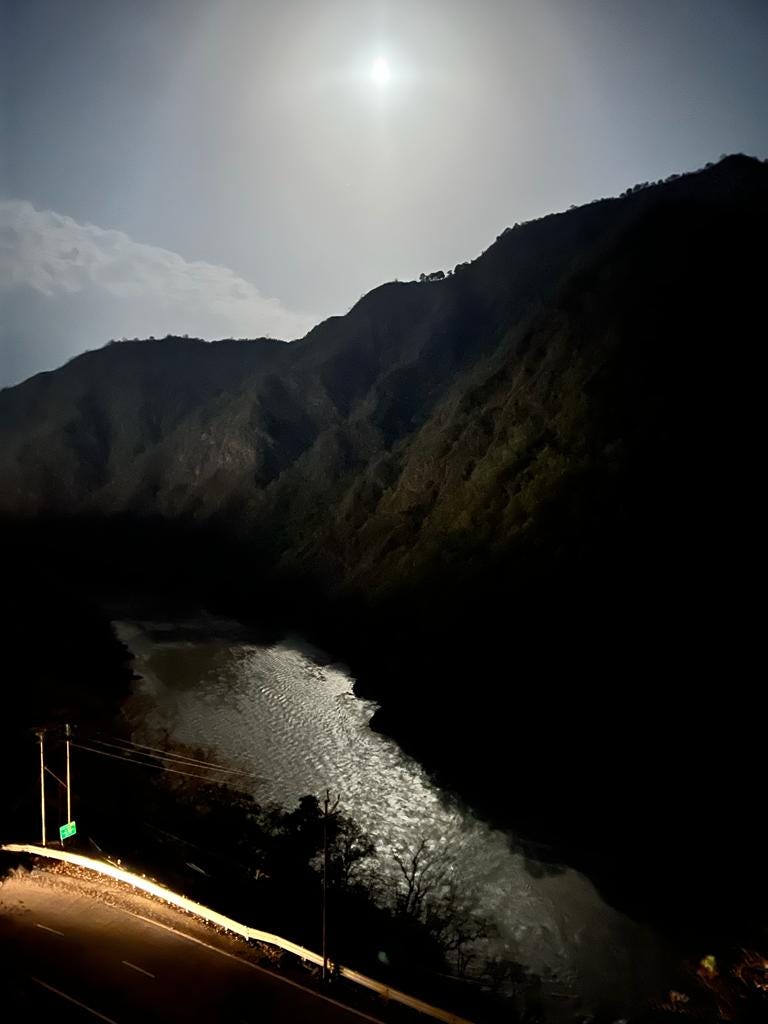
Photo by Shubha Apte

The full moon is associated with mystery, magic and a sense of wonder and awe. I experienced a feeling of calmness and tranquillity while observing the moonlight on the Ganga in Rishikesh.

Rishikesh is in the foothills of the Himalayas in northern India. Ganga flows through the Himalayan Valley and originates from the mountainous terrains of Rishikesh.

I was in Rishikesh on the full moon day, and my hotel was on the banks of the river Ganga. To sit on the banks and observe the moonlight spread on the river water can not be described in words but can only be experienced.

It reminded me of William Shakespeare’s magical words,

How sweet the moonlight sleeps upon this bank!

Here will we sit and let the sounds of music

Creep in our ears: soft stillness and the night

Become the touches of sweet harmony.

William Shakespeare, The Merchant of Venice

The full moon day, called Purnima in Hindi, is an auspicious day per the Hindu calendar. During this day, most people observe fast throughout the day and have a light meal at night after sighting the moon.

It is believed that taking light food on the full moon day helps to reduce the acidic content in our body system, slows down metabolic rate and restores the body and mind balance.

The full moon day is considered auspicious and is important in Hinduism because the moon completes its one cycle around the earth, which signifies the end of a chapter in one’s life.Thankyou Sahil Patel for this inspiring nature prompt.

I also enjoyed Allisonn Church prose poem,

Marta Henriques importance of moon for her and the impact it had made on her life,

Reciprocal
Nature
Peace
Moon
Recommended from ReadMedium