
Why Doesn’t the Moon Have an Atmosphere?
A few days ago, one of my readers sent me the following question via email:
Hello. Please explain why Pluto has an atmosphere, even though it’s fragile, while the Moon, which is six times larger, does not have one.
Let’s dig in. Indeed, Pluto has a fragile atmosphere. The surface pressure on Pluto is approximately 1 Pa. For comparison, the atmospheric pressure on Earth under normal conditions is 101,325 Pa. Technically, the Moon also has an atmosphere, but it is millions of times thinner than even Pluto’s atmosphere. The surface pressure on the Moon is 0.00000001 Pa.
There are several reasons why the Moon does not have an atmosphere.
Proximity to the Sun
The Moon has no magnetic field. Additionally, the Moon has relatively weak gravity. Solar wind particles sweep away gas particles into space, firstly because there is no magnetic field to protect the Moon’s atmosphere, and secondly, because the Moon’s gravity is so weak that it’s easy for gas particles to overcome it. Therefore, the Moon can’t hold onto a substantial atmosphere.
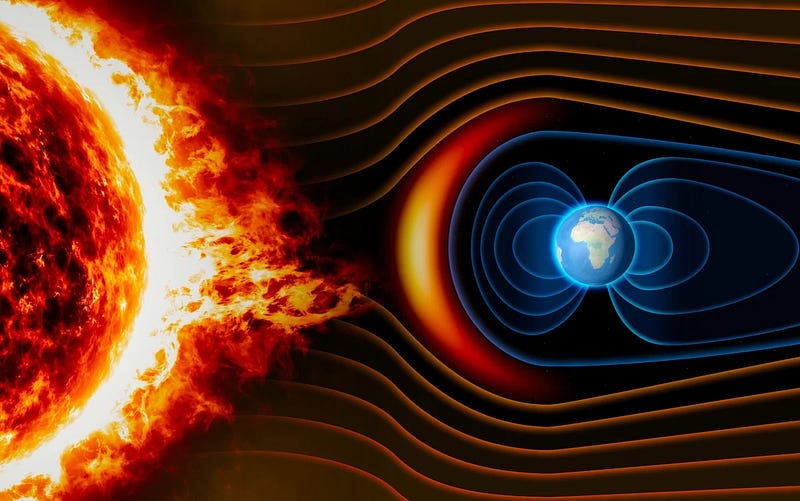
More giant planets like Venus and Earth retain their atmospheres primarily due to stronger gravity and secondly due to the presence of a magnetic field (Venus doesn’t have its own magnetic field, but it does have an induced one). Mars also has retained remnants of its atmosphere due to its significantly greater mass.
Pluto also lacks a magnetic field, but it is 30 times farther away from the Sun and receives 900 times less solar wind than the Moon. Therefore, it manages to maintain a fragile atmosphere.
Low Escape Velocity
As mentioned earlier, the Moon has weak gravity. Therefore, its escape velocity (the second cosmic speed) is much lower than Earth’s. For example, the surface escape velocity on Earth is 11.2 km/s, whereas for the Moon it is 2.37 km/s.
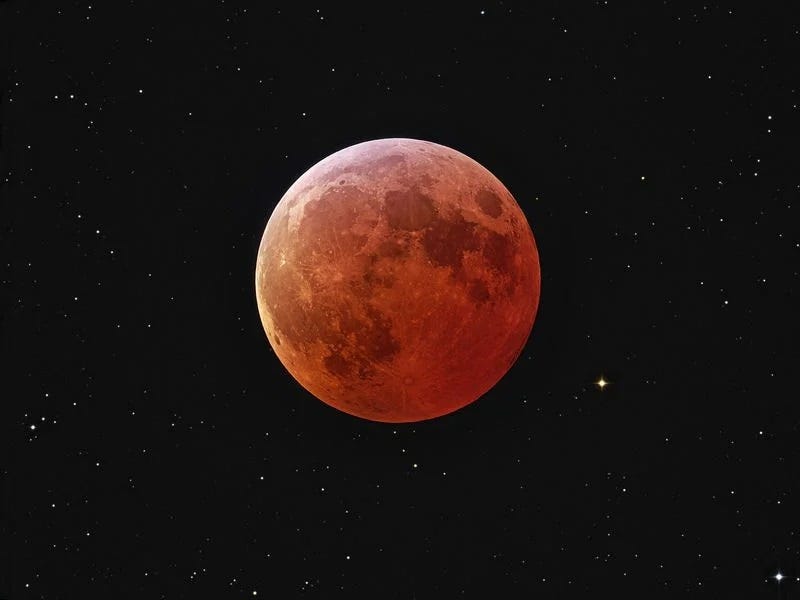
It means that any particle moving at a speed of 2.37 km/s (or faster) will inevitably leave the Moon and fly into space. Using Maxwell’s distribution, it’s not difficult to calculate the average molecular speeds for most gases.
Most light gases, such as hydrogen and helium, can easily reach escape velocity and leave the Moon even without the help of solar wind. For example, the average speed of hydrogen molecules at room temperature is nearly two km/s.
No Sources of Replenishment
Another reason why the Moon doesn’t have an atmosphere is that it lacks tectonic and volcanic activity. Without plate tectonics and active volcanoes, the atmosphere is not replenished by the emissions of volcanic gases. In other words, the Moon’s atmosphere is not being replenished with new gases and any existing gases are either carried away by the solar wind or escape on their own.
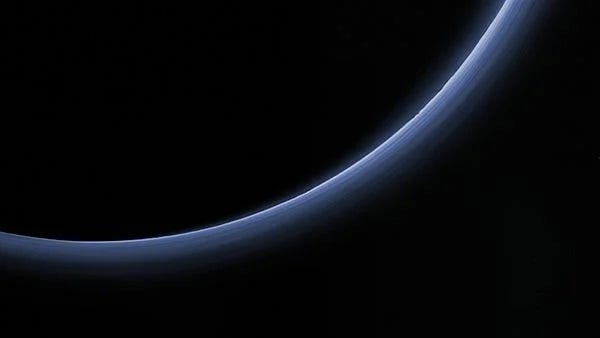
On Pluto, the atmosphere is continuously replenished by the periodic melting of sun-warmed hydrocarbon ices on the surface of Pluto and by emissions of gas from the planet’s interior, particularly nitrogen. The exact source of these emissions has not yet been determined; it is assumed that some geological activity is still occurring within Pluto.
There Was An Atmosphere After All!
However, research on lunar soil samples brought back by astronauts from the Apollo missions, mainly the magmatic rocks, suggests that the Moon once had a fairly dense atmosphere. It was about twice as dense as Mars’ atmosphere is now.
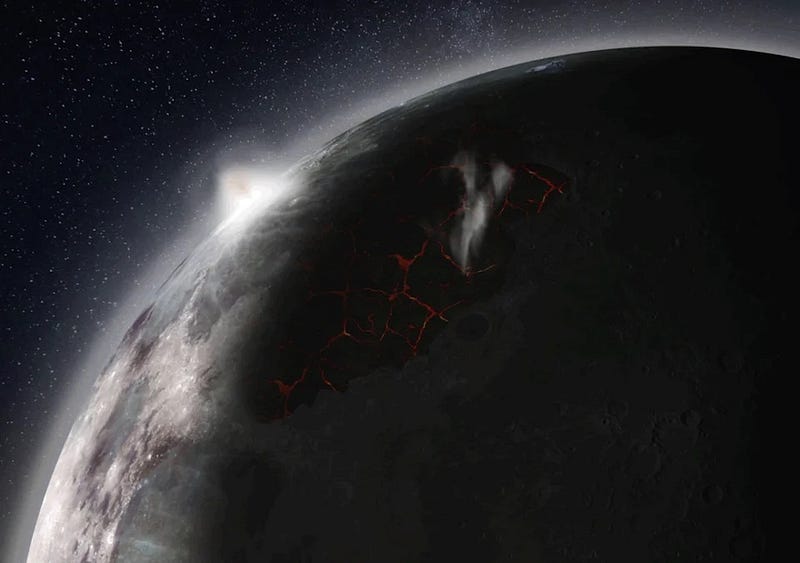
It was approximately 3.5 to 3.8 billion years ago. The atmosphere was likely formed from volcanic gases that erupted to the surface due to volcanic eruptions and from the Moon’s collisions with various meteorites.
The Moon’s atmosphere was primarily composed of carbon dioxide but also contained water vapor, suggesting that there might have been liquid water on the surface of the Moon for at least a short period.
At that time, the Moon was already tidally locked with Earth, meaning it always faced the Earth with the same side. Because of this, days and nights on the Moon lasted for tens of Earth days, and any significant bodies of water could not form there. The period during which the Moon had an atmosphere, according to scientists’ estimates, lasted for about 35 to 40 million years.
Clape if you want to see more articles about space in your feed!
Subscribe to our channel and ask your questions, which I will answer in the following articles.
If you like my work, you can support me by becoming a member of the medium using this link. It will cost only $5 per month and will help us create even better content.


