The Phoebus Cartel Was Never Really Evil
Debunking the myths around the 120-year lightbulb, shining a more positive light on the Phoebus cartel, and getting the facts right around LED lights.

There are very few things in terms of technology as ubiquitous as the humble lightbulb, and for good reasons. “Let there be light” changes everything. It helps us see things, see each other, transmit information, enables screens for us to stare at, and I could go on and on. Light produced through the use of electricity is everywhere and without it, our civilisation would crumble. If you thought lockdowns during the pandemic or climate change were bad, imagine turning off the lights forever. “Oh God, we’re all doomed!” would be a very optimistic reaction compared to what would actually unfold within minutes, and it wouldn’t even have to happen in the middle of the night.
My fascination with light and lightbulbs started at the age of around 7, right after the death of my grandad. As an “inheritance” I received a big bag full of plastic building blocks. They weren’t quite LEGO, but worked quite similarly. The piece variations were quite limited, though, as you were meant to build mostly houses out of them. Doors, windows, bricks, roof slopes and that was about it. Building houses got boring pretty quickly, so I decided it needed something extra — it needed lighting.
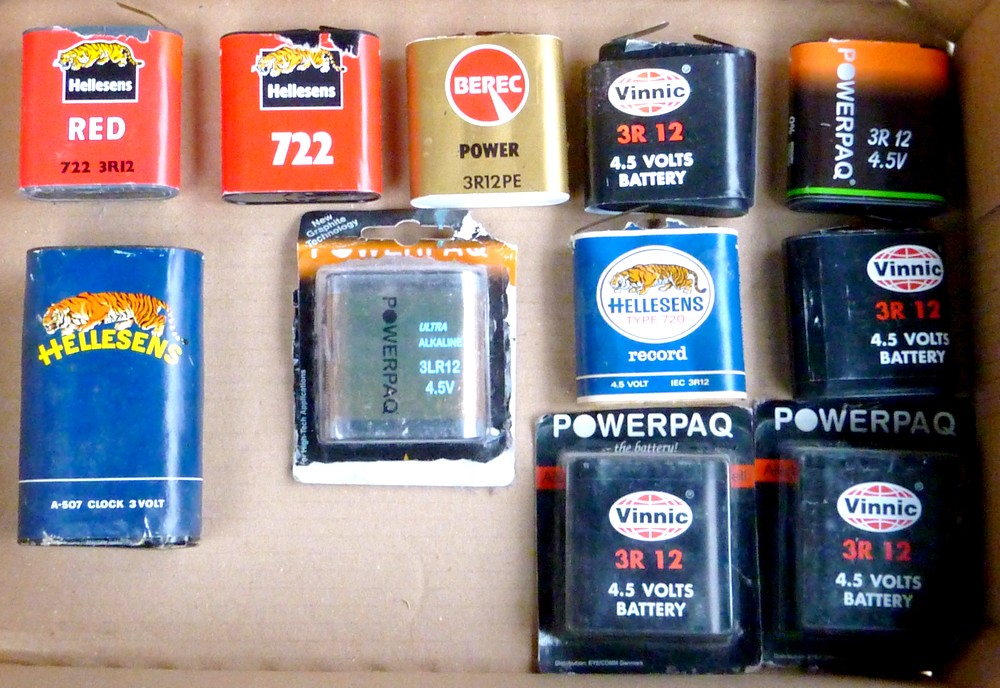
For a 7-year-old, I came up with a pretty ingenious idea. Another thing I “inherited” from my grandad was an old torch (flashlight). It ran on a single 4.5 volt rectangular battery (a battery pack of three 1.5 volt batteries, really). This made the torch fairly compact, unlike the tubular one my parents had, so it fit right into the “attic” of my toy house, with the reflector bit facing the inside of the building. Flip the switch on, and voilà, there was light. I was pretty pleased with myself.

My dad, inspired by my idea, decided to teach me something, namely, how to take the torch apart. I ended up with a small lightbulb, and a 4.5 Volt battery. To make light happen, all I needed was to touch the two contacts of the lightbulb to the battery’s two contacts. At this point, there was but one piece of the puzzle missing. Wires, of which dad — who never threw away anything — had plenty.
A small lightbulb, a battery and two wires started off a decades-long interest in electronics, technology, and a passion for energy-efficient lighting.
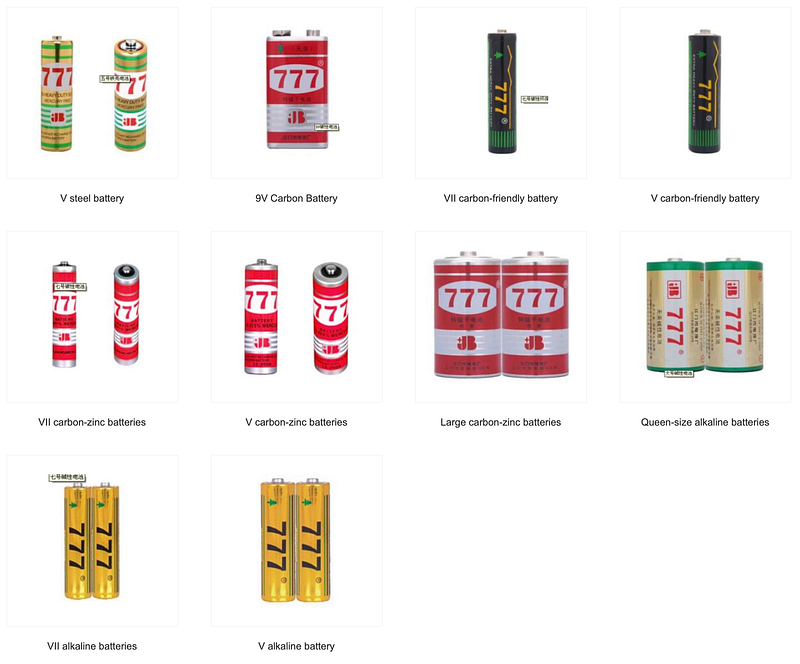
Of course, making light with a small battery felt magical, so I needed to understand everything about it, and I did that through experimentation. I quickly understood that as my battery started depleting, the light would get dimmer and dimmer. The amount of light also depended very much on how many batteries I used. I started buying cheap batteries by the dozen from a brand called 777, that surprisingly still exists and makes batteries to this day!
What followed quickly after is something that some readers are probably already expecting with an all-knowing grin — and indeed, I soon found out that there is a limit to how many batteries my little lightbulb can cope with. For a couple of weeks I spent more pocket-money buying little bulbs than I or my parents were comfortable with, but as it usually does, experimentation goes hand in hand with science, and I finally learnt that the life of a lightbulb is simply put inversely proportional to the number of batteries I connected.
I had a lot of burnt-out bulbs, but I learned a valuable technology lesson through simple experimentation.
Having a bit of understanding now how things worked, my later experiments caused far less damage, but I did end up with more burnt-out bulbs, but now, over time. What I observed as a child was that the brighter the bulb burnt, the less its filament lasted. If my bulb was supposed to take 9 volt batteries just fine, and I kept it running continuously on 12 volts — by then I had an adjustable AC-to-DC transformer — the bulb’s life would be shortened by a considerable amount compared to just running it on 9 or even 4.5 volts.
More light = shorter bulb life. Less light = longer bulb life.
At this point, I became really curious about the mechanics of lightbulbs as during my experimentation I also managed to break the glass on a couple of them only to notice they burnt out as soon as I connected them to a battery. Clearly, there was something invisible involved in having more than just a brief flash of burning filament. As back then there was no internet, I turned to my trusted encyclopaedia. The way my dad put it, there was no “air” inside the glass bulb. Therefore, the filament kept glowing instead of just burning out instantly. While he was technically correct, my encyclopaedia went a tad further. An incandescent lightbulb is filled with vacuum or an inert gas. This keeps the tungsten filament from burning out and as it heats up to as high as 3,000 Celsius, it emits light. If the bulb is filled with gas, it tends to be either argon, nitrogen, krypton, or xenon. My small bulbs — as standard — were all filled with vacuum.
Long story short, depending on the gas used in the bulb, the filament can glow at higher temperatures, giving out more light without shortening the life of the bulb, or running at standard temperatures rendering a longer filament life-span.
So how about that 120-year light-bulb?
It’s a real lightbulb, no question about it. But you know that saying about things sounding too good to be true? It applies here as well. While the lightbulb itself is real and still in working order, the light it emits is so dim that calling it a lightbulb and proof that lightbulbs can last a lot longer than 1000 hours, is downright laughable. That’s a lot like stating that a gas can lasts 20 years when all you’re doing is lighting cigarettes with it 10 times a day. In fact, that gas can, if used for cooking — as it’s meant to — would probably deplete within three weeks.
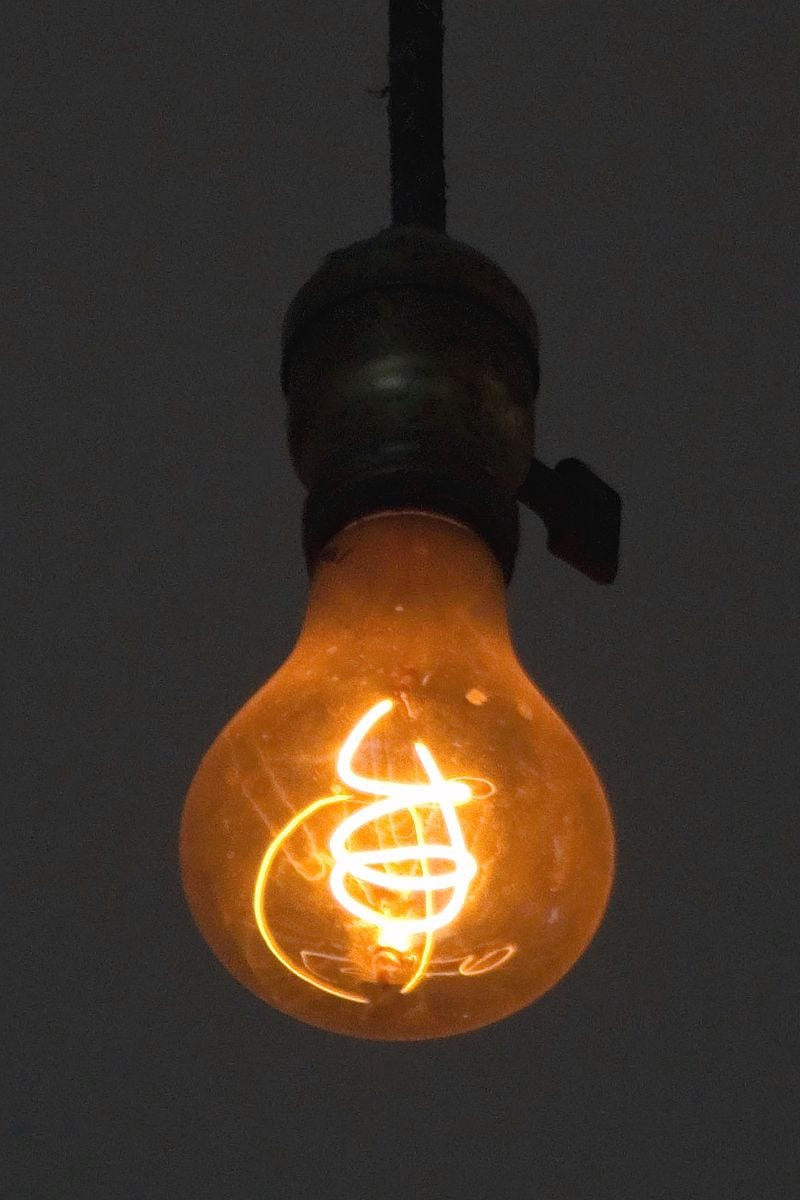
The Centennial Light, as they call this “lightbulb” was originally manufactured to be a 60-watt bulb, but over 120 years in, it’s emitting barely what a 4-watt nightlight would. That’s barely more than my tiny 2.5V mini bulbs would produce back in the day! Nowhere near enough even for reading, not to mention lighting a small room, yet its fans are acting as if it were a 120-watt xenon bulb shining a light on a dark hidden truth, exposing the infamous Phoebus cartel.
The cartel that really wasn’t…
The incredibly abridged version of the Phoebus cartel conspiracy theory claims that in 1925, major incandescent lightbulb manufacturers agreed to limit the lifespan of all bulbs to 1000 hours and nearly 100 years later, that limit — even long after the dissolution of the “cartel” — has been kept.
What no-one is disputing is the existence of the Phoebus corporation. It’s also an undisputed fact that the 1000-hour standard was agreed upon by both European and North American companies like Osram, General Electric, Philips and Associated Electrical Industries. Was profit a primary concern? Of course, it was. I always find it puzzling when people living in a capitalist society point the finger at businesses for wanting to turn a profit. The entire point of a business is to make money and to accomplish that, it needs to be a sustainable business. Turns out, when really considering all factors, running 2500h bulbs wasn’t a sustainable avenue for anyone, not even the consumer.
What conspiracy theorists often very conveniently forget to either research or admit, is the most important aspect of any lightbulb, not just incandescent — efficiency. Light-source efficiency is measured in lumens-per-watt, lumens being the amount of visible light and watt translating directly to the amount of electricity a consumer ends up paying, and in this case, the higher one goes from 1000h, the less efficient the incandescent lightbulb becomes.
In essence, using a 2500h lightbulb would have cost more to the consumer in electricity bills than the cost of the extra 1.5 bulbs over the same period of time.
Of course, lightbulb companies saw their profits going up by a considerable margin as people started buying more bulbs, but everyone seems to be acting as if lightbulbs were a luxury item, costly to purchase. It couldn’t be further from the truth. The luxury aspect for many was having electricity in the first place, and then paying for it. If anything, the “cartel” helped reduce power consumption and lower bills by making lightbulbs have a standard life of 1000h. Guido Mingels has a very interesting article about the cost of light through the ages, which — based on verified stats — proves that the cost of 1 hour of light in 1900–25 years before the new 1000h standard — already cost as little as 4 euros in 2012 money. In the year 2000, the cost of 1 hour of light was already as low as 4 euro cents!
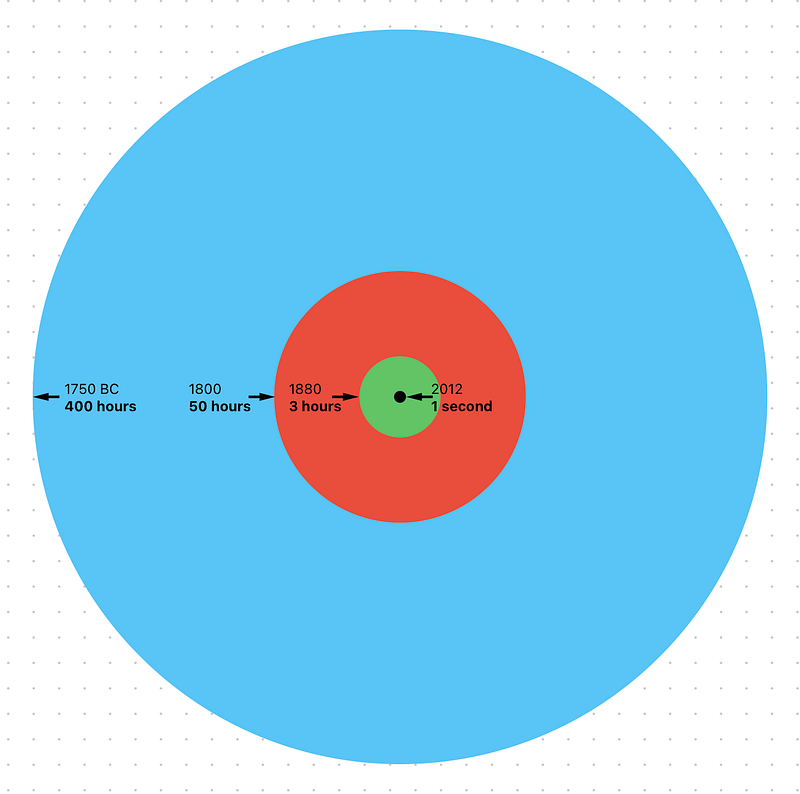
The 1000 hour life-span made more sense from a cost-benefit analysis perspective than 2500 hours, or any other number.
One could even argue that all those fossil-fuel run power plants would have had to double or triple their output if inefficient 2500 hour bulbs had stayed the norm, causing global warming to be an even bigger concern than it is today. Imagine my little lightbulb draining my 4.5 Volt battery 30% faster than it did just to last twice as long, run hotter while not giving any extra light either.
Lightbulb manufacturing became cheap quickly, so cheap in fact that buying them by the dozen didn’t put any financial strain on households. There was no point for any lightbulb manufacturer to sell them at a high price, as that would have kept people from adopting electricity or using bulbs enough to have to buy new ones. Making them prohibitively expensive would have been a shot in the foot. Their own foot.
What you need to know about LED lights
So how does that bring us into the LED lighting era? Well, it doesn’t really, and I know, those of ye in the back screaming something around the lines of “but fluorescent tubes were just fine”, I don’t entirely disagree with you. While not great for every application, they did precede LEDs, and guess why? Efficiency. The very thing that seemingly everyone ignores until the electricity bill drops.
If you ever wondered why offices were famous for having fluorescent tubes everywhere, well, cost was one of the main reasons. Imagine running incandescent bulbs in huge multi-floor office-spaces. Not only isn’t the light’s yellow colour very suitable, it would also send the bill through the roof, on top of having the need to purchase industrial amounts of bulbs every month and having maintenance replace bulbs just about daily. Fluorescent tubes fixed all of those problems and many more. In fact, they were so loved that many households shifted towards them as well. My parents’ home was, and to an extent still is, entirely lit by fluorescent tubes of various shapes and sizes, bringing lighting cost down by about 70%.
Investment and maintenance for these glowing tubes was also always low enough for people to consider it irrelevant. In my personal experience, the fluorescent starters were the things that tended to go more than anything else, and those were cheap.
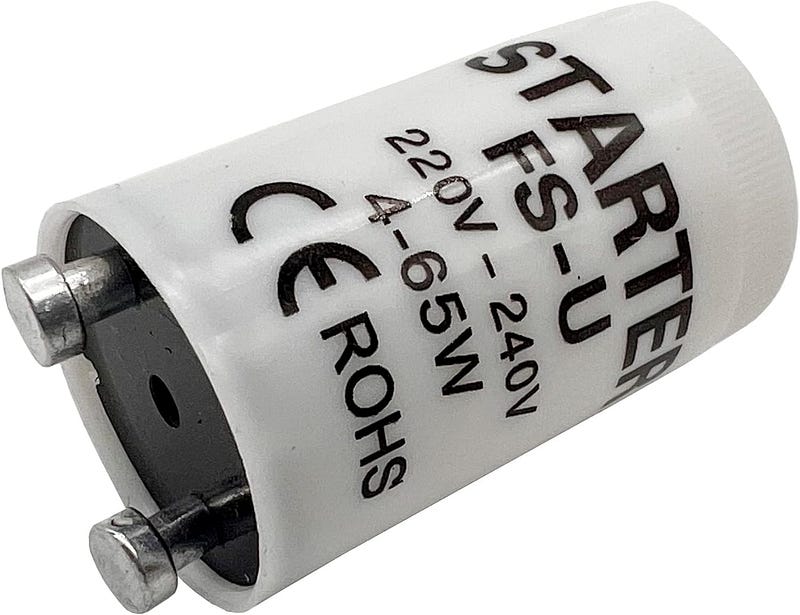
A pack of 12 costs about 10 euros. The ballast tended to outlive actual people and tubes always lasted well-above the 1000 hours of an incandescent bulb. In real-world scenarios over the years, I have seen them last as many as 25,000 hours in a home. Not having to replace one for 6–7 years wasn’t unheard of.
But the race for lighting efficiency didn’t stop, hence the latest trend — LED lighting.
I jumped on the LED bulb bandwagon soon after Apple started selling Philips Hue lights in their stores. LED lighting as a concept wasn’t new to me, of course. Both as a hobbyist and someone who studied electronics in school, LEDs were pretty common components in my little projects. I have some right here, in my office desk drawer, waiting to be used. Traditionally, though, they were used for indicating things or tacky light-shows on speakers. The idea of using LEDs to light an entire room was quite intriguing to me, and for good reason.
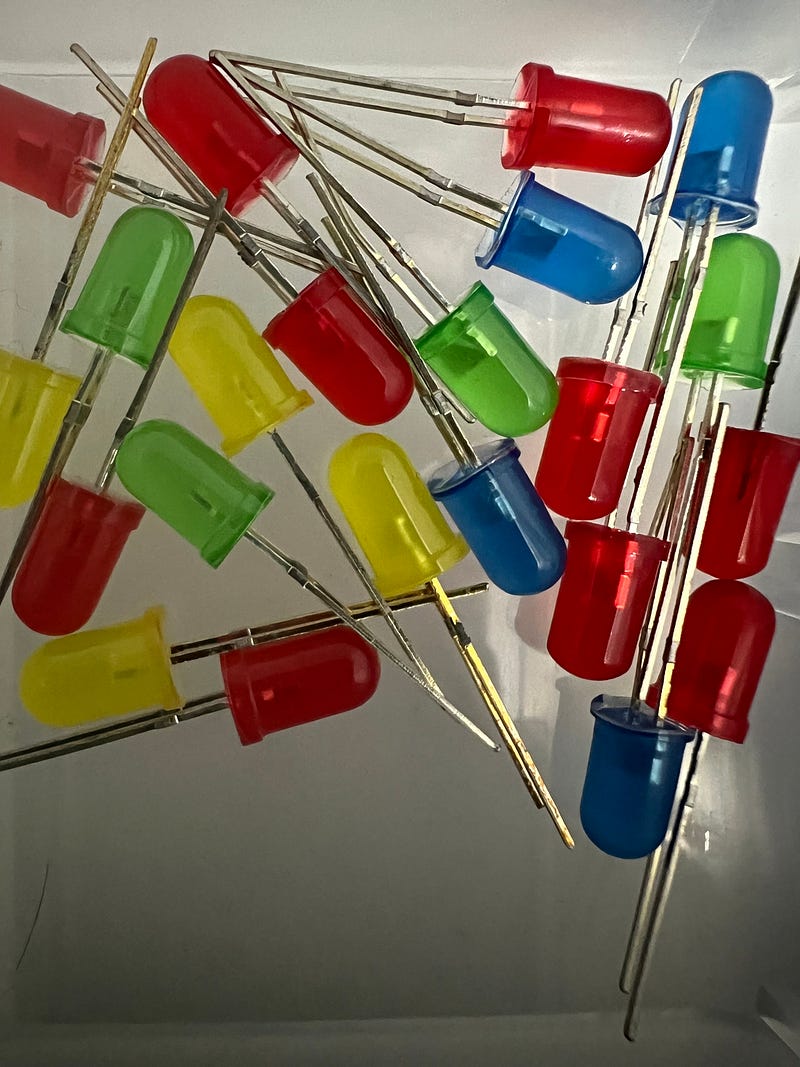
LEDs are really diodes that happen to emit light, and just how much they can emit varies, but it’s not exactly an awful lot. One diode alone would never be able to compete with an incandescent bulb — unless it’s the Centennial Light — or a fluorescent tube. But it comes with one huge advantage over everything else — size. Diodes being incredibly small, often the size of a grain, you can mount a gazillion of them on a circuit board, and suddenly you got yourself a very powerful light. It’s very common to find 10 or more little individual LEDs inside a bulb.
Even when considering the jump from fluorescent to LED, it’s still a 50% improvement in efficiency, and I am being conservative with the numbers. Even considering the investment into the bulb itself, the cost saving on one’s electric bills are immediately and very-very noticeable. Those moving from incandescent bulbs to LED will notice a 5–7 times drop in their monthly bills, while fluorescent fans migrating to LED will essentially half their lighting bills. Just look at this lumens-per-watt comparison.
- Incandescent: 15 lumens-per-watt
- Fluorescent tube: 50 lumens-per-watt
- LED: 75 lumens-per-watt
LED lighting also solves the lifespan issue, the infamous 1000h “problem”. On paper, they last 35,000–50,000 hours. Real world life-span varies though and this is one important factor to keep in mind.
In general, the incandescent bulbs tended to underpromise and overdeliver as most of them would last a bit longer than the advertised guaranteed 1000h. Some would even last as long as 2000 hours. With LED bulbs, it’s a tad the other way around. Given that these are no more electric but electronic devices, there are more points of possible failure. It very often isn’t the LED itself, but other circuitry around it. It’s important to note that these can also fail just partially. If one diode out of the many in a bulb goes, the rest will keep on working just fine and the bulb keeps shining — albeit a bit less bright.
The advertised 35–50,000h lifespan can be true, but it’s not really guaranteed and varies from manufacturer to manufacturer. Always assume less. 25,000h is a realistic average.
That still means nearly 3 years’ of continuous use, which in normal households means somewhere around 7–12 years. In the last decade or so, I have only experienced one failing LED bulb, and it wasn’t the diodes failing, but the circuitry starting to burn. It was a “cheap Chinese” LED bulb bought on Amazon for a change. All my other bulbs — all Philips Hue — are between 7 and 9 years old. That includes light-strips as well. Add lifespan into the mix and LED lights become by far the most efficient lighting solutions current technology can offer.
A century later…
As much as conspiracy theorists like to chew on the whole Phoebus cartel story, I really don’t think it holds much water. Incandescent lighting had and still has serious limitations, and it was a fine balancing act between efficiency, profit, sustainability, and standards. Was there an attempt to capture the entirety of the lighting business? There certainly was, but not to the extent to call it a cartel in a derogatory sense. Per The American Heritage Dictionary of the English Language, a cartel is:
A combination of independent business organisations formed to regulate production, pricing, and marketing of goods by the members.
Going by the above, almost everything around us is a cartel. The entirety of the EU, the US, the old Soviet Bloc, major tech companies and the list could go on and on. From where I’m standing, the 1000h lightbulb standard introduced by the Phoebus cartel was basically harmless at worst. Those more optimistic could even argue that it helped propel civilisation into the modern age through something as simple as decent lighting from a single, cheap lightbulb, allowing scientists to discover things such as the ubiquitous LED that lights more and more homes today for the minuscule cost of just 1 cent or less per hour.
Attila Vago — Software Engineer improving the world one line of code at a time. Cool nerd since forever, writer of codes and blogs. Web accessibility advocate, LEGO fan, vinyl record collector. Loves craft beer! Read my Hello story here! Subscribe for more stories about LEGO, tech, coding and accessibility! For my less regular readers, I also write about random bits and writing.