
Common Lisp In 2055
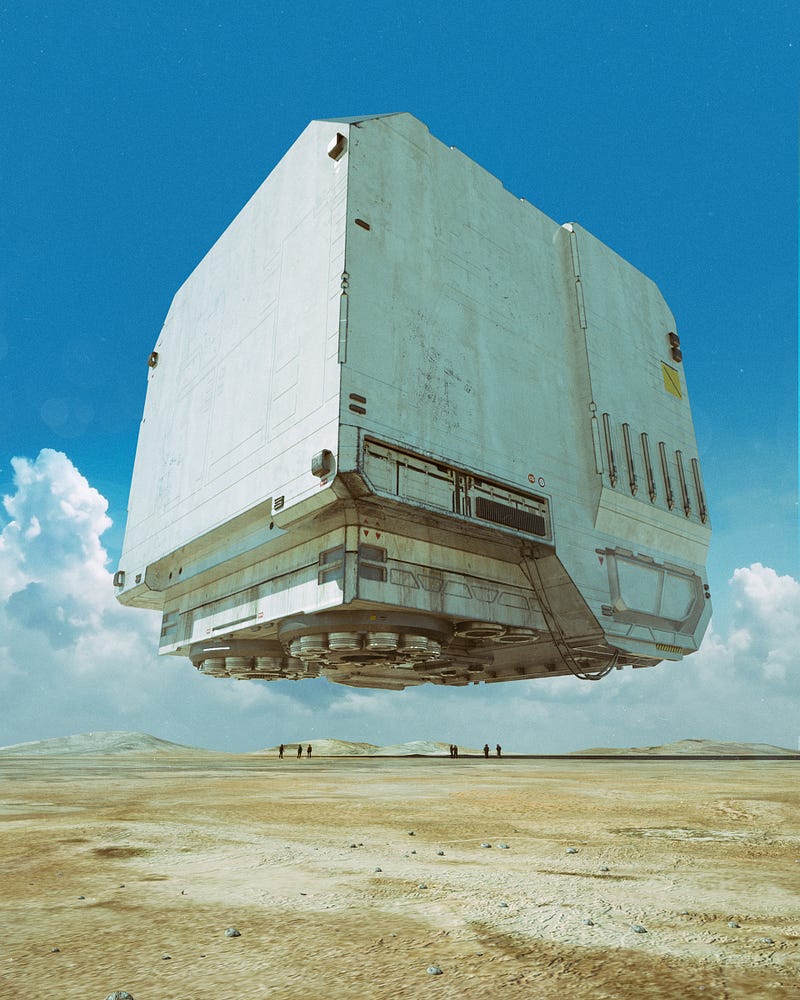
The year is 2055. AI automation has made 99.7% of all jobs obsolete — a human barista is now a rare novelty.
Despite AI calling the shots, it can’t generate truly original ideas — there’s just something fundamental about human creativity, perhaps linked to the mysterious quantum microtubules in our brains.
We still need new ideas, the economy runs on them. But after millennia of civilization, genuinely novel ideas are rare. This is where “Idea Engineers” come in.
Idea Engineers work inside controlled environments called “Idea Farms,” purpose-built to nurture creativity. Here, humans let their minds run free. An AI evaluates every passing thought, comparing it against humanity’s collective knowledge to extract the rare, truly original concept.
Most become “R.E.M. Engineers,” who sleep with neural interfaces that upload their dream-generated ideas directly into The Cloud (the world’s first anti-gravity data center). They literally dream for a living.
Then there are the “Nirvana Engineers,” the rock stars of the idea world, who create ideas while awake, often enhanced by precisely microdosed pharmaceuticals.
Welcome To The Idea Farm
I work for MaltaTech, the technology firm under the Sovereign Knights of Malta — now humanity’s de facto rulers, despite their humble origins as medieval crusaders.
My starting role was “Junior Nirvana Engineer”. After a few weeks, I got high on salvia and accidentally drew a series of loops in the air — apparently some monumental breakthrough in topology.
This unexpected success earned me a promotion to Senior II Nirvana Engineer, complete with premium drugs and my own windowed idea pod.
My daily routine at the Idea Farm — a sleek, futuristic facility inspired by early-2000s sci-fi aesthetics — begins by checking in with my AI manager, SCRUM, who assigns tarot cards to guide ideation sessions (a corporate ritual inherited from the ancient Agile Manifesto). Today’s card is “The Tower,” signifying sudden, transformative change — a promising omen.
Settled comfortably in my pod, I take my corporate narcotics and relax into creative mode, surrounded by ambient lighting and the ever-present “Music for Spaceports” by The Aphex Twins (I love classical music). My neural interface captures every thought. Rare ideas earn a bonus; practical ideas enter the GNU GPL Blockchain, generating royalties.
Most days, I get nothing. SCRUM’s favorite phrase is “This concept was already explored in ‘Capitalism and Schizophrenia’ by Deleuze and Guattari (1972).” I’ve never read it, but at this point, I’m convinced those guys thought of literally everything.
The WeWork Civil War
Like most things nowadays, Idea Farms exist solely in the Metaverse.
Physical land became so expensive during the WeWork Civil War¹ that it lost all practical value, relegating the real world to anti-radiation pods designed for human storage.
The Sovereign Knights of Malta² had centuries of experience in managing a nation-state without a physical territory, which made them perfectly suited to become the rulers of humanity after the “Great Metaverse Migration” following the war.
They now control a significant portion of the economy. Which largely consists of exchanging cryptographic assets with mysterious aliens.
Oh, and aliens exist.
Turns out the galaxy is divided into regions controlled by different species, humanity being the newest kid on the block.
Unfortunately, direct contact with other species is just too much for humans to handle, due to what the government calls “the extremeness of the situation.”
Consequently, diplomatic interactions occur exclusively via robotic intermediaries positioned at galactic borders.
¹ WeWork became a paramilitary organization in 2037, when the supplies of free kombucha ran out. ² The Knights of Malta, a medieval order (arguably as formidable as the Knights Templar), have been sovereign without territory since the 12th century.
The Forbidden OS
After a long day, SCRUM discarded my latest creation. “A democracy where voters are replaced by feral cats. Reason: Prior art — 19th century French anarchist thought. Please inhale and try again.” Fuck the French.
Weeks without a good idea were starting to wear on me, especially because an entire area of knowledge was locked away. It felt like having a puzzle with huge pieces missing.
Like most digital devices, SCRUM has DRM technology (Danger Recognition Mechanism) that prevents humans from accessing alien information beyond bare essentials.
But I was determined. Convinced that genuine originality, and even true freedom, awaited beyond these restrictions. So I installed a DRM-free Linux distro as my work environment, explicitly violating the Cosmic Stability Act.
My colleague Maya — a calm and calculating Senior III Nirvana Engineer, represented digitally as a floating purple light — caught me installing it during lunch.
Maya was respected around the farm, having unlocked the highly coveted “Literally Buddha” achievement on her first 6 months, which even allowed her to skip those boring “AI empathy training” sessions.
“Don’t you know that OS can melt your brain?” she warned, mentioning Johnson from Accounting, who famously saw an alien diplomatic transcript and spent three weeks convinced his skin was made of math.
“That’s just Maltese propaganda,” I replied dismissively.
Later that day, I connected my neural interface to my Linux distro. I took the usual dose (plus a little extra I had saved up for a special occasion), laid back, and opened myself to the universe.
Immediately, the flood of ideas overwhelmed me, symbols and parentheses flew faster than comprehension allows. An immense, unknowable presence emerged, communicating through trees and multidimensional macros. I realized that I was experiencing something like the language of God — a surprising revelation, given I was raised as an Atheist-Buddhist like most people.
Then darkness enveloped me.
A Thousand Parentheses
I awoke three days later in a hospital, greeted by Maya’s relieved shade of purple. “Are you alright?”
A calm voice interrupted. A mysterious figure representing the Knights of Malta Digital Security Division approached in full crusader knight armor. He calmly informed us that we’d both accessed forbidden interstellar knowledge.
“Both of us?” Maya asked. “But I didn’t do anything.”
“We’re aware of your modified OS. You’re just more discreet — typical of OpenBSD users. However, we’re not here to prosecute. We’re here to offer you a job.”
“A job?” Maya asked.
“Being in possession of alien knowledge opens up some job opportunities. To be fair, the dangers are somewhat overstated to avoid saturating the market.”
“Then what happened to Johnson from Accounting?” I asked.
“Mr. Johnson is a separate case. His issue stemmed from accessing alien fashion concepts, which are particularly hazardous to human cognition.”
“Now tell me,” he continued, “during your DRM-free explorations, how many parentheses did you see?”
“I saw… all of them.”
“Interesting. Have you ever heard of Common Lisp?” the agent asked.
“That old programming language?”
“It’s way older than you think.” He replied. “Here, let me read you a passage from the scroll ‘What Made Lisp Different’ by the ancient sage Paul Graham.”
When John McCarthy (glory to Him) designed Lisp in the late 1950s, it was a radical departure from existing languages.
Lisp embodied nine new ideas: 1. Conditionals. 2. A function type 3. Recursion 4. A new concept of variables. 5. Garbage collection. 6. Programs composed of expressions. 7. A symbol type. 8. A notation for code. 9. The whole language always available.
1–5 are now widespread. 6 is starting to appear in the mainstream. Python has a form of 7, though there doesn’t seem to be any syntax for it.
8, which (with 9) is what makes Lisp macros possible, is so far still unique to Lisp, perhaps because: - a. it requires those parens, or something just as bad, and - b. if you add that final increment of power, you can no longer claim to have invented a new language, but only to have designed a new dialect of Lisp.
“Lisp embodied nine revolutionary ideas, but Paul Graham missed a tenth one, which we only discovered on first contact: Lisp is the cosmic language”, the agent continued, “Indeed, any sufficiently advanced language is indistinguishable from a Lisp dialect. Eventually, all interstellar communication converged into a single Lisp. Namely, Common Lisp.”
“In short,” he concluded, “you’ll need to master Common Lisp quickly to serve as human diplomats — it’s always good to keep a few of our own out there, just in case.”
“And the pay?” Maya asked, ever practical.
“Competitive, with bonuses and full medical coverage for macro overuse. You’ll quickly adjust to reader macros and nested quasiquotations.”
A New Career in a New World
Maya and I were assigned to a space station hidden from Malta Maps, exchanging qubits between humans and aliens dominions, encoded on little-endian and Common Lisp, as custom.
As it turns out, advanced civilizations communicate in S-expressions.
My first week writing Lisp macros was tough — I spent an entire day on a single “macro-writing macro” with three levels of nested quasiquotes and unquoting. But it was well worth the effort:
One thing troubles me, though: I’m beginning to suspect that the aliens view Common Lisp as a simple language and are only using it to humor humanity.
But maybe my worries are the product of years looking for the “next big thing,” unable to see Common Lisp as a perfect system unto itself — I’ll keep these thoughts to myself for now.
Anyway, that’s how I landed a Common Lisp job in 2055.