
Empty Rhetoric Won’t Bring Leslie Sherman Back
She lit up a room; remembering her vitality and sacrifice can help us work to end gun violence
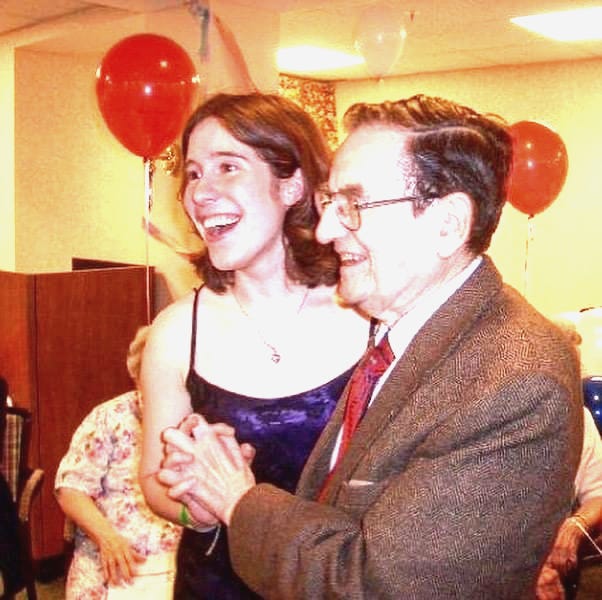
If Leslie had been there, she would have told a joke. Or 12. We all would have been smiling. Then laughing. Then, doubled up, hugging our sides, rolling in the proverbial aisles.
But she couldn’t be there. So we cried, instead.
West Springfield High School dedicated its track to Leslie Geraldine Sherman before the assembled student body, the news media and quite a few local dignitaries, including Leslie’s parents and her sister.
Leslie, Class of 2005 and Virginia Tech Class of 2009, wasn’t there for the commemoration of her love of running and her selfless devotion to the cause of personkind. She never made it to college graduation, either. She died 14 years ago in her French classroom — in Room 211 of Norris Hall on the Tech campus.
With so much violence in our world today, I think folks have become anesthetized to the sheer number of our fellow Americans who have perished at the end of the barrel of a gun. Up to 38,000 of us fall victim to gun violence every year. That’s about 100 per day.
But Leslie’s death was personal. In 2007, a lunatic took the lives of 32 students and professors on the Virginia Tech University campus in Blacksburg, Virginia. Then he shot himself to death. Five of the victims, plus the gunman, were from the Northern Virginia suburbs, an area most notable only because of its proximity to D.C. I lived there with my family for close to three decades. I taught at West Springfield High School — in the heart of what we call NoVa and Leslie’s alma mater — for 23 of those years.
One victim of what has come to be known as the Virginia Tech Massacre attended school with my kids. Two were freshmen who had graduated the previous year with the gunman who shot them to death. One was a Holocaust survivor.
Then, there was Leslie.
An avid runner, who believed deeply in service before self, Leslie competed with our track team during all four years of high school, She had an infectious smile. She trained for marathons and then ran in them; never first, always in the middle of the pack, so happy to be there. She completed D.C.’s Marine Corps Marathon six months before she died. Friends from Tech painted gaudy signs that read, “Run, Leslie, Run!”.
After that Herculean effort, Leslie was a master of the quintessential quip: “I beat Oprah’s time!” she declared with her typically unrestrained glee. It was only appropriate that the following April in the wake of her death, Leslie’s parents appeared on Oprah’s show; one condemned NBC’s screening of the killer’s video (he sent a package to the network before launching his attack on Norris Hall) and other materials. The other praised the network for its transparency, hoping NBC’s actions would help end gun violence.
Leslie, too, was full of contradictions. But that’s what made her worth knowing — and remembering.
She loved to dance. So she volunteered at a retirement home and organized what she called a “Senior Prom”, where the old guys knew how to cut a rug.
She loved history. We learned that she showed up at her high school American History teacher’s wedding rehearsal in an historic Old Town Alexandria church. Just because.
She said experiencing the past was so much more real than reading about battles and treaties and scientific breakthroughs in a musty old book. But she thought nothing of reading a 600-page tome on Napoleon. “I needed to do that,” she once said.
Leslie’s smile lit up a room. “My favorite memory of Leslie is pretty simple; it was her smile. She had a wonderful smile,” her one-time cross country coach told the high school newspaper.
Leslie had the silliest side. She once spent time with a history teacher ranking the “attractiveness” of previous presidents. And she had a crush on noted historian David McCullough. She played pranks on her friends and gave hilarious, but helpful, tips to novice runners.
I’ll always remember when Leslie, a well-known senior, clued in a freshman on the ins and outs of successfully finishing a cross country race.
The 14-year-old apparently had a tiny bladder. Her coach knew she had the makings of a good runner, but she kept stopping behind the trees on the course to relieve herself, and always finished at the back of the pack. The coach summoned Leslie to tell the kid God’s honest truth about competing in the face of adversity.
“She told me that if I felt the urge, I just had to pee my pants, and keep on running,” the young woman later wrote in a college admissions essay. “I started finishing in the top 10 after that — a little damp, but happy.” One of the most entertaining essays I’ve ever read. And the child can thank Leslie, because she was accepted by her top college choice.
Leslie ran 12 seasons — cross country, winter and spring track — for West Springfield High School. She didn’t always lead the pack, but she chose to lead in a variety of different ways.
Her passions continued into her college years. She worked in the Tech cafeteria because that’s how Civil Rights leader John Lewis worked his way through college. She continued to run. She was a double-major at Tech, in History and International Studies. She wanted to join the Peace Corps when she graduated.
Instead, she died in a senseless shooting one week after her 20th birthday and was buried at Arlington National Cemetery (her parents are U.S. Navy veterans).
“Senseless shooting”. What a useless phrase. Sort of like “Thoughts and Prayers”. We need to make some sense out of the pervasive gun violence in this country so that Americans like Leslie Sherman will not have died in vain.
Three years after she died on the Virginia Tech campus, we honored Leslie, the way she honored us with her love and perseverance. As 2,500-plus Spartans and others crammed into the home side of our school’s football stadium, we heard stories, we sang tributes, we pledged to honor our fallen friend. One of my yearbook editors at the time, representing the track team that Leslie so loved, had a difficult time getting through her speech. She was a senior, planning to start school at Tech that August, where she became a member of their Division 1 squad. I know she thought of Leslie every time she laced up her running shoes.
Empty platitudes won’t bring Leslie back. Neither will the gorgeous Leslie Sherman Memorial Track at West Springfield High School or the Leslie Sherman Memorial Invitational our high school hosts annually.
The Spartan family also honored Leslie shortly after she died with the Leslie Sherman Memorial 10K at the school’s home cross country course and then by creating the Leslie Sherman Scholarship, which is awarded every year to a graduating senior who will attend Virginia Tech. But it will be the actions of others that contribute the most to Leslie’s memory.
These tributes are incredible expressions of our love for the Leslie Sherman we knew. But I hope that keeping Leslie’s memory front and center, especially for the West Springfield students who were born so many years after Leslie’s death and were never touched by her big-hearted ways, will encourage them to help change the world. The beauty that was Leslie Sherman will touch these kids. And maybe they will spend some time working to make sure that Leslie’s life — and the lives of all of our fellows who’ve died at the hands of the NRA and Gun Nuts Anonymous — continues to mean something.
I think about Leslie every day. So do many others, I’m sure. And I can’t think of a more fitting memorial than using her memory to forge a path for peace.