
Empty Nest Syndrome: What to Expect
Lessons I learned when my child moved out of home
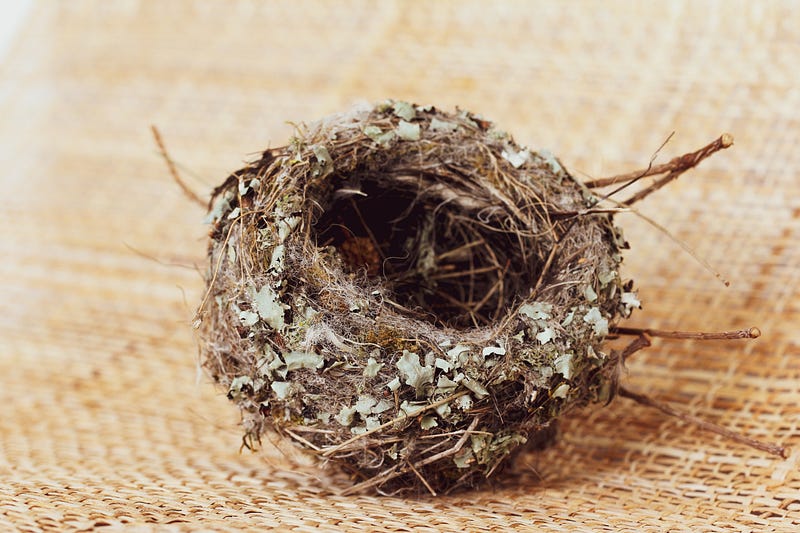
Every parent’s empty nest experience is different. While it’s perfectly natural for children to leave home and start living independent adult lives, this is a complex process of change — for you and for them.
My son moved out of the family home last year. I hadn’t put much thought into whether empty nest syndrome might affect me. I was surprised at how much it did. There is so much more going on in this period of change than I expected.
If you’re about to lose your fledging, then hopefully my experiences will help you prepare for this next stage of your life. Let’s look at what I learned.
Your child might leave home in stages
Many parents think that they’ll move into empty nest status in one fell swoop. Their child suddenly moves out and doesn’t live with them anymore.
Fact is, this can be a slow and staged process. Yes, the day will come when they leave for good. However, you get some trial flights before this happens.
For example, if your child goes to university, then they move out of your family home for extended periods. They often come back at the end of every term and live with you again.
This staged move eases you into the ultimate transition. You get used to living your life without having them around, but you don’t have to go cold turkey.
You might not feel the way you thought you’d feel
Parents typically view the prospect of an empty nest life in two ways. Some cannot wait until their child leaves home. Others are sadder. They don’t look forward to this change at all.
I don’t think you can anticipate how you will feel here. Your actual feelings might surprise you.
I worried about how I’d feel when my son left home. It felt like too big a negative. However, when he left, I think we were all ready. Yes, it was sad in a way. However, I felt good because it was the right thing for all of us.
On the other hand, one of my friends could not wait until her daughter left home. She was positive about the change and had planned lots of things to do, both with her home and her life.
She fell apart the day her daughter moved out. She became quite depressed. Rather than enjoying this new stage of her life, she couldn’t come to terms with her loss.
Because this natural change is a loss.
Mothers often struggle more here. When your child leaves home, you can feel that your life as a mother has ended. No matter how well you prepare yourself for this stage, you might have some grief to deal with.
If you do suffer from negative empty nest feelings, then the good news is that these feelings usually don’t last too long. According to The Science of Health, most people feel better after a couple of months once they get used to the transition.
Your child might struggle too
My son couldn’t wait to leave home and move into his own flat. Don’t get me wrong, we have a lovely relationship, but, boy was he ready to live on his own.
While your child might swan off into the sunset looking like they haven’t got a care in the world, leaving home can cause them some initial hiccups too.
They will miss you as well.
Once the reality of living independently kicks in, they can feel overwhelmed by their new life. They have to earn their own money, feed themselves, and take care of a lot of financial and domestic responsibilities that you used to cover.
You might find that your child calls you for advice, a grumble, or simply when they feel a bit lonely. They might want to come home for visits to centre themselves again.
Don’t feel that you have to leave them alone to settle into their new home; keep in regular touch with them. If you call or message them too much, they will tell you. Most kids appreciate you reaching out.
Luckily, our son doesn’t live too far away. If he’s feeling a bit down, he can pop home for dinner after work, do his supermarket shopping in my cupboards and fridge, and still get home again in time to go to the pub with his flatmate.
Kids often have two homes in their hearts. They come home to you and then they go back to their own home later. You don’t lose them completely, and they still sometimes need you.
Your nest might not be completely empty
We live in a small house, so I was looking forward to reclaiming space when my son moved out. Did this work? Not really.
He emptied his bedroom when he moved but it refilled itself like a Hermione Granger bag. It’s still full of things he doesn’t need right now but can’t throw away.
So, if you want to reclaim or repurpose your child’s bedroom, you might have to negotiate putting some stuff in your attic or garage. Your nest might not be as empty as you expected even if your child takes a gazillion truckloads of stuff with them when they move out.
You might not know what to do with your life
Even mothers who cope well when their child leaves home can feel out-of-sorts for a while. You might feel that your life has shifted off balance or that you’ve lost your sense of purpose.
This is natural. You’re going through a major life transition. You’ve been one kind of mother for years and now you’re becoming a different kind of mother. You also have to shift focus to being your own person again.
I found that it helped to change my routines and to find new things to do. It took me a while to get used to having so much time to myself, but I started to enjoy it.
Your relationship might need some work
You and your partner have been parents for years. You might have lost sight of each other, and you might have to adapt to how you both change when your child no longer lives with you.
Some couples do split up after their child leaves home. If you’ve stayed together for the sake of your child, then you face a difficult choice now that you are on your own together.
However, many couples rediscover each other at this stage. They build a new and stronger relationship. At the very least, you should give each other time to see how things work out.
The thing that has stuck with me most after going through this process is that it is much more manageable if you try to accept and adapt to this change. Try not to get stuck in what you have lost but think about what you have gained. After all, the end of something always heralds the beginning of something new.
Source:
The Science of Health: An Empty Nest Doesn’t Have to Mean an Empty Life