
WOMEN’S HISTORY MONTH
Empowered Black Voices of the Lusophony
The empowered women who plucked my heartstrings with their voices
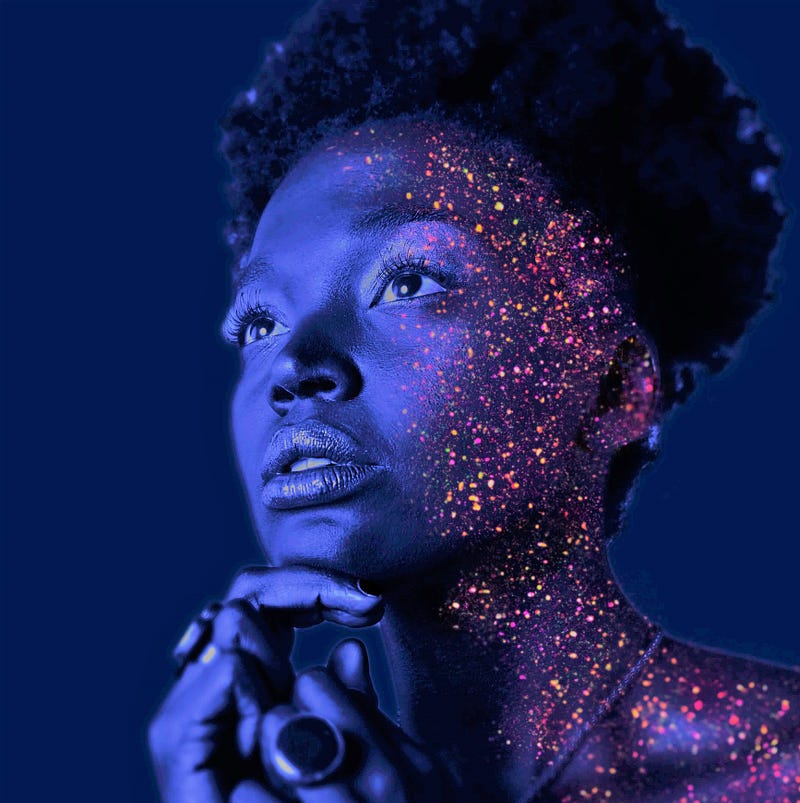
Music has always been one of the ultimate expressions of art. But for many empowered women struggling to rise above and amplify their voices in an uneven playing field, music has also been a vessel of equality, diversity, and inclusion.
Over the years, women used music to speak up against the shackles of the patriarchy. With that in mind and moved by the motto of this year’s celebration, I want to amplify the voices of ten empowered black women who have carved their names in fiery musical notes on my heartstrings.
March is National Women’s History Month in the US. In 2024, one of the celebration themes is “Women Who Advocate for Equity, Diversity, and Inclusion” (NWHA).
Empowered women in music have been doing it with their voices for decades. Please welcome some of the best singers in the Lusophony:
Cesária Évora
Born on August 27, 1941, Cesária reminds me of my mother. They have the same birthday and Virgo personalities.
Although she was successful in several other musical genres, Cesária Évora became an icon in Cape Verdean music’s history for the morna, a slow-tempo musical genre. Cesária started singing in the local bars of her town, Mindelo, on the island of St. Vincent.
By the early 90s, she was famous worldwide, mainly due to her acclaimed album Sodade. She also received the Grammy Award for Best Album of the Year, with Voz d’Amor (2003), in the World Music category.
The Cape Verdean singer is one of the most famous artists on this list. Alongside Amália Rodrigues, she was an influential voice in my poetic vision of Saudade.
I realized how my poems are often inspired by the same leitmotivs found in the Cape Verdean morna: “Sodade,” which refers to that unique feeling that I cannot transpose to any other language. I wrote some of my best poetry while listening to songs by Cesária Évora, the “barefoot diva.”
Zena Bacar
I share an umbilical connection with Zena Bacar. We have the same birthday; thus, we were born under the same stars but years apart.
Zena Bacar Ali was born in 1949 in Mozambique’s Nampula province and started singing when she was six. She became a prominent figure in the Mozambican music scene due to her unique voice. She was also the singer of Eyuphuro, one of the most renowned Mozambican bands of all time.
In 1980, she went to Maputo to record her first song, titled “Urera Kurera,” which means “vanity without judgment.” There she met Eyuphuro, and the band’s composer, Omar Issá, invited her to join them. He had a glimpse of the full potential of her voice.
Zena recorded three albums with Eyuphuro: Mama Mosambiki (1990), Yellela (2001), and 25 Anos (2006). The artist toured the world promoting her music, which she sang in the Emakua language, combining traditional African sounds with a world music vibe.
Margareth Menezes
Margareth was born in Boa Viagem, a poverty-stricken area in Salvador, Brazil. In 1987, her first single was released as an LP entitled Faraó (Divindade do Egito).
Afterward, she releases two records reaching the Billboard World Albums Charts. Margareth also received nominations for the Grammy Awards and the Latin Grammys.
In her latest albums, she aligned with the Afropop style, mixing African and Brazilian elements. Margareth is an acclaimed singer, composer, producer, actress, and entrepreneur, winner of two Caymmi trophies, two Imprensa trophies, and four Dodô and Osmar trophies. One of her best-known songs is “Dandalunda.”
Elza Soares
Born and raised in the favelas of Rio de Janeiro (1930), Elza Soares left us in 2022. She was an everlasting symbol of black resistance in Brazil. Famous for her husky voice, the singer was one of the biggest names in Brazilian popular music.
Elza’s life story includes tragedies and memorable twists and turns. She got married when she was only 12 years old. Ten years later, she was already a widow and had buried two children who died of famine.
Mother at 13, a target for racist attacks, a victim of domestic violence, and forced to bury four children, Elza is one of the most knowledgeable voices fighting for women’s empowerment.
“Today I find it easier. The idea of the woman, the black man, the human being, today she has more freedom to speak. Black people can speak, be what they feel,” said Elza Soares to Alma Preta
At a young age, she started singing to her father’s guitar. In 1953, Elza entered the artistic world and did her first audition at Rádio Tupi. She became a leading figure of the Brazilian Bossa Nova and, in 1999, was elected by London’s BBC Radio as the Brazilian singer of the millennium.
Elza’s legacy lives on, and she will forever be worshiped as the Queen of Samba and one of her country’s most beloved singers.
At age 90, Elza was still confronting racism and social, racial, and gender inequalities, always exalting her pride in being part of these groups.
“I’m happy to be a black woman in Brazil with a lot of satisfaction because I never stopped to look at my color. Quite the contrary, I have always fought for my color. I love myself, I love myself. I am a black woman, I breathe my blackness with a lot of love, a lot of affection.” — Elza Soares, in Alma Preta
Carmen Costa
Born in Rio de Janeiro (1920), Carmen Costa was a Brazilian singer and composer. At the age of 15, she started working as a maid at Brazilian singer Francisco Alves’s estate.
One day, during a party, she was invited to sing. The guests were overwhelmed by her voice, encouraging her to follow a musical career. Later on, she began to sing professionally with singer and composer Henricão.
Carmen’s songs are among the most iconic of Brazilian music: “Eu sou a Outra”, “Está Chegando a Hora”, “Só Vendo que Beleza”, “Casinha da Marambaia”, “Cachaça Não é Água Não”. In 2003, the City Council of Rio de Janeiro approved a proposal by the Museu da República, making her officially part of Brazil’s cultural heritage.
Mayra Andrade
I started this playlist with Cesária Évora. Now, as I move forward to a new generation of singers, I realize how Mayra Andrade is carrying the torch of Cesária’s legacy. She symbolizes the global village we live in; Mayra was born in Cuba.
Her father was an anti-regime freedom fighter. The family fled to Cuba, and Mayra was born in Havana. At the age of six, she settled in Senegal, but she traveled around several world capitals from an early age because her stepfather was a diplomat.
Afterward, she went to Cape Verde at the age of 14 and began singing. She is, apart from Cesária, the most well-known Cape Verdean artist. Her debut album Navega (2006) won awards in several European countries and saw her stardom rise. Mayra is an active voice in the fight against #racism.
Lura
Born in Lisbon, Portugal (1975), Lura’s parents are from Cape Vert. Her musical debut happened in 1996 with the acclaimed album Nha Vida.
In 1998, she shared the stage with Cesária Évora, opening the Cape Verdean star’s concerts at Expo 98 in Lisbon. Lura was heartbroken when Cesária passed away in December 2011. Her song “ Nós Diva” is a heartfelt tribute to Cesária’s memory.
Herança, her last full-length work to date, was released in 2015. The album pays tribute to that experience with its vibrant, exotic, and danceable songs. With a swinging sound, her songs are contagious and leave no one standing still.
Lura manages to incorporate influences from jazz and tango with rhythms reminiscent of the African traditional music that we also find in the Brazilian lambada.
Sara Tavares
The singer was born in Lisbon, Portugal, in 1978. Sara was one of the most acclaimed Portuguese Black voices. We are still in mourning since she passed away last November at the age of 45.
In 1996, she released her iconic debut album with the Shout Choir, but it was with Mi Ma Bô (1999) that she ascended to stardom. The sophomore album showed how Sara’s voice had matured and was more in touch with her ancestral Cape Verdean roots. The album Balancê released in 2005 was considered one of the year’s best albums by musical critics.
Back in 2021, Sara Tavares, Mayra Andrade, and five other Portuguese singers recently signed a petition for a new Portuguese version of the Disney movie “Soul,” asking for the enrollment of black voices representing the “historical importance” of the moment.
The film generated controversy because the producers decided to cast white actors for the dubbing. This serves to show how Sara was committed to the empowerment of Black voices.
Elida Almeida
Born on the island of Santiago, Cape Verde, Elida Almeida is one of the most vibrant new voices of Soul. Her first album, Ora Doci Ora Margos, is based on the singer’s personal life, full of sweet and bitter experiences that touched her sensibility.
Most of the album’s songs include personal, enticing lyrics and melodies, written with sincerity. The singer presents us with her life story in a faithful portrait of her experiences. With a fusion of contemporary sounds, Elida’s voice has the power to break down musical borders and conquer the world.
Selma Uamusse
Born in Mozambique, she came to Portugal at the age of 6 and, at 14, persuaded her parents to let her stay in Lisbon. She sings in Portuguese, English, Russian, and Latin.
After her debut album Mati, which took her across four continents, Selma Uamusse released her sophomore record Liwoningo, which means “light” in Chope, one of Mozambique’s languages. Hence, the album brought forward a message of light in times of COVID-19 darkness.
The record is also a tribute to the immaterial African heritage of Mozambique. I immediately notice it in the lyrics and melodies that exhale Africanity while mixing it with world music. Wandering between electronic, rock, and afrobeat and going from traditional to more experimental musical atmospheres.
These are some of the African voices deeply plucking at my heart strings. Listening to their music, I let my thoughts run free as I listen to the voices of these brave, beautiful black women.
I invite you to join hands in a worldwide, everlasting, unbreakable chain, and as one voice, shout: NOT TODAY! To racism, sexual harassment, and any other form of violence or discrimination against women.
“We call upon all communities to be tolerant-to reject prejudice based on cast, creed, sect, religion or gender. To ensure freedom and equality for women so that they can flourish. We cannot all succeed when half of us are held back.” -Malala Yousafzai
For more stories honoring women, follow Fourth Wave. Have you got a story or poem that focuses on women or other disempowered groups? Submit to the Wave!


