
A deeper understanding on…
Empiricism: Adaptation
Road to PSM III — Episode 4
[revised for 2020 Scrum Guide update]
Somewhere over the rainbow, way up high And the dreams that you dream of, once in a lullaby Somewhere over the rainbow, blue birds fly And the dreams that you dream of, dreams really do come true Somewhere Over The Rainbow - The Wizard of Oz — E.Y. Harburg / Harold Arlen

I love stories in which the main character finds him or herself, by whatever unforeseen events, in a strange new land. And so it is with Dorothy in the story of the Wizard of Oz.
When finding herself blown away in the magical land of Oz, she goes on a quest to find a wizard that could help her find a way back home. On her journey, she meets various strange characters, each with their reasons for visiting the wizard. They all have limitations, but together they form a close-knit band, each relying on the other to succeed in their quests.
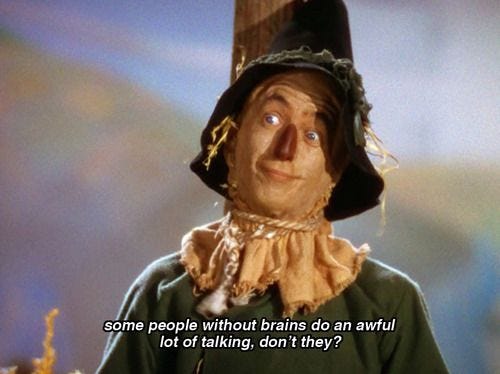
The Scarecrow, needs a brain, the Tin Woodman desires a heart, and the Cowardly Lion, is in search of courage. Dorothy seeks belonging.
Responding to change
Now, as mentioned in the Scrum Guide
In complex environments, what will happen is unknown.
What will happen is unknown… Our quests in our technological wonderland often involve collaborations with specialists from various backgrounds. Each has specific skills and qualities, but it usually requires a collective effort to overcome challenges or adapt to change. And let’s face it, we all have our limitations too.
“Responding to change”, one of the four values of the Agile Manifesto, connects to Adaptation in Scrum. This is all about adapting based on the results of the inspection of the current state of affairs to a desired state.
In our corporate wonderland, we like to think we are great at organization. In reality, however, we stumble a lot. In managing change, if it can be managed at all, mistakes will be made, miscommunication is common, and we experience that, at times, we are let down by our colleagues, partners, teammates, and especially ourselves. I’ve seen teams collectively and enthusiastically agree on implementing an improvement plan during a Retrospective, only to learn later that hardly any followed up. We’re all guilty of delivering the excuse: “I didn’t have time to….”.
This creates precedence for others not to uphold their commitments to the team. This generally results in disappointment by those who did follow up, ultimately leading to demotivation. There will be those who think or say and deep down chuckle, ‘I told you so; this was never going to work’. The pessimists are right.
The ability to adapt depends on living the Scrum Values.

In many cases, some individuals don’t want to be a part of a team but rather take on individual challenges and work within a clearly defined individual boundary. But in a Scrum Team, the band must play together. They can’t ignore how their sounds harmonize with others.

The Wizard of Oz gives us hope. It tells us that individuals lacking heart, courage, brains, and a sense of belonging can come together and work it out as long as they are open, supportive, and trusting. The first step to adaptation is members admitting they need it and committing to help each other seek and achieve it. People are complex, yes. Adaptation doesn’t have to be. The foundation needed to be able to adapt appropriately is the following commitment:
- We continuously invest in developing our skills through collaborative practice.
- We build together, and we learn together.
- We help each other along the way.
- When challenged, we recover fast together.
This is how to continuously improve, reduce dependencies, increase transparency, and guarantee quality.
How to adapt?
“Inspection enables adaptation. Inspection without adaptation is considered pointless. Scrum events are designed to provoke change.” — the Scrum Guide
The Scrum Guide tells us that Scrum prescribes four formal events for inspection and adaptation: Sprint Planning, Daily Scrum, Sprint Review, Sprint Retrospective. As for adaptation, the Scrum Guide instructs us to create a plan during each event:
The Sprint Planning:
- “The work to be performed in the Sprint is planned at the Sprint Planning.”
- “This plan is created by the collaborative work of the entire Scrum Team.”
The Daily Scrum:
- “The purpose of the Daily Scrum is to inspect progress toward the Sprint Goal and adapt the Sprint Backlog as necessary, adjusting the upcoming planned work.”
- “The Daily Scrum is not the only time Developers are allowed to adjust their plan. They often meet throughout the day for more detailed discussions about adapting or re-planning the rest of the Sprint’s work.”
The Sprint Review:
- “The purpose of the Sprint Review is to inspect the outcome of the Sprint and determine future adaptations.”
- “attendees collaborate on what to do next.”
The Sprint Retrospective:
- “The purpose of the Sprint Retrospective is to plan ways to increase quality and effectiveness.”
- “The Scrum Team identifies the most helpful changes to improve its effectiveness.”
Scrum doesn’t tell teams how to create plans. That’s up to the team. Wait… no, perhaps it starts, at first, with you. It’s up to you to set standards and lead by example.
Perhaps it’s silly of me to use childhood stories, fantasy tales with magic. Yet, the technology we have today often out-magics the magic we see in these stories.
Adaptation also includes having to figure out how the job gets done. But to leave you with this is perhaps unsatisfactory. We talked about the importance of adaptability, and the importance of changing plans during events, without helping out on how to approach this. So here are three adaptation techniques I suggest:
- Do things together, side by side. Pair up to train and exchange knowledge. Learn from each other.
- Keep the backlogs clean continuously: Clean Product Backlog. Clean Sprint Backlog. They should represent a real-time picture of the work to be undertaken. They should be clear, light, relevant, and timely.
- Administration should not get in the way of work, but it should help collaboration. The plans created at each event must contain few, simple and clear steps that the team works on together. They should ideally not contain individual micro-steps that aren’t relevant to team members.
- Figure out how to respond by doing it, not just talking about it. Interact with a problem, bug, or impediment together.
This way, you will sometimes discover that complex challenges are overcome through simple steps, a simple tap of the heels that you had in you all along.

The Road to PSM III is being updated to the 2020 edition of the Scrum Guide and new standards for PSM III assessment.
Join the Road 2 Mastery
Continue to the next episode:
