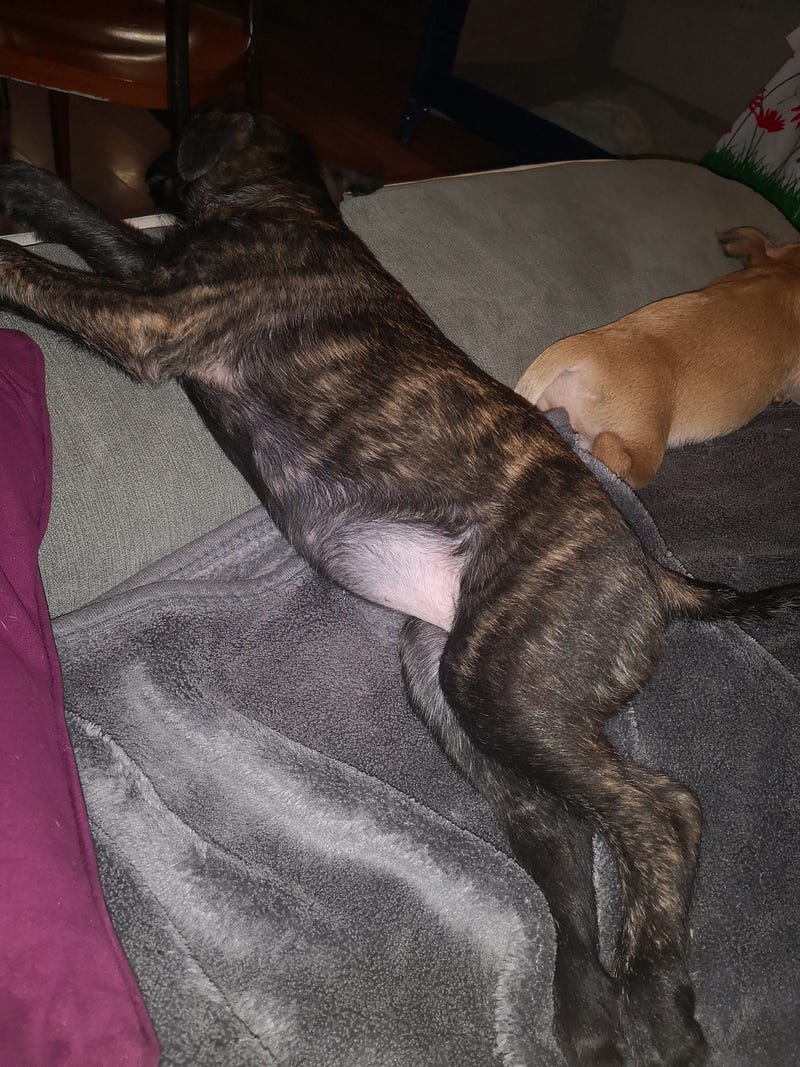
Emotional, Weary and Exhausted — How Seven Pups Survived
At just three weeks old, the survival of seven helpless pups was literally in our hands — this is their journey (and ours)
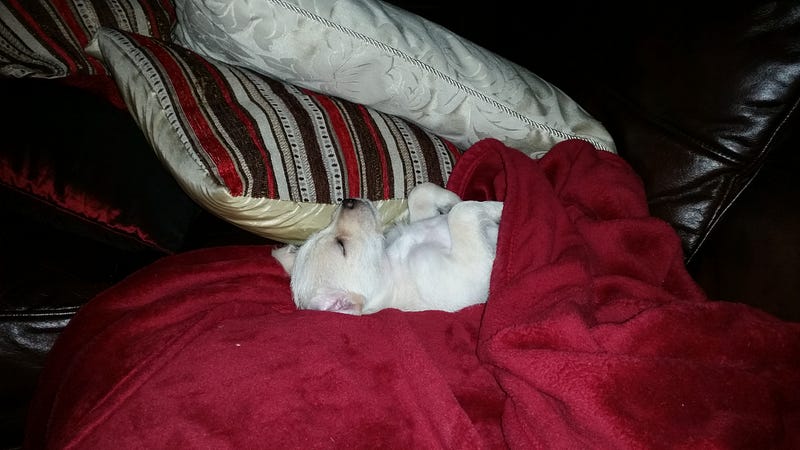
“STOP, she’s not feeling well,” said my Dad as I ran to Mandy, our family dog, momentarily pausing a few feet from where she slept. I turned to eat breakfast, leaving Mandy to recuperate, or so I thought.
I was eight or nine years old.
Later that day I discovered the truth. Mandy had passed away — She was gone. I was distraught and cried for days. I loved her. She was my first pet.
That was my first experience with grief.
Years later, I learned that Mandy, our 14-year-old poodle, struggled up the stairs to my parents bedroom that night. She was breathless. Panting. She stayed for a few minutes before heading back downstairs to rest — She was saying goodbye.
Fast forward 30 years
May 2019: I was was dozing on the couch. Nearby our family dog, Daphne, lay with her litter —seven hungry pups, who fed relentlessly. She was exhausted.
5am
I awoke to Daphne walking near my head as I slept on the couch, panting uncontrollably. At first I told her, “Go to bed.” Then I realized that something was wrong. Was she saying goodbye, just as Mandy had 30 years before?
“Michelle”, I called out, “there’s something wrong with Daphne”.
She was breathless, and couldn’t walk properly or stop panting.
Michelle called the emergency vet, taking the lead. Minutes later we were on the road, a 45-minute drive from our home in Dublin to Kildare, Ireland. Leaving behind seven pups, all alone. “They’ll be fine,” I hoped.
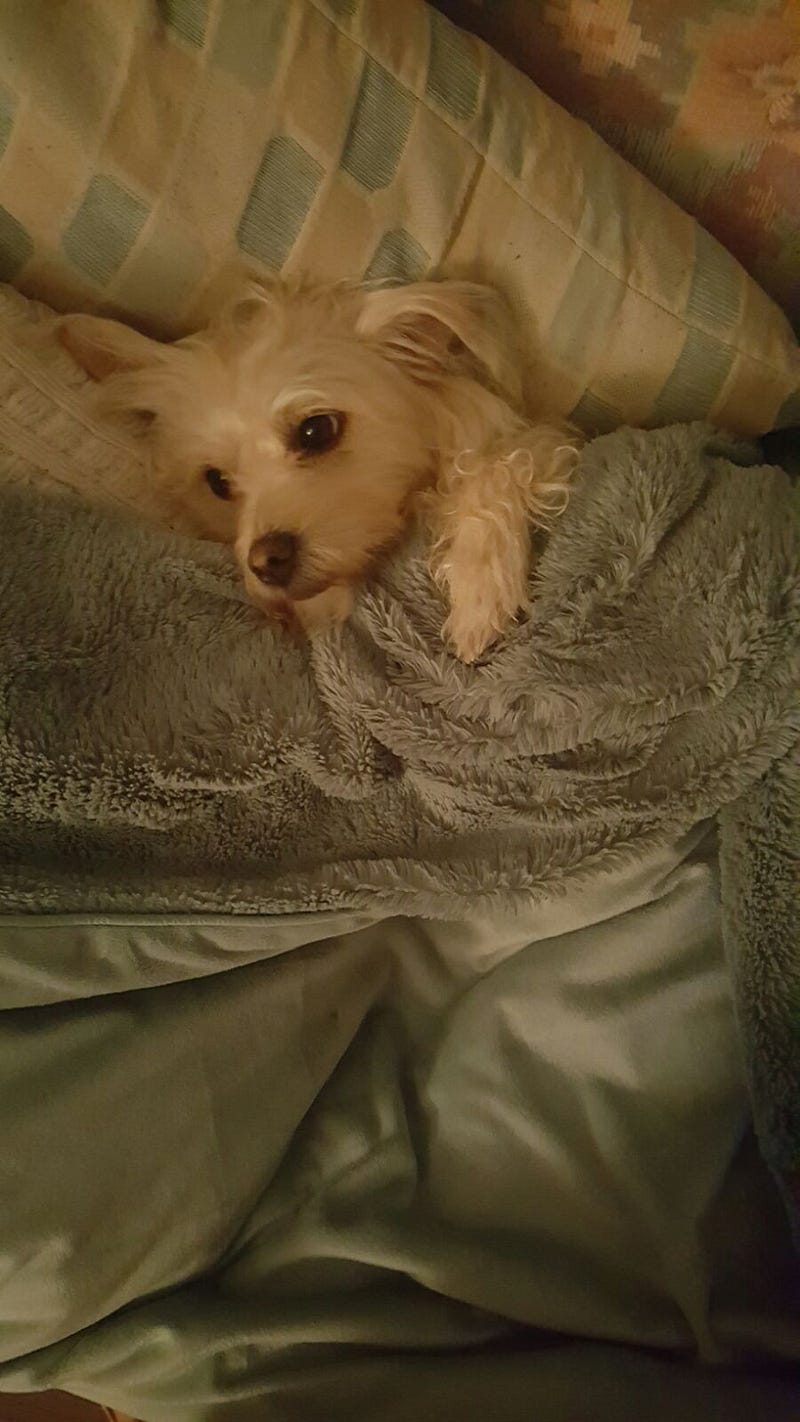
En route, we became increasingly concerned for Daphne. “Hang-on, Daph!” I said, while Michelle held her in her arms to comfort her. She seemed to be fading, her breath shortening.
The previous week, Daphne had spent a day at the vet suffering from eclampsia, a condition caused by depleted Calcium levels—she could not produce enough milk to feed all seven pups, a highly dangerous situation.
The Vet
When we arrived at the emergency vet, he was nowhere to be seen. A cow had just given birth on a nearby farm.
We hoped that Daphne could hold-on.
Finally, the Vet arrived and administered an injection. He said that he would need to keep Daphne overnight for care and observation: “From now on, you’ll have to help her feed her pups.”
We didn’t know it on our drive home early that Wednesday morning, but from that point forward we would be the primary caregivers to seven ferociously hungry but helpless little souls.
The Birth
A couple of months earlier, in March, we noticed that Daphne was pregnant. “She’s big,” said the vet. “At least five or six Pups, but I can’t say for certain.”
The following month, around 11pm on a Tuesday night, it began. Daphne started to breath heavily. She became restless, pacing. By 1am her breathing had intensified, the contractions were underway. I stayed by her side, rubbing her and encouraging her — she was in labour.
A little after 1am on Wednesday morning she started to push. Soon after her first born arrived, stillborn, or so we thought. Michelle picked up the lifeless being and rubbed her vigorously until she whimpered — She was alive!
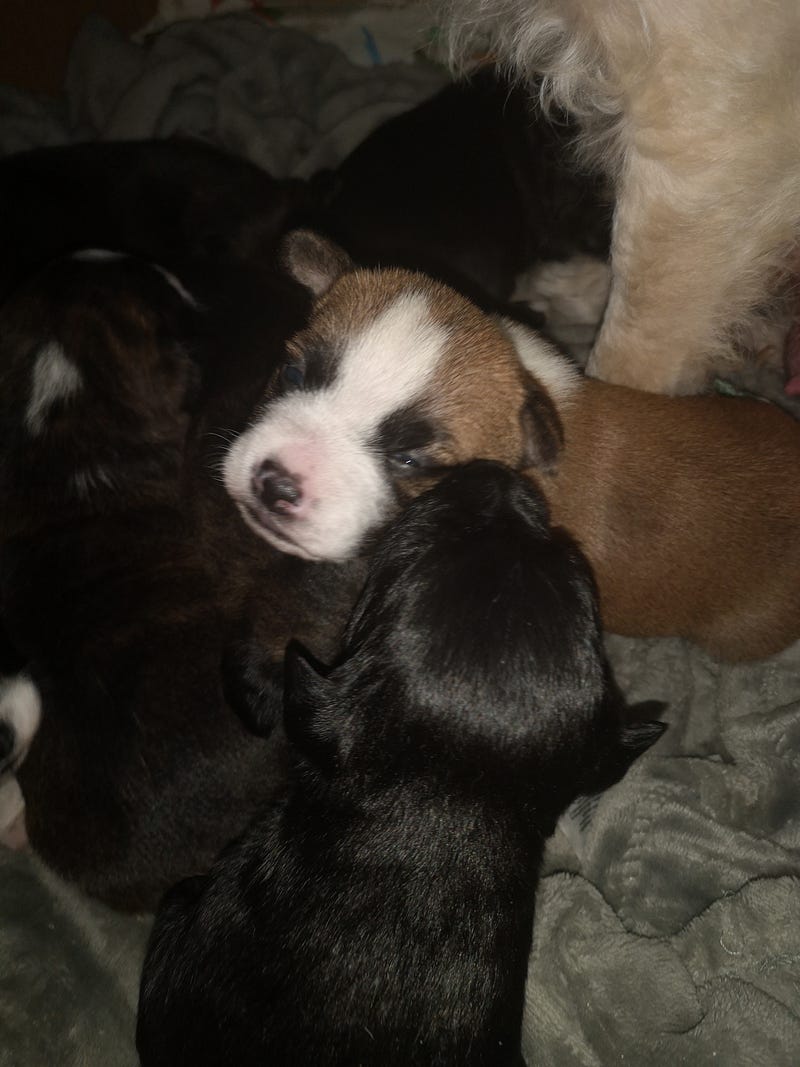
Six more pups followed, one by one. I’ll never forget how Daphne screeched like a Banshee, but she was a tough little cookie, a Trojan.
By 8am it was over— seven new lives had just entered the world — AMAZING! Also, all seven were female—not a single male in the litter. This could be some type of record.
Now let me introduce you to the pack:
- Harley — The firstborn and the smallest
- Daisy — My favourite, with silky smooth brindle fur and white socks
- Bertie (Big Bertha)— The “‘Black-sheep,” the loudest and by far the biggest in the litter
- Chloe — Unlike her siblings she stood out with her tan and white coat
- Willow — Small like willow with similar brindle fur
- Sootie — All black, with random brindle specs around her paws
- Lily — All Black too with white paws
Feeding
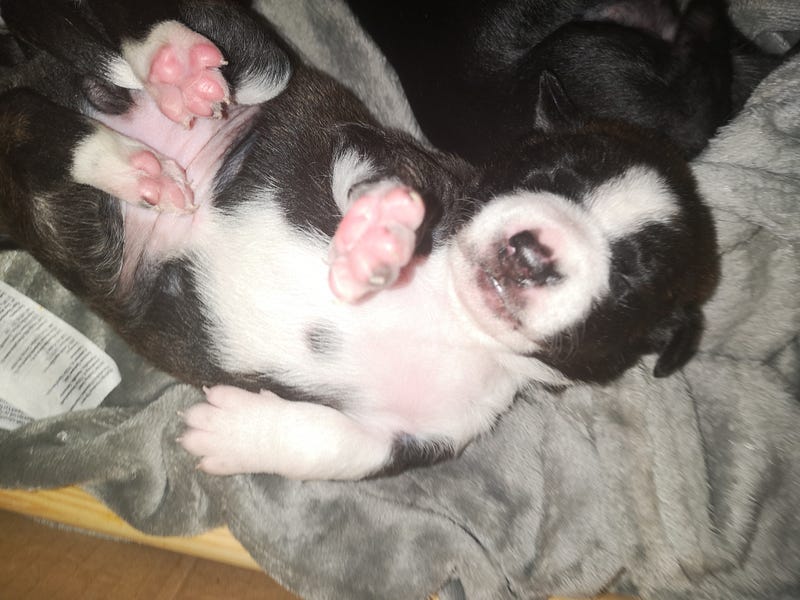
When we arrived home at 8am that Wednesday, having left Daphne at the vet, we knew we had work to do. Puppies need to be fed milk until they’re four weeks old. So for the next few days we had to hand-feed all SEVEN 3-week old pups every three hours.
“We can do it,” we hoped.
A couple of days later we collected Daphne. “She can no longer feed her litter,” the vet said. “She will not survive a third episode.”
Exhausted after just a few days, feeding by hand, that was the last thing we wanted to hear.
Later that day Daphne was shipped off to stay with relatives as we faced weeks of sleepless nights. I was struggling to cope and took a week off work to get through the next 10 days.
Just like that, they had no mother. They were orphans.
But they had to survive —that was non-negotiable.
The lives of seven little pups depended on what we did for the next week, and four weeks after that.
Finding homes
We did it — they all survived. The vet called it “a miracle. It’s rare that an entire litter survives when being hand fed, so well done.”
We were chuffed!
When you raise seven helpless beings, by hand, to become a clatter of thriving balls of mischief, with vitality in abundance, the next step is not only hard but it’s personal.
Despite the chewed Nike trainers (€150), the vet bills (€1,000), the chewed Macbook cable (€85), the mountains of food (€500+) and accessories, they were our children — our fur-babies.
We knew we couldn’t keep them all, we simply hadn’t the time, space, resources, or sanity. So we had to put some of our babies up for adoption. Plain and simple.
All future homes and owners were vetted and interviewed — well grilled. Some people were rejected and before a baby, I mean pup, exchanged hands, their new caregiver was given a clear instruction — a warning really:
“Do not give her away to anyone. If you can't keep her we’ll take her back.” That was part of the the deal.
And so it began. Our fluffy farewell was in progress.
Rejection
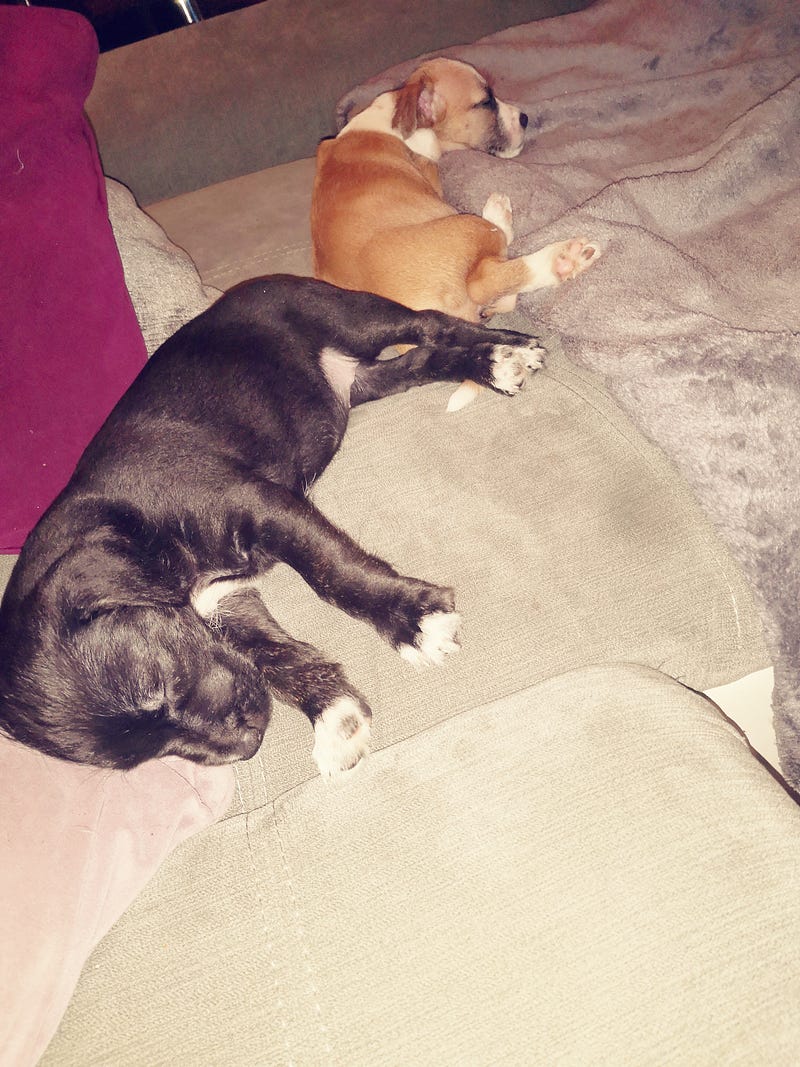
Harley and Willow were the first to leave, followed by Sootie, then Lily soon thereafter. Their new families sent updates and images. We were delighted to see each of them flourish in their new surroundings. It was important to us.
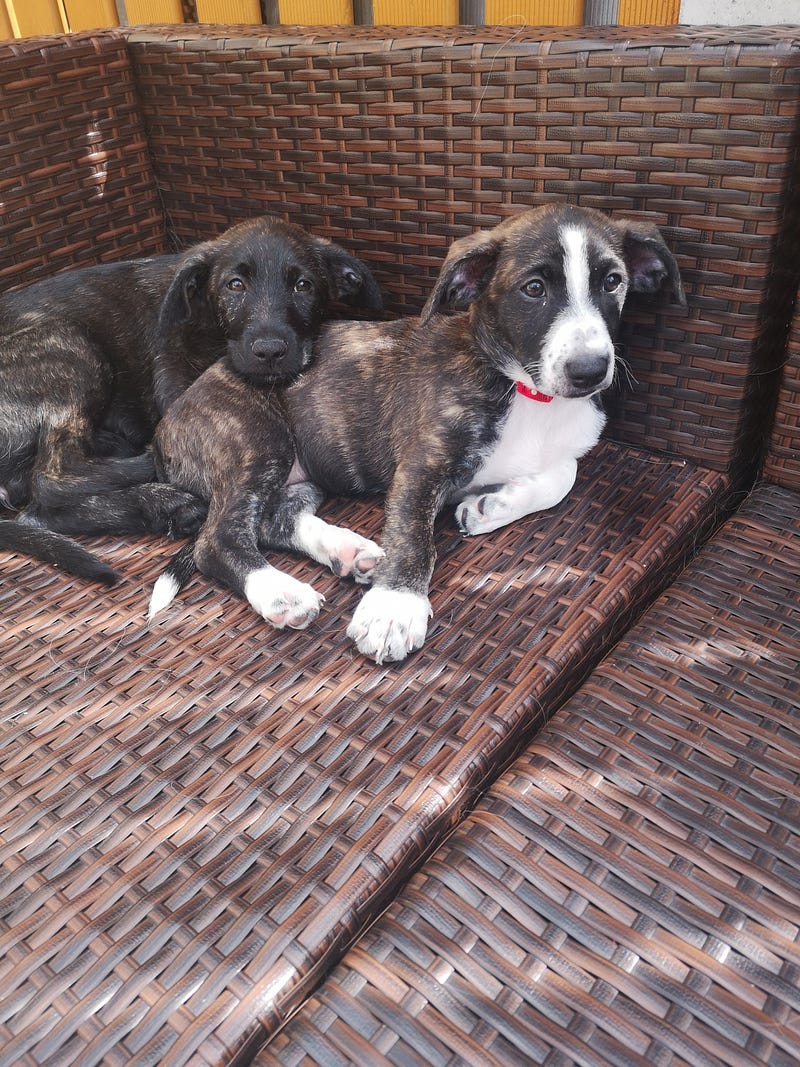
Three remained — Bertie, Chloe, and Daisy.
Daisy and Chloe were popular and could be homed quite easily. Our kids wanted Chloe and I wanted to keep Daisy, so Bertie had to go.
That’s not how it unfolded.
We decided to keep just one pup — Chloe — so we had to find homes for Daisey and Bertie, the last two to leave.
A 7-foot Polish man and his Daughter’s heart melted when they met Daisy, it was a done-deal, a perfect fit. She’s come on leaps and bounds since.
Then there was Bertie.
Bertie is adorable, but she’s tall (unlike the others), gangly, full of energy, and boisterous. What’s not to love?
Well she was rejected — twice.
Yes, two family homes returned her. The first one in less than 24 hours, the second after two weeks.
That sealed Bertie’s fate — or ours rather — we now have three dogs:
Daphne, Chloe and Bertie!
The article written by Gillian Sisley certainly resonates now — I Didn’t Want This Rescue Dog — Now He Eats My Food and Hides My Socks.
Life Lessons
I learned so much from this experience, so to conclude I’d like to share three takeaways with you:
- Sometimes Life just throws you a curveball. It’s unplanned, but if we’re measured on how we respond or what we do when these events arise, then I can live with that.
- Nature is a powerful force. Despite the obstacles, nature will fight hard to find a way to ensure survival.
- Integrity means realizing that some things are bigger than “you.” We demonstrated to our children that you have to put the needs of others, human or not, above your own, when it comes to protecting life.
Looking back, I’m extremely happy that we rescued seven lives because sometimes our canine friends return the favour to us humans. The story shared by Maggie Lupin is testament to this—the title says it all: My Rescue Dog Rescued Me.
“My favorite things in life don’t cost any money.”—Steve Jobs