
Embracing Imperfection Is the Key to a Fulfilled Life
Change your perception with bestselling author Brené Brown
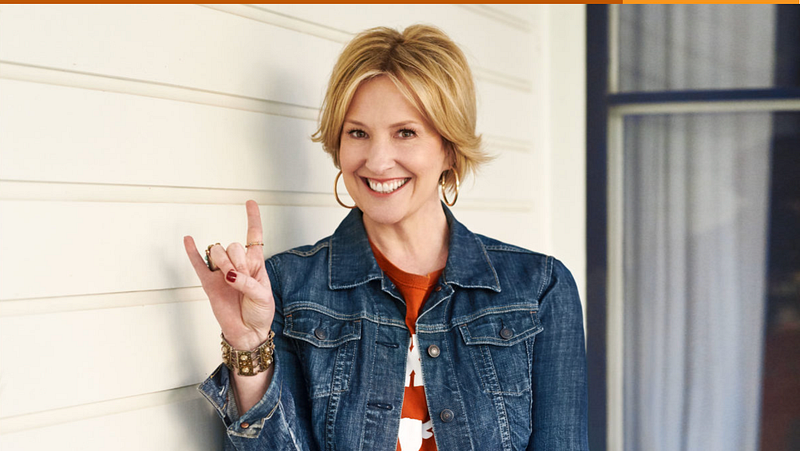
Brené Brown is a successful author, professor, researcher, and Ted Talk phenom. She has written five #1 New York Times bestselling books, and her Ted Talk on vulnerability has exceeded over 35 million downloads. Now, you can add podcaster to her list of talents.
Ten years ago, her book, The Gifts of Imperfection, changed my perception and thinking on perfectionism forever. I had spent the first half of my life trying to be perfect. Do not try this — it’s exhausting and unattainable.
I’m embracing my imperfections in the second half of my life.
The book came to me at the right time. The main takeaway is to embrace authenticity. Live what you were told as a child, “Be yourself,” despite society’s constant messaging, “Be anything but yourself.”
I’m grateful for her books and Brené Brown.
Here are ten things I learned from Brené Brown that shifted my mindset
#1. You have to put a lot of work into *not* being vulnerable
Avoiding vulnerability is how most people live — armored up.
Most people walk through life wearing heavy armor so that they won’t get hurt. They think, if I take off the emotional shield and let myself be seen, what if no one loves or cares for what they see?
This defense mechanism doesn’t serve you in the long run because armoring up prohibits connection.
“Let go of who you think you’re supposed to be; embrace who you are.”
It takes a lot of energy to hide who you are.
All of us know what it feels like to feel small — like we aren’t enough. We know what it feels like not to feel noticed. We are afraid if we drop the armor, we’ll get hurt.
What underpins shame is the belief, “I’m not good enough,” so we don’t allow ourselves to be seen; we hide instead.
It takes courage to allow ourselves to be seen when we don’t know the outcome, and it’s the only path to a connection with others.
#2. Selfishness drives codependency
Codependency is, “I need you to stop behaving this way because it’s scary for me.”
The job of trying to get someone to behave a certain way enables you to not look at and deal with your stuff, and in the end, will annihilate your sense of self.
“Daring to set boundaries is about having the courage to love ourselves even when we risk disappointing others.”
I escaped a codependent relationship.
While in it, it was exhausting. I had to remain small and unseen. I was angry all the time and didn’t know why. I’m responsible for my part; it takes two people to be codependent. My partner’s lack of boundaries and lack of sense of self had a devastating effect on me and our relationship. I’m happy to be out.
You cannot be empathic with someone if you don’t know where you end and they begin. Codependency is malignant empathy or, rather, the opposite of understanding.
#3. There’s a massive difference between guilt and shame
Guilt is adaptive.
Guilt is, “I did something, and I hold it up against my values. If it doesn’t align with my values, I change it or make amends.”
Guilt is, “I did something bad.”
Shame is, “I’m a bad person.”
“Guilt is just as powerful, but its influence is positive, while shame is destructive. Shame erodes our courage and fuels disengagement.”
#4. Humans are neurologically wired for connection
Connection is why we are here; it gives purpose and meaning to our lives. We want it. We seek it out.
I’ve only been in love twice romantically. Each time I sought a deep connection. I had a similar experience when my child was born. One look at her, and I was in love.
“Connection is the energy that is created between people when they feel seen, heard and valued — when they can give and receive without judgment.”
Since becoming a parent, I want healthier relating skills so my daughter has a good role model, and we remain connected. I want my relationships with friends and family to have a strong foundation of real meaning and connection.
#5. Addiction and shame are highly correlated
Brené Brown found in her research that shame and addiction go hand in hand. They are so closely linked it’s hard to see where one starts and the other ends. Shames is highly correlated to alcoholism, eating disorders, depression, violence, addiction, and bullying.
Shame in a nutshell: shame is the fear that there is something about you or something you’ve done or failed to do that makes you unlovable and unworthy of connection and belonging.
“Shame is the most powerful, master emotion. It’s the fear that we’re not good enough.”
Your belief, “I’m not lovable.” When you hold this unconscious belief, you act from a false narrative and search for responses from the world that validates this belief. This belief forms a massive basis of shame.
Empathy is the antidote for shame. Be kind to yourself.
#6. It’s *not* about your lovability
The most dangerous story we tell ourselves is about our lovability.
We tell ourselves that we are not lovable because someone in our past failed to love us. Their failure has nothing to do with how lovable we are.
Your caretaker or your parent’s capacity to love didn’t have anything to do with you. Just because someone couldn’t love you or wasn’t willing is not a reflection of how loveable you are.
#7. Vulnerability is courage
Vulnerability is uncertainty, risk, and emotional exposure. Vulnerability is the ability to show up when you can’t control the outcome.
You can never control the outcome.
You can’t be brave without vulnerability. There is no courage without it.
“Vulnerability is not winning or losing; it’s having the courage to show up and be seen when we have no control over the outcome.”
Brené Brown’s examples of courage:
- The first date after your divorce
- Waiting for your doctor to call with test results
- Trying for another child after a miscarriage
- Saying “I love you” first
- Sitting with a loved one while they are dying
These things are scary, and when you sit with them, you’re the opposite of weak, you are courageous.
These examples require you to be vulnerable.
You may get hurt; you may never have a child. You may have to deal with disappointment; you might lose someone. You may have to deal with a cancer diagnosis. You might have to fail at something. But if you are attempting something courageous, it means you are living. You are showing up in the arena.
#8. You can never control the outcome
As a recovering control freak, I like this one.
You can never control the outcome. You can never control what people think or their perspective, what they say or what they do.
There’s a possibility of rejection: you might not get the date with the cute boy you asked out, you might not get your story accepted by the publication you submitted to, you might not get the client you wish to, you might not get the diagnosis you so desperately want to hear.
You have to be brave despite this.
#9. You can measure someone’s capacity for vulnerability, very specifically, by their ability to feel joy
How willing and open are you to experiencing joy?
The answer will tell you how open you are to vulnerability.
“Joy is the most vulnerable emotion we experience,” Brown says. “And if you cannot tolerate joy, what you do is you start dress rehearsing tragedy.”
#10. Why forgiveness is difficult
Humans are better at causing pain, then feeling pain
For many people, forgiveness is hard.
One reason people have a hard time with forgiveness is that for forgiveness to happen, something has to die.
Humans have a pathological fear of loss and grief.
I know I do.
I don’t handle loss well, and so my capacity for forgiveness doesn’t always come through.
For forgiveness to occur, we have to go through a grieving period and admit to ourselves something has been lost. Most humans don’t excel at this.
Even if you stay with your husband after you found out he had an affair, there is still a death of something, a loss — loss of an idea, a promise, loyalty, trust, commitment, the idea of how you thought your marriage would be, the picture of your relationship before the knowledge of the affair, and on and on. There is still a death (pain) even if you decide to stay in the marriage.
One of the reasons we hold on to rage, anger, and resentment is because these emotions are so much easier to handle than grief.
Grief is a hard emotion to tackle because it is loss and longing.
#11. Wholehearted people feel worthy of love
In Brown’s research of those who lean into life, “the wholehearted” as she labels them, 80% of the sample group fought for the belief that they are worthy of love — the idea that they are enough. The other 20% received the message during childhood.
The wholehearted ultimately believe they are enough even when they screw things up and make mistakes.
- They embrace vulnerability as a necessity for living.
- They believe that what makes them vulnerable, makes them beautiful.
- They have the willingness to do something bold when there are no guarantees, like saying, “I love you” first.
- They have the courage to breathe through difficulties and lean in; they invest in relationships even though there are no guarantees on how those relationships will turn out.
- The courageous tell the story of who they are with your whole heart.
- They dare to be imperfect.
- They have the compassion to be kind to themselves and others. We can’t practice compassion with others if we can’t practice it with ourselves.
- They are willing to let go of what they should be and just are.
“You are imperfect, you are wired for struggle, but you are worthy of love and belonging.”
Jessica is a writer, an online entrepreneur, and a recovering type-A personality. She lives in Los Angeles with her extrovert daughter, two dogs, and two cats.


