
LIFE
Embracing Failure and A Beginner’s Mind
Would you let failures make or break you?
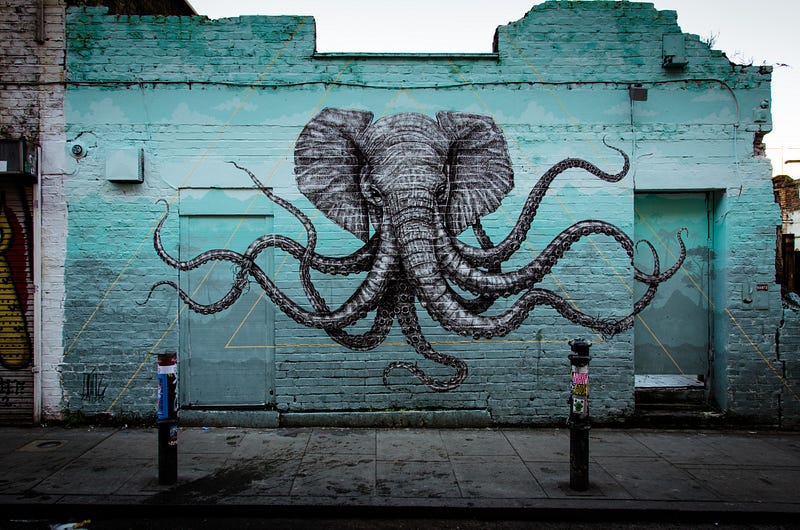
“The brick walls are there for a reason. The brick walls are not there to keep us out. The brick walls are there to give us a chance to show how badly we want something. Because the brick walls are there to stop the people who don’t want it badly enough. They’re there to stop the other people.” — Randy Pausch, ‘The Last Lecture’
I took several days off Medium to be quiet but my mind has been anything but.
The past week I was engaged in several meaningful conversations I’ve not had in a long time. Conversations that occurred on the phone, via video calls, face-to-face, and in my own head.
Conversations with people across cultures and continents; old and young; family and friends; men and women. They’re the conversations you actively listen to more than you speak, you take a step back to ruminate and marinate the content, you spiritually and emotionally rise above to have a bird’s eye view of your entire life. For me that would be forty-seven years worth.
I’m at an existential intersection in my life where I’m planning my next decade. In three years time I will be entering my third act. Among friends, we affectionately call it The Five Series. It’s a big deal, an ascension, and it should be a celebration. The problem is, I am surrounded by many who tell me they’re on the way down.
From their knee and back problems, low motivation, sluggish metabolism, poor mental health to diminished libido, their respective house of cards is falling down, and if I’m not careful, it will suck and pin me to the human seafloor with them.
I am not having any of that. And neither should you.
As an Asian woman, I’ve made many decisions that went against the grain of traditional eastern society. I’ve no regrets but it’s not always easy. I’ve traveled to places I wanted to see never once feeling forced or deprived of opportunities. I’ve worked my ass off and I’ve served many leaders, both men and women, hard nuts and soft shells. Each day that I am able to do that without being in the shoes of a refugee, being in a shelter, walking on eggshells of any kind, I consider myself a very lucky woman. I can safely say, to be where I am, I’ve paid my dues, I’ve earned it the right way — the hard way.
In 2021 I took the bull by its horns and to everyone’s surprise, announced I was going to exit a cushy corporate position and set up my own business producing artisanal textile. I knew in my head and heart it was time. There was never a moment of doubt. It was time to say goodbye to all that was familiar. My friends joked that it was the pandemic lockdown that pushed me over the edge.
Perhaps.
In contrast, many of my friends were on the verge of experiencing the empty nest syndrome, the onset of marital divorce where by now they were living separate lives, emotionally struggling on life support.
The pandemic lockdown was the final nail to their coffins. There was something about being forced to live together that made people realize having a job that required leaving the house was actually what kept couples glued to their union. Forced to work from home stripped off the adhesive. To many, the confinement became the real test of their relationship, and it was not a pretty epiphany.
Over drinks and luncheons, friends talked about taking that big leap although deep down you know they won’t because conjecture is always better than actuality. That’s storytelling in itself.
There are those who are successful with a doctorate in hand, found love and marriage for the second or third time, and friends who packed their suitcases to migrate to a foreign country. These however, are far and few in between.
The greener pasture may vary from an individual to another, but one thing is certain, switching gears when nearing your five series may scream louder with each passing year, but the courage to acknowledge the call is often muffled by the irrepressible fear of failure.
Instead of acting on what they truly desire out of life, people resort to alternatives that may appear the opposite. More often than should, they just remain where they are — in misery, doubt and emotional deficit.
To the cynical, they term it as a midlife crisis. For me, maintaining the status quo is the crisis, the killer disease.
In my case, many thought it was a joke, a pastime, or a temporary phase. Out of twenty people, three believed I was serious. My own siblings felt finding a husband and settling down made more sense than to single-handedly steer an entrepreneurial armada. My frenemies wanted to see me fail, my former colleagues thought I was losing my marbles. Obliging friends just wanted me to be normal a.k.a be like everyone else.
I listened and I nodded because it became obvious over time that for them, failure is irreparable pain, unbearable shame.
The truth of the matter is, everyone was projecting their fears. What bothered them was not their struggle to fathom what I was thinking, doing and aspiring. It was their struggle to reconcile with their own longings. There was a gap in the mindset, and instead of asking me the right questions, they bombarded me (and themselves) with assumptions. Consequently, this started to affect my relationship with them.
It left me no choice but to leave them, to give up the friendship, lock, stock and barrel.
Well, sometimes you do what you have to do.
It’s something I learned from a man named Randy Pausch.
In 2007 I came across a YouTube video titled ‘The Last Lecture’. A brilliant college professor from Carnegie Mellon spoke about life, forgiveness and compassion.
Pausch was persuasive, endearing and extremely engaging. He talked about appreciating love and loved ones especially when nearing the end of one’s life. Soon, it became clear that Pausch was referring to his own mortality.
‘The Last Lecture’ is Pausch’s final message to the world before his impending death of pancreatic cancer at age 47. Pausch was no ordinary man, he was also a very well-known researcher who worked on various projects with Adobe, Google, EA, and Walt Disney themed on human-computer interaction.
Pausch’s advice was nothing short of remarkable. The truth of his condition added an inner richness to his words: “Time is all you have and you may find one day that you have less than you think.”
With nothing to lose, Pausch was leaving behind a legacy of reminders that I still keep close to my heart whenever I needed a customary kick and a push. That kick and a push inspired by Pausch is what separates me from my friends:
“Too many people go through life complaining about their problems. I’ve always believed that if you took one tenth the energy you put into complaining and applied it to solving the problem, you’d be surprised by how well things can work out.”
As a man prepared to die, Pausch developed a unique, if not heightened, sense of observation. I love the part where he said, “The road to success is one where you’re prepared to forgive and to fail.”
Failure, he believes, is what creates the framework for our success: “The person who failed often knows how to avoid future failures. The person who knows only success can be more oblivious to all the pitfalls.”
In a recent conversation with Ellemeno editor David Todd McCarty, we talked about chasing pursuits. We were musing over the fact that just when David figured he had had enough of talking politics, almost overnight, he launched a new political publication on Medium.
Calling it ‘Rome’ with a striking visual cue of the coliseum, the idea is to inspire a platform for radicals. That sudden turnaround isn’t something random, it’s partly built-in together with a deep-seated desire to not just witness change, but to participate with it. Thrown in as a bonus, that desire inspired David to lead his revolution.
This is the characteristics of a bona fide outlier, and such radicals aren’t made overnight. They’ve lived a life of observation, altercation and note-taking while waiting for the right moment to strike. And for David and ‘Rome’, that moment is now.
It only goes to show that sometimes, feeling the discomfort and burning edges of our seat is what’s needed to trigger and inspire, as opposed to giving up.
On my end, I shared with David my plans to expand my business to Europe. I said, “I often felt that to take radical ideas to a greater height, one needs to aggregate like-minded people who not only can share your vision, but can encourage the radical that you are.”
What you don’t need is people who tell you the opposite — to play safe, to stay within the chalked lines, to be normal and stay ordinary. Good company doesn’t diminish your spark. Instead, they make your light shine brighter
David paraphrased Ed Catmull, the co-founder of Pixar, on creativity: “In Korean Zen, the belief that it is good to branch out beyond what we already know is expressed in a phrase that means, literally, ‘not know mind.’ To have a ‘not know mind’ is a goal of creative people. It means you are open to the new, just as children are. Similarly, in Japanese Zen, that idea of not being constrained by what we already know is called ‘beginner’s mind.’”
“When there’s an elephant in the room, introduce him.” ― Randy Pausch
In 2021, I sat opposite my doctorate supervisor who kept steering my research towards the direction I didn’t agree with. He did it because he was unfamiliar with the design and historicism I was more fluent in. I argued that reducing it to his level was not how I understand a doctorate to be. It was fundamentally my research not his and that he ought to rise to the level it deserved — even if it meant he had to venture out of his comfort zone and existing expertise.
I was formerly a lecturer and a research advisor myself. I was not being difficult but as critical as what was expected of a doctorate candidate. Our antlers were locked when he asked me what was my desired outcome of having a doctorate and I said it was a labor of love and not a title I intend to use in the future. “I’m not saving lives, professor. My doctorate is as hollow as it comes.” I professed. It’s obviously not what he is used to hearing.
To my professor (and many alike), the perks of a doctorate is having the title “Dr”. I see this as a blind spot. It is what inflated many of my former professors’ brains (and ego) into thinking they were always right. When I confessed it was not my reason for pursuing a doctorate, he made a sly comment that this mindset would influence me to be lazy, unassertive to be industrious; a potential failure.”
I am a believer that it’s a free world and everyone is entitled to his/her opinion, but I thought long and hard about his comment as I left the supervisory meeting.
I felt insulted but I was also fired up to do something extraordinary as a sign of retaliation.
I took a self-imposed break (for as long as I wanted, I decided) and dancing on his words like a mantra on the edge of the Universe, I went on to launch my textile company, designed ten fashion collections, wrote and published a book, resumed my passion for painting. I am a third away from completing a full collection for my first art exhibition.
Interestingly, speaking to some folks, they’d tell me how I risk losing out not focusing on my doctorate. On my end, which they neglect to see, is how instead of becoming myopic with one endeavor, I was inspired, became industrious, and succeeded in birthing more than one project.
I reached the goal of recognition and accomplishment without the prefix “Dr’’ but as the eccentric outlier that I am who enjoys seeking odd elephants in tiny rooms. It finally dawned on the little minds that I’m not a title seeker, I’m an experience seeker.
As Pausch succinctly highlighted in his last lecture: “Experience is what you get when you don’t get what you wanted.” Or, as David mentions in our discussion echoing Catmull, which I whole-heartedly agree with: “The attempt to avoid failure makes failure more likely.”
Randy and David are examples of the radicals you need to encourage the radical that you are (or want to be). As I filter my social circle teething on my third act, I need folks that will nourish the youth and excitement in me, not accelerate the aging process to a premature death of avidity.
There’s also the part where over-thinking kills and it curbs your ardor.
Children are the ones with a doctorate in the area of creativity, courage and communication. Kurt Vonnegut has this to say which may sound terrifying but that’s exactly the kind of firing you need: “We have to continually be jumping off cliffs and developing our wings on the way down.”
A common misconception among friends is to confuse their annual holidays as a form of ‘living large and living out loud’. The truth? That’s only a temporary escapism. It’s the daily aspiration, the little tweaks we are doing in our lives that accumulate into a grander scheme of things.
An initial mistake I made was to think like everyone who played within the lines not outside — that a doctorate was a game-changer that was going to put me on a map of some sort. It didn’t. Instead, it isolated me from others, it was self-absorbing and a feeding fest of self-grandiosity. It was far from developing a beginner’s mind. There is nothing humble about a doctorate degree.
I realized, perhaps a little too far in but never too late, that what I was longing for was to create something new, not to gain a title.
While supervisors tend to berate you for making wrong turns and questioning them at their own expertise, a beginner’s mind is the opposite — it encourages you to make mistakes, iterate and question everything. David wrapped it perfectly from Catmull’s book:
“By resisting the beginner’s mind, you make yourself more prone to repeat yourself than to create something new. Paying attention to the present moment without letting your thoughts and ideas about the past and the future get in the way is essential. Why? Because it makes room for the views of others. It allows us to begin to trust them — and, more important, to hear them. It makes us willing to experiment, and it makes it safe to try something that may encourage us to work on our awareness, trying to set up our own feedback loop in which paying attention improves our ability to pay attention. It requires us to understand that to advance creatively, we must let go of something.”
If you ask me, this includes letting go of people around you that would hinder your potential for seeking newness, vitiate your spirit of innovation, and impair your courage to be a disruptor. You only live once, so carpe diem, baby.

Dedicated to the one person who believes in my rocket potential and eccentricities. Te amo mucho, Dre. Happy Anniversary. June 2023.


