Why Dance Should Be A Part of The School Curriculum
The benefits of embodied learning are still overlooked by most educational systems
Over the past few decades, there has been an increasing amount of research on the connection between art, health, and well-being. In November of 2019, The World Health Organization Regional Office for Europe (WHO) launched its first-ever report on the role of arts in improving health and well-being. The report reviews 900 publications on the topic, including 200 analyses on over 3000 studies, concluding that there is growing evidence on the positive impact of arts on both mental and physical health.
So, in what way does art impact us? Among other things, the report found that listening to music can help reduce anxiety, support cognition, and improve attention. Reading to children before bedtime can help them sleep longer and better, resulting in improved concentration at school. Adolescents who participate in after-school arts have been found to become more responsible in their decision-making and less likely to engage in violence. Art has a lot more connections to our overall well-being than what one might be aware of.
One particularly interesting field of arts and its connection to learning, something yet to be implemented into schools and into the education system, is dance. I first became familiar with the relationship between dance and education through my mother, Eeva Anttila. She is a dance pedagogue and professor at the University of The Arts Helsinki, and she has been researching and teaching embodied learning for over a decade. Her field of research includes dialogical and critical dance pedagogy, embodied learning, embodied knowledge, and practice-based/artistic research methods.
The notion of embodied learning entails that learning takes place within the entire human being and between human beings, within social and physical reality. It also means that embodied activity is a fundamental element of learning,” (Eeva Anttila, 2018).
I have a special connection to dance; it was my whole life up until I stopped in the fall of 2019. I started ballet at age six, trained for my whole childhood, and went on to dance professionally in Finnish National Ballet for nine years. It wasn’t until I started studying again that I became interested in what my mother does and the question began to intrigue me. What is the connection between dance and learning?
My mother believes a performative practice like dance has significant educational potential. She argues that young pupils have an intuitive understanding of embodied learning, are inclined towards learning through embodied actions, and have a natural desire to collaborate with peers.
“A collaborative approach towards creating dances incorporates embodied action with negotiation, decision-making, opinion-stating, and demonstrating own ideas not only in words, but also with the entire body. The experiences related to performing, coupled with witnessing others performing creates space for a shared experience and thus, may enhance the sense of community. A sense of community may, in turn, generate a safe environment for performing difference, and for an education that celebrates difference.”
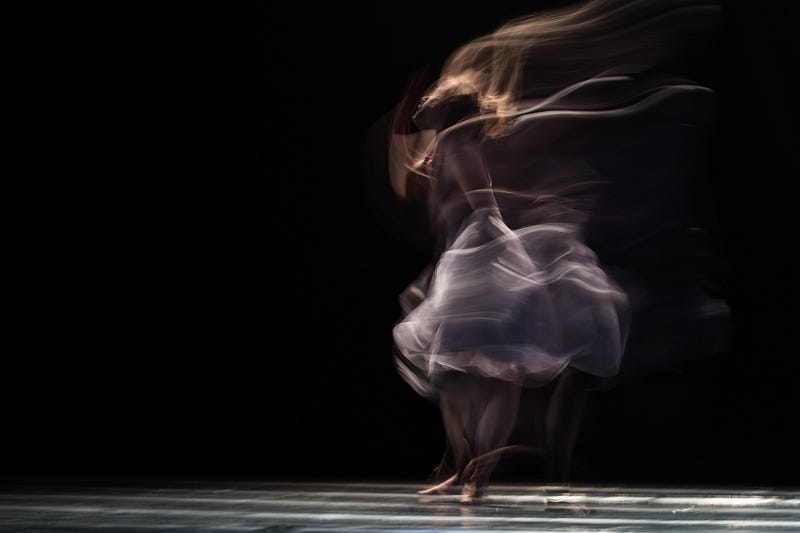
Dance is not just a physical activity. It is a social activity, it engages emotions, imagination, and senses. I felt that when I was dancing, I was not only moving my body; I was learning about the space around me, I was creating shapes with my body, discovering what kind of imaginary helps me accomplish a certain outcome. I felt joy and connection to music and to others around me. I learned to connect dots, think of musicality, technique, and artistry all at the same time, in the span of one second.
In 2018, Master of Science Hanna Poikolainen conducted a research project to help understand the processes dance generates in the cortex of the brain. In her research, she compared the brain functions of dancers and musicians to people with no experience of dance or music as they viewed a recording of a dance piece. The results indicate that the auditory and motor cortex of dancers develops in a unique way, and supports the argument that dance and music play a role in our brain activity and learning.
It comes as no surprise that embodied learning has benefits other than improved learning skills. Research conducted by The Brookings Institution in 2019 collected surveys from 42 different schools across the U.S. and concluded that “students who received more arts education experiences were more interested in how other people feel and more likely to want to help people who are treated badly.”
Despite these findings, dance remains outside of the curriculum of most education systems in the world. In fact, according to a recent study by The National Endowment for the Arts, the amount of students receiving arts education has drastically decreased in the U.S. Moreover, arts education in school usually includes varying amounts of music, theater, and visual arts, but not dance. With the growing emphasis on the importance of computer skills and technology in the current school curriculum, are we perhaps going in the wrong direction?