
Embodied Health
On Overcoming the Anguish of a Dysfunctional Childhood
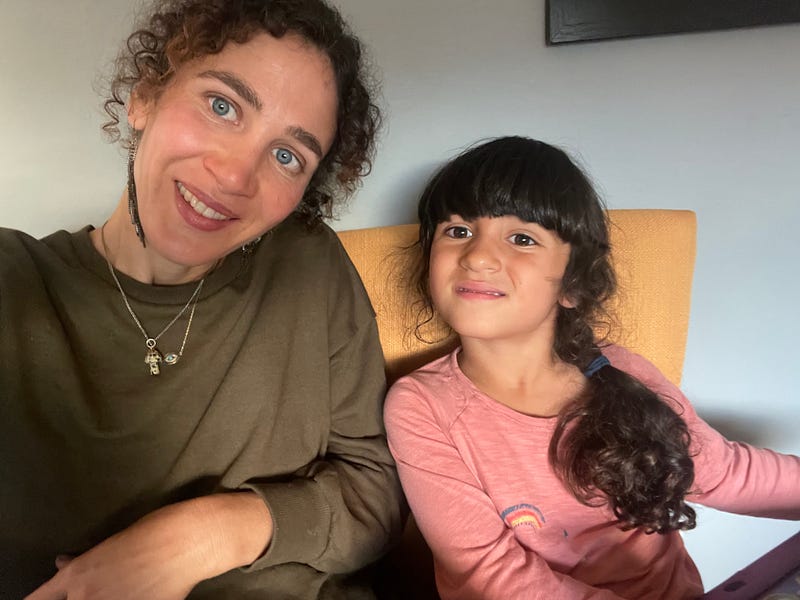
There is a special kind of anguish that comes from being a child (and a middle child, no less) to an exceptionally driven, career-focused, and entrepreneurial father. As children of a man who had a superhuman level of professional drive and who found his life’s purpose in his work, my siblings and I were provided for in some ways but in others painfully neglected and sidelined.
That disconnection and neglect, paired with having a stay-at-home, similarly negligent mother ill-equipped to deal with her own traumas and the responsibilities of raising three children primarily on her own, gave my siblings and me enormous confusion, poor self-images, and significant trauma that none of us have likely fully worked through.
I have long since struggled to grapple with the paradox of my privilege and neglect, while also learning that such a combination is far too commonplace in this industrialized, disconnected, capitalist world. Privilege on the outside is no indicator of a healthy upbringing, and it often guarantees a certain level of disconnect between children and the successful parent(s), I’ve come to learn.
I’ve come to understand as well that most, if not all of us, have experienced traumas from the nuclear family model, from the materialist, capitalist culture, and from a medical model that, in adopting a pharmaceutical framework, treats symptoms rather than approaching physical or mental health in a holistic and preventative manner.
So it is no surprise that, in repudiation of my traumatic childhood, I sought an unconventional life in young adulthood, foregoing the goals of a successful career, a mortgage, and a family for my freedom, the freedom to live life as I wanted, the freedom to largely abstain from the 9–5 life, and the freedom to travel and enjoy the culture and nightlife of NYC. Of course, retrospectively, the ways in which I lived recklessly, with little consideration to investing financially, professionally, or romantically in my future, were not only expressions of my youthfulness but also all manifestations of unhealed trauma.
I know it can sound clichéd and overly simplistic to chalk up behaviors, mindsets and health conditions to being trauma responses, but I think this is a powerful, valid and tremendously useful lens that mainstream medicine and culture are only now beginning to recognize. I had a lot of guilt in my twenties for jumping from one odd teaching job to another, coupled with my side hustles, rather than holding down a conventionally successful career path. I was a grifter, and I thought pejoratively of myself as a degenerate. But a therapist once assured me that if my path was working for me, I didn’t owe myself guilt over a path not taken.
Yet I couldn’t ever shake the guilt and shame I felt for my sense of a lack of ambition or purpose. The influence of having a wildly successful academic father, paired with societal notions of success, still had a great hold on me. With perseverance, I began and almost completed a PhD program in education, focusing on information literacy from the perspective of an educator who’d long taught in higher education as an adjunct. While the subject remains passionate to me, my academic burn out was further fueled by the reality of dismal career prospects in a highly saturated and over-competitive academic job market (that increasingly skews toward hiring underpaid adjuncts) and the reality of working as a single mom during this unprecedented pandemic.
I struggled to hold on even as I was feeling increasingly disillusioned with the nature of PhD work and how decoupled it can be from one’s professional and financial needs. Even though I’d already completed the data collection portion of my research and was mid-dissertation, my heart was no longer in the work. While a part of me still desires the PhD for the status symbol it is, it has felt extraordinarily liberating to let go of a path that I increasingly felt poorly aligned with.
Research, I have learned, is a tedious and unreliable process, where objectivity is upheld as the ideal and yet also in practice essentially impossible to achieve. I was also skeptical of the reliability and meaningfulness of my data in particular. If I were to have completed my PhD, the research into which I had poured myself would have in practice meant little; it is more a symbolic endeavor to prove oneself as a novice researcher. I have always gravitated toward work in education, but a PhD values research over teaching work; and I had to learn the hard way that, unlike my extraordinarily driven father, I am not a researcher at heart.
Disheartened by my experience with the seeming never-ending and unreliable nature of the research process and simultaneously grappling with my father’s extended battle with cancer and subsequent passing, my long yearned-for true sense of purpose finally dawned on me. As I now work toward my certification to become a holistic health coach, I have also been working on my own holistic health and earth medicine journey and advocacy.
In my own healing journey, I have finally learned to find tremendous compassion for both my parents and myself. While yes, I am an individual, I know that all of my experiences are informed by my social and economic realities; so my individual experience of surviving adverse childhood experiences (ACEs), living my life in retaliation of conventional norms subsequently, and now, working on spreading advocacy on using earth medicines intentionally and taking radical self-responsibility for health and healing, are all also in sync with larger social realities of our time.
For my father, I can bear him no grudges and only show him gratitude that he showed me what it was to have such an enormous sense of purpose in his life that it felt spiritual, even if it meant neglect in other areas of his life. I can only have gratitude for myself that I did what I could to survive and heal with the tools I had in my 20’s, and that I am now finding the bravery to speak my truth and fight to help people question conventional societal and medical narratives. There is no doubt that we all have traumas in this age. We all have our own unique challenges, advantages, and skills; yet we are also all inextricably intertwined and interdependent.
So I say this as someone who had a long, challenging journey to see myself as worthy, having suffered from poor self-image due to extreme negligence, perceived poverty, and thinking myself genetically inferior for a multitude of reasons (including battling a chronic auto-immune condition): we are all worthy, and it takes radical self-responsibility to live life intentionally and to find healing and wellness. To live life more authentically and intentionally, and to let go of limiting beliefs and mindsets can be scary; yet it is only through doing so that we can re-birth and re-parent ourselves and find healing and growth.
References
Ashraf S. A. et al. (June 2020). “Cordycepin for Health and Wellbeing: a Potential Bioactive Bioactive Metabolite of an Entomopathogenic Medicinal Fungus Cordyceps with Its Nutraceutical and Therapeutic Potential.” Molecules. https://www.ncbi.nlm.nih.gov/pmc/articles/PMC7356751/
Carhart-Harris, R. L. & Goodwin, G. M. (2017). The Therapeutic Potential of Psychedelic Drugs: Past, Present and Future. Neuropsychopharmacology, https://doi.org/10.1038/npp.2017.84
Carhart-Harris, R.L, Roseman, L., Bolstridge, M., Demetriou, L., et al. (2017). “Psilocybin for treatment-resistant depression: fMRI-measured brain mechanisms.” Scientific Reports. 1307. https://doi.org/10.1038/s41598-017-13282-7
Esposito, Lisa. (January 27, 2017). Magic mushrooms as mental health treatment. U.S. News & World Report. https://health.usnews.com/wellness/articles/2017-01-27/magic-mushrooms-as-mental-health-treatment
Gandy, S. et al. (December 6, 2020). “The potential synergistic effects between psychedelic administration and nature contact for the improvement of mental health.” Health Psychology Open. https://doi.org/10.1177/2055102920978123
Griffiths, R.R., Richards, W.A., Johnson, M..W., et al. (2008). “Mystical-type experiences occasioned by psilocybin mediate the attribution of personal meaning and spiritual significance 14 months later.” Journal of Psychopharmacology.22: 6, 621–632. https://doi.org/10.1177/0269881108094300
Griffiths, R.R., Johnson, M., Carducci, M. et al. (2016). “Psilocybin produces substantial and sustained decreases in depression and anxiety in patients with life-threatening cancer: A randomized double-blind trial.” Journal of Psychopharmacology. 30: 12, 1181–1197. https://doi.org/10.1177/0269881116675513
Griffiths, R.R. (2017, May 10). “John Hopkins Psilocybin Research Project: Studies of mystical experience, adverse effects, meditation in healthy volunteers, and palliative effects in cancer patients — implications for spirituality and therapeutics.” [Video file]. Retrieved from https://www.youtube.com/watch?v=6bu3q3GMHfE&t=1079s&ab_channel=MAPS
Grob, C.S., Danforth, A.L., Chopra, G.S., Hagerty, M, McKay, C.R., Halberstadt, A.L. et al. (2009). “A pilot study of psilocybin treatment in advanced-stage cancer patients with anxiety.” Arch Gen Psychiatry. 68(1): 71–78. https://doi.org/10.1001/archgenpsychiatry.2010.116
Hasler, F., Grimberg, U., Benz, M.A. et al. (2004). “Acute psychological and physiological effects of psilocybin in healthy humans: A double-blind, placebo-controlled dose-effect study.” Psychopharmacology. 172: 145. https://doi.org/10.1007/s00213-003-1640-6
Hendricks, P.S., Johnson, M.W., Griffiths, R.R. (2015). “Psilocybin, psychological distress, and suicidality.” Journal of Psychopharmacology. 29: 9, 1041–1043. https://doi.org/10.1177/0269881115598338
Isokauppila, Tero. (March 14, 2019). The healing power of mushrooms [video]. YouTube. https://www.youtube.com/watch?v=VZnGwFblXpA&t=2s&ab_channel=TalksatGoogle
Kirsch, I. (2010). The emperor’s new drugs: Exploding the antidepressant myth. Basic Books.
Lake, Ricki & Epstein, Abby. (2018). Weed The People [video]. https://www.weedthepeoplemovie.com/
Maroon, J., Bost, J. (April 26, 2018). Review of the neurological benefits of phytocannabinoids. 9:91. https://doi.org/10.4103/sni.sni_45_18
Merry Jane. (2020). The CBD Solution: How Cannabis, CBD, and Other Plant Allies Can Change Your Everyday Life. Lauren Wilson, Ed. Chronicle Books.
Pollan, M. (2018). How to Change Your Mind: What the New Science of Psychedelics Teaches Us About Consciousness, Dying, Addiction, Depression, and Transcendence. https://www.penguinrandomhouse.com/.../how-to-change.../
Powell, Martin. (June 6, 2018). Why all mushrooms are magic [video]. YouTube. https://www.youtube.com/watch?v=fITifKJwZZc&ab_channel=BrightonNaturalHealthCentre
Rediger, Jeffrey. (2020). Cured: Strengthen Your Immune System and Heal Your Life. Flatiron Books.
Samorini, Giorgio (2002). Animals and Psychedelics: The Natural World and the Instinct to Alter Consciousness. Park Street Press.
Schenberg, E. E. (July 5, 2018). Psychedelic-assisted psychotherapy: A paradigm shift in psychiatric research and development. Frontiers in Pharmacology. https://doi.org/10.3389/fphar.2018.00733
Shahzad, F., Anderson, D., & Najafzadeh, M. (2020). The anti-viral, anti-inflammatory effects of natural medicinal herbs and mushrooms and SARS-CoV-2 Infection. Nutrients, 12(9), 2573. https://doi.org/10.3390/nu12092573
Stamets, Paul. (Feb 20, 2021). “Psilocybin mushroom medicines: A paradign shift in global consciousness.” [Video file.] Bioneers. https://bioneers.org/paul-stamets-psilocybin-mushroom-medicines-paradigm-shift-global-consciousness-zstf2012/


