
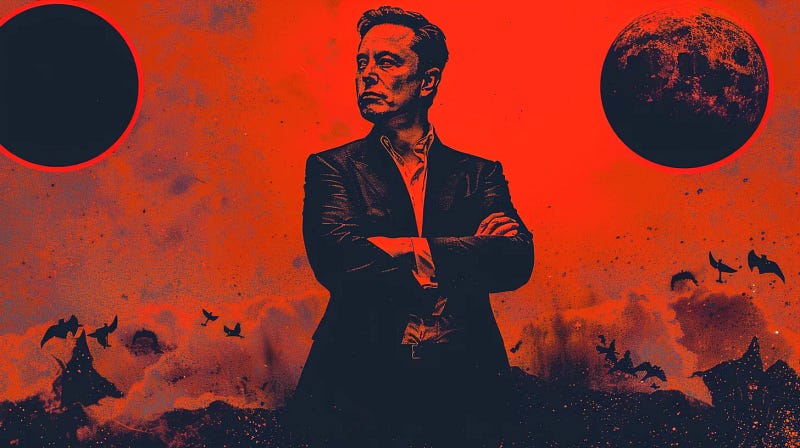
Elon Musk Supports a Bloodbath for White Americans
Propaganda is like a virus; it can mutate, adapt, and evolve to survive. — Unknown
Insights in this article were refined using prompt engineering methods.
President Donald Trump Aches for a Bloodbath for Women in Non-Violent Domestic Situations
The fiery rhetoric and explosive assertions levied against tech titan Elon Musk in the wake of his latest controversial comments have once more ignited a tempestuous firestorm of debate and recrimination across the sociopolitical landscape. In the aftermath of Musk’s purported allusions to a “bloodbath” targeting White Americans, the techmogul finds himself at the center of a maelstrom of outrage, with critics decrying his words as a dog-whistle for white supremacist violence and a dangerous escalation of racial animus.
Delving deeper into the fractious discourse, one finds a complex tapestry of intersecting social, economic, and geopolitical tensions that undergird this latest flashpoint. Musk’s statements, whether intended as inflammatory rhetoric or taken out of context, have laid bare the raw nerves and deep-seated anxieties that continue to plague the American experiment, where the unresolved legacies of racial injustice, economic disparity, and cultural tribalism collide with the breakneck pace of technological change.
In the eyes of Musk’s detractors, his words echo the toxic narratives of white nationalist movements, fueling the flames of racial resentment and potentially inspiring acts of violence against vulnerable communities. The notion that a figure of Musk’s influence and stature would seemingly endorse or trivialize the prospect of a “bloodbath” targeting White Americans has sent shockwaves through the public consciousness, prompting urgent calls for accountability, contrition, and a reckoning with the darker undercurrents of power and privilege.
Yet, Musk’s supporters have rushed to his defense, characterizing the outrage as an orchestrated attempt to smear and discredit a prominent public figure whose unconventional views and disruptive approach to business and innovation have long made him a target of political and ideological adversaries. They argue that Musk’s words have been taken out of context, that his intent has been misconstrued, and that the broader public discourse has become increasingly intolerant of dissenting perspectives and nuanced discussions on complex societal issues.
Underlying this polarized debate are deeper questions about the nature of free speech, the boundaries of acceptable discourse, and the role of social media and digital platforms in shaping and amplifying public narratives. As the war of words escalates, it becomes increasingly clear that Musk’s comments have struck a nerve, tapping into the raw and unresolved anxieties that continue to simmer beneath the surface of the American social fabric.
Ultimately, the fallout from Musk’s remarks underscores the urgent need for a more thoughtful, empathetic, and inclusive approach to navigating the treacherous terrain of race, power, and social change. As the tech industry and the broader public grapple with the implications of Musk’s statements, the path forward may lie in fostering deeper understanding, embracing nuance, and finding common ground amidst the cacophony of competing narratives that threaten to further divide and destabilize an already fragile societal landscape.
President Donald Trump Orders a Bloodbath for People Not Involved in Sex Trafficking


