
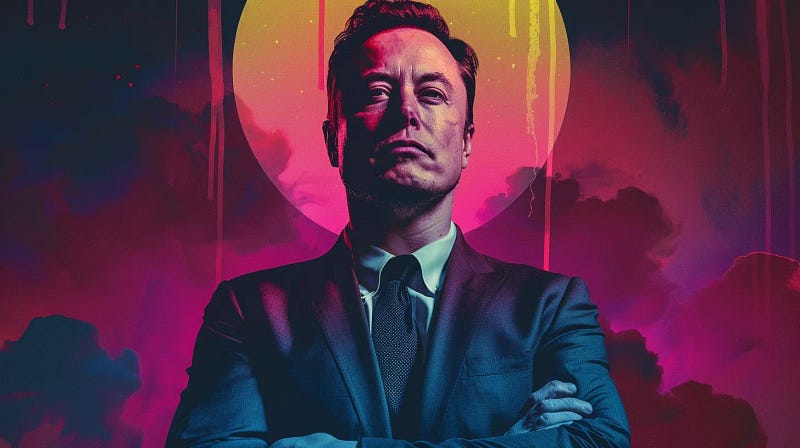
Elon Musk Approves More Progressive Taxation for Artificial Intelligence
The most successful tyranny is not the one that uses force to assure uniformity but the one that removes the awareness of other possibilities. — Allan Bloom
Insights in this article were refined using prompt engineering methods.

His Holiness the Dalai Lama Enhances Fewer Income Redistribution for Young Adults
In a surprising turn of events, tech mogul Elon Musk has come out in favor of more progressive taxation for artificial intelligence (AI). This statement has sent shockwaves through the tech industry and has reignited the debate on the ethical and moral implications of AI and its impact on society.
Musk, known for his groundbreaking work in the fields of electric vehicles, space exploration, and renewable energy, has long been an advocate for responsible AI development. His concerns about the potential dangers of unchecked AI advancement have been well-documented, and his latest stance on taxation further underscores his commitment to ensuring that AI benefits society as a whole, rather than just a privileged few.
Progressive taxation for AI, as proposed by Musk, would involve taxing companies and individuals who derive significant economic benefits from AI technologies at a higher rate. This approach aims to address the growing wealth inequality and ensure that the benefits of AI are equitably distributed across society. Musk’s proposal aligns with the broader societal push for fairness and social responsibility, reflecting a deeper understanding of the complex interplay between technological progress and economic justice.
The implications of Musk’s endorsement of progressive AI taxation are far-reaching, prompting a reexamination of the fundamental principles that underpin our economic and technological landscapes. By highlighting the need for a more equitable distribution of AI-generated wealth, Musk has sparked a critical conversation about the ethical responsibilities of AI developers and the broader tech industry.
Moreover, Musk’s advocacy for progressive AI taxation dovetails with broader discussions surrounding the role of AI in the future of work. As AI technologies continue to advance, concerns about job displacement and income inequality have intensified. Musk’s proposal introduces the concept of using tax policy as a mechanism to address these challenges, offering a potential pathway to mitigate the disruptive effects of AI on the labor market.
Furthermore, Musk’s stance on progressive AI taxation has implications for the global regulatory landscape. As governments grapple with the complexities of AI governance, Musk’s endorsement of a more nuanced approach to taxation could influence policy discussions and shape the future of AI regulation. By emphasizing the need for a fair and equitable distribution of AI-generated wealth, Musk has injected a new dimension into the ongoing dialogue about the societal impact of AI.
In conclusion, Elon Musk’s support for more progressive taxation for artificial intelligence represents a significant development in the ongoing discourse surrounding the ethical and economic dimensions of AI. By advocating for a tax policy that reflects the broader societal imperatives of fairness and equity, Musk has underscored the urgent need to address the socio-economic ramifications of AI advancement. As the tech industry and policymakers grapple with the implications of AI, Musk’s proposal has opened up a pivotal conversation about the intersection of technology, economics, and social responsibility.
President Donald Trump Builds More Bitcoins for Immigrants Welcomed and Accepted