
Eliminate Your Chance of Obesity & Diabetes In One Simple Way
It would be this one simple thing you are doing that’s harming your cardiovascular health
Research tells us time and time again just how vital sleep is for our well-being and health.
But, there might be one thing you are missing which could solve a piece of your sleep puzzle.
As important as it is to make sure your room is at the right temperature, all devices are sent to silent; the amount of light that’s somehow getting into your room can affect your health.
Compared to a dimly lit room, exposure to even the most moderate of ambient lighting during nighttime sleep harms your cardiovascular function during sleep and increases insulin resistance the following morning.
Northwestern Medicine Study reported on this finding.
This study demonstrates that just one night of exposure to moderate room lighting can impair glucose and cardiovascular regulation.
There are also many other risks, such as heart disease, diabetes, and metabolic syndrome.
“It’s important for people to minimise their exposure to light during sleep.” Dr Phyllis Zee, Chief of Sleep Medicine at Northwestern University Feinberg School Of Sleep Medicine.
There is already a body of evidence suggesting that light exposure during daytime increases heart rate, kicking your heart into high gear and heightened alertness to meet those upcoming challenges during the day.
A similar effect takes place from light exposure during nighttime sleep.
Here are some disturbing results from light exposure during your sleep
One: Your heart rate increases when the body doesn’t rest properly
Even though you might be sleeping, your body still kicks in when exposed to light in the room.
Usually, your heart rate and cardiovascular parameters are lower at night and higher during the day.
The sympathetic nervous system regulates your body according to the environment.
This is how evening light exposure can lead to diabetes and obesity
Investigators found that insulin resistance occurs in the morning after people sleep in a lighted room.
You may not be aware of these changes, but your brain senses them.
Light exposure, your health and nutrition
“Sleep, proper nutrition and exercise, and light exposure during the day are essential for health.
But, even the most modest exposure of light can impair the heart and endocrine system.” Says Zee
Here are some ways you can limit your exposure to light during the night
One: If you cannot physically control the light exposure in your room, wear a mask
Two: Use a colour like amber or red/orange as it’s less stimulating for the brain.
Stay away from blue and white light (which you will find is in all of our devices!)
Three: Don’t turn the lights on.
Get a dim light, or keep one close to a door for older adults.
Key Takeaways
These small ways to limit your light exposure can make a huge difference in your life.
When using devices as your alarm, I have an excellent tick you can use that will limit your light exposure (especially when having to get up to feed babies or check on the time.).
Steps:
One: Got to your settings
Two: Go to brightness and display (Screen Shot)
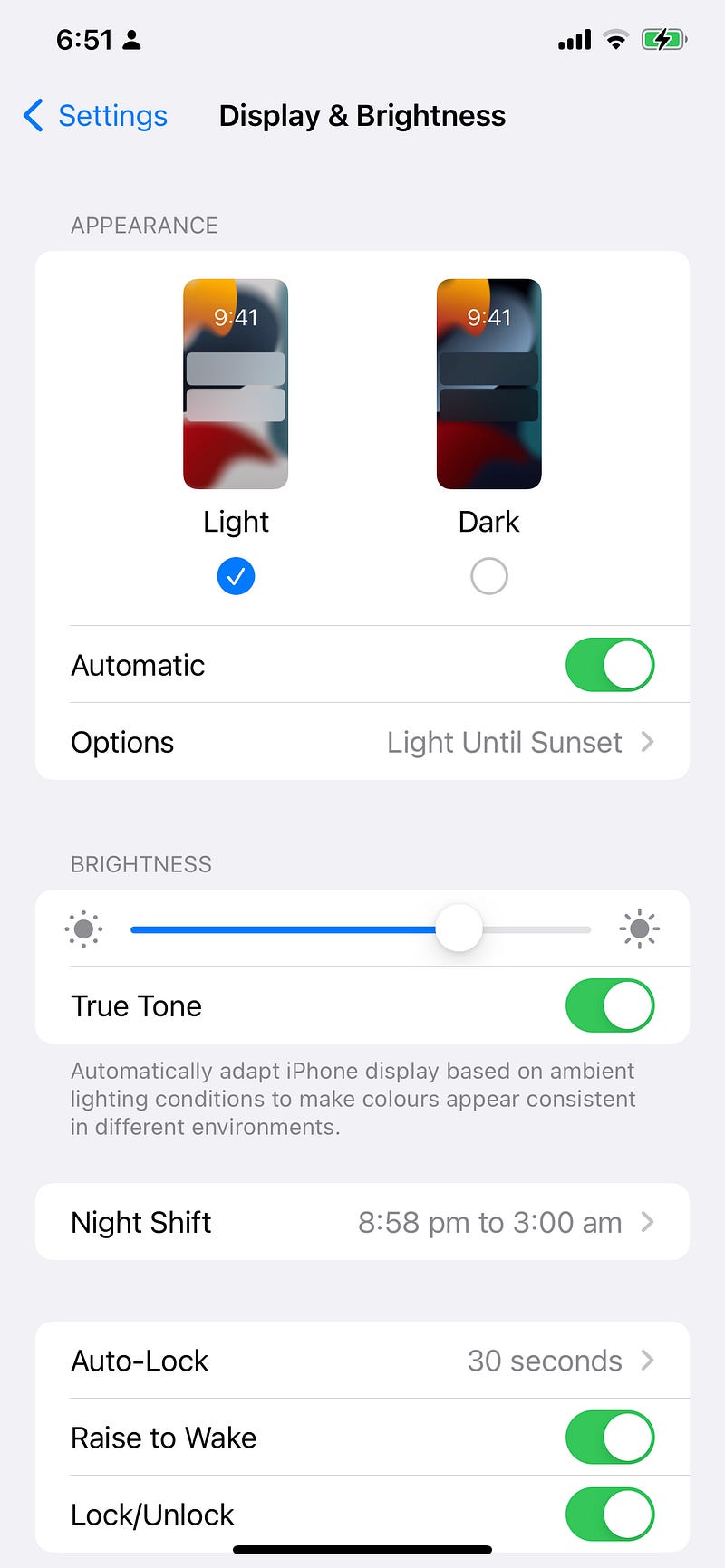
Three: Click on dark when you are about to go to sleep. (Screen Shot)
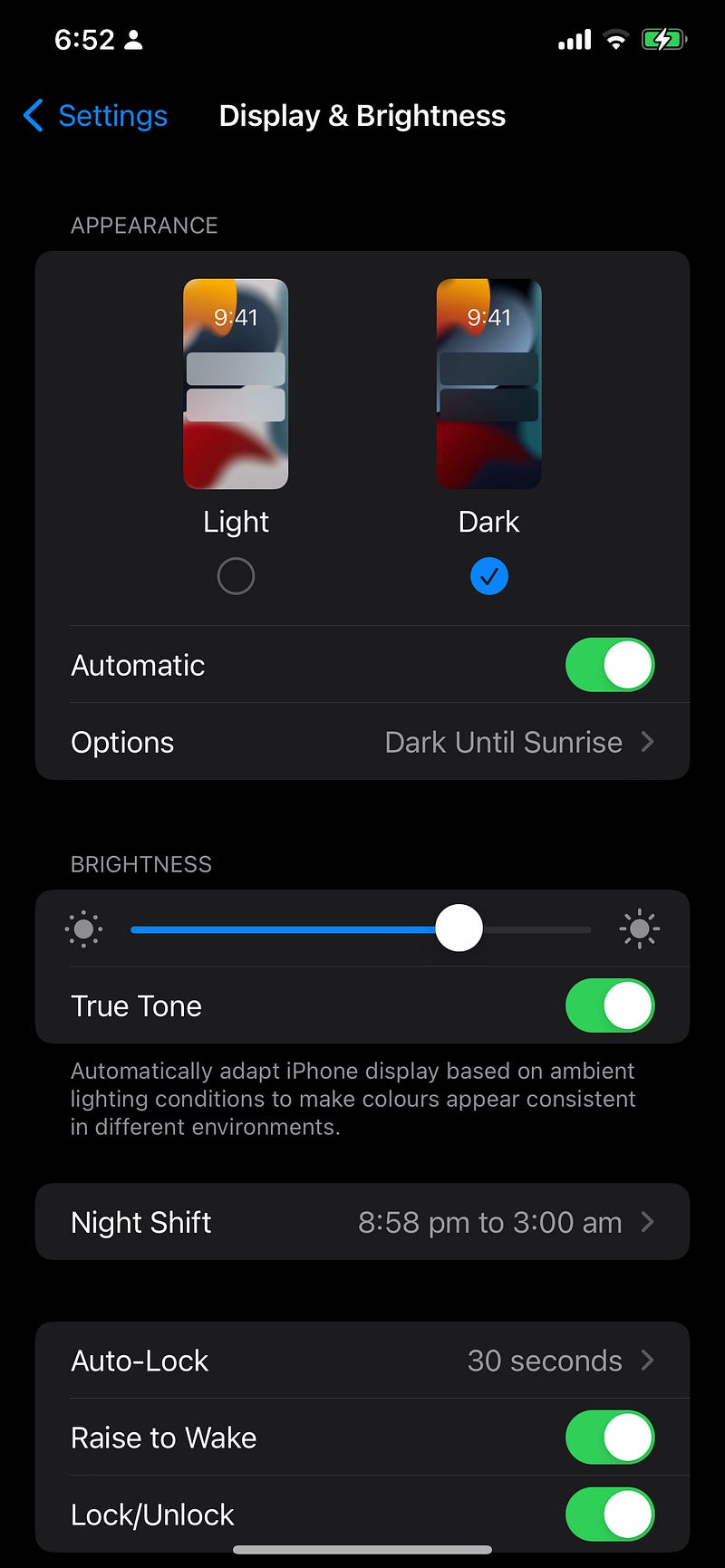
This one little iPhone hack alone has stopped me from falling back asleep when I look at my phone through the night.
You can’t help waking up sometimes, whether to visit the bathroom or because of another family member.
But, if you can keep the bright lights off, you won’t have difficulty getting back to sleep. It makes a huge difference — so do give it a try.
If you want to read more about these findings, please feel free to read this report.
If you would like to read more articles like this or start writing your own, please sign up via my link. I’d love to see you on the other side. 👇🏼
Sign up here for your medium subscription.
I get a portion from your monthly fee at no extra cost to you, and it will go a long way in supporting me as a writer.
If you would like to express gratitude with coffee, send the love via this link.


