Elegant Gothic Lolita: A (Literal) Formal Protest
How a misunderstood form of goth fashion slowly took over the world.
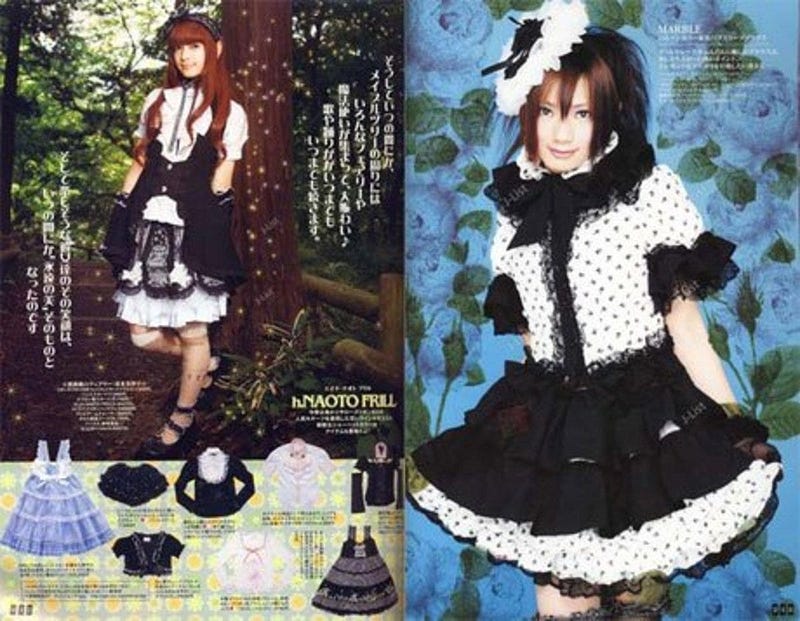
I was fucking weird when I was a teenager. One thing I was really into was cosplay and gothwear. Unlike most people in my area, I was not afraid to wear goth clothing.
More specifically, I was still trying to show I could “girl” right and therefore became obsessed with Japanese Elegant Gothic Lolita.
EGL, or Elegant Gothic Lolita, is what most Americans would call an eyebrow-raiser in both name and style. When I wore it, I looked like Elvira shat out a Cabbage Patch Kid. It was not very flattering for me.
However, it was flattering for the youth of Harajuku Japan back in the early aughts. How did I know? I would buy every Gothic Lolita Bible magazine that I could get. (For the reference, that was the streetwear magazine that every cool Japanese kid in the EGL world wanted.)
Looking back, it didn’t occur to me why people were weirded out by the name “Gothic Lolita.”
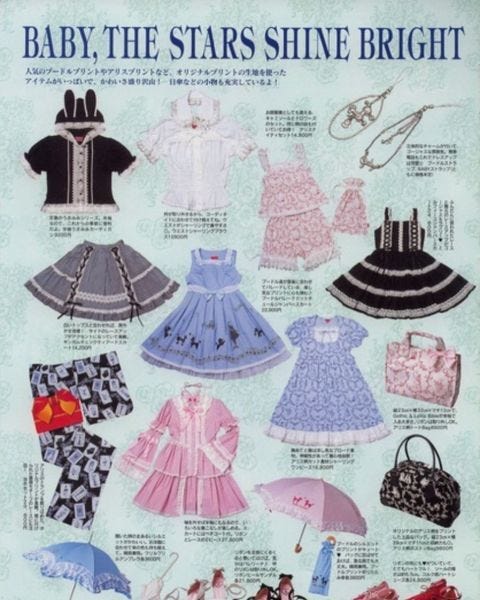
I know, I know. It’s a moment where my naivete really gets put on display. Or perhaps, it’s because the term “Lolita” did not really have a single connotation for me. I saw it as two things: a term for a girl that tempts (read: gets victimized by) older men and as a Japanese fashion statement.
It just so happened that most people didn’t know this was a Japanese trend at the time. It was 2006. Either way, I was oblivious to why my Cabbage Patch-looking ass was always getting derided for calling myself a Lolita.
The term Elegant Gothic Lolita has nothing to do with sex and everything to do with rebellion.
The moment I saw EGL clothing on Mana, a male rock star, something really resonated in me. It didn’t take me too long to find out that EGL was not just a fashion statement, it was a social rebellion movement in Japan.
During the 90s and 2000s, Japanese culture was famous for hyper-conformity. While it still is today, the sheer level of collectivism and conformity that was expected of a typical Japanese student would boggle a typical American’s mind.
EGL (and its counterpart, Sweet Lolita) was a combination of goth culture imported from America, goth rock, and a look that was designed to buck the trend of conformity.
Wikipedia explains it better:
“Lolita is seen as a reaction against stifling Japanese society, in which young people are pressured to strictly adhere to gender roles and the expectations and responsibilities that are part of these roles. Wearing fashion inspired by childhood clothing is a reaction against this.
This can be explained from two perspectives. Firstly, that it is a way to escape adulthood and to go back to the eternal beauty of childhood. Secondly, that it is an escape to a fantasy world, in which an ideal identity can be created that would not be acceptable in daily life.”
Japanese Lolitas often had their own Lolita outfits, strictly for meetups where they would have tea or shop around the district. Their very existence was meant to raise a middle finger to society while keeping things elegant.
Unlike ganguro and the more extreme yamanba cultures, Lolita fashion was one that was expected to be modest, cute, youthful, and still a unique interpretation of Rococo. There was history to the look’s origins, but there was also a deeply rebellious statement to it.
Unlike American goth subculture, there were specific rules EGLs were expected to abide by.
Despite it being a fashion movement that was rebellious, it still had a lot of rules to abide by. It was individualism, yes, but individualism within certain boundaries that made it a challenge. For example…
- No cleavage allowed. Unlike other rebellions, this was a modest take on fashion. Cleavage was not Lolita, because it was meant to be youth-inspired like a 19th-century doll.
- Shoulders must be covered. This goes back to the modesty.
- After a certain age, you would “graduate” to Elegant Gothic Aristocrat. This was a thing back in the 2000s and it’s not so much now. EGA is a more adult “sister style” that’s more formal.
- No sandals. I would suck at this rule now.
- Skirts must be knee length and A-line or cupcake profile. It’s worth noting that men can wear skirts in this scene. (See Mana from Malice Mizer for an example on this.)
- Stick to black, white, pink, or blue. Actually, most pastels work, but you’re not allowed to clash.
Overall, Lolita gave this idea of a bold rebellion mixed in with guidelines to help you make a wearable art piece.
I also like the idea of taking back the word “Lolita” to mean something nicer.
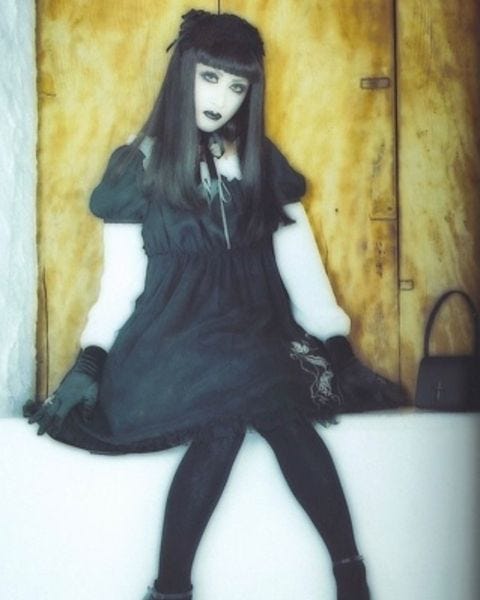
I don’t think I need to explain the book by Nabokov too much, but let’s put it in plain terms anyway. The book was about Humbert Humbert, a teacher who becomes obsessed with a young girl named Lolita.
Humbert’s obsession led to him abducting her, raping her, and later on, ruining her life. The name “Lolita” used to be fairly popular until that book came out, and I always found that to be tragic.
EGL had this way of reclaiming stigma in a beautiful way for me. As someone who was often slut-shamed and occasionally called a “lolita” in a sexual way, EGL was a subtle way of taking power back from my abusers — even if I didn’t realize it at the time.
Mana from Malice Mizer was a man who wore this outfit, and the fact that he wore a dress was so mind-blowing to me. He actually helped me realize that fashion is about self-expression and beautifying yourself regardless of the gender norms society had.
Where America’s concept of “Lolita” was tainted and sexualized, Japan’s was one that said “I’m pure.” One showcased the victimization of a girl, the other involved girls taking their power back.
Today, EGL is gaining a lot of popularity on Tiktok.
And you know what? I’m all for it. The message that EGL sends is one that I’m noticing people resonate with. However, I think the message it sends is a little shifted.
As a society, we are seeing women get more and more sexualized online. Rather than combat conformity, it wouldn’t shock me if Lolita ends up being a rebellion against the sexualization of women as a whole.
But that’s just my thinking.