
Electronic Health Records Need To Be Designed More Thoughtfully
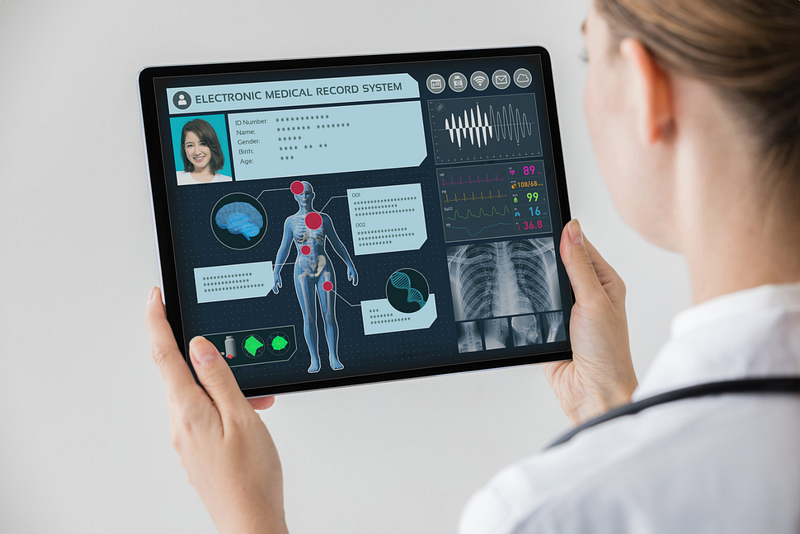
It’s likely that the last time you went to the doctor, your healthcare provider walked in with an electronic device instead of a physical file. The incorporation of electronic health records (EHRs) in hospitals emerged in the 1960s and 1970s making it easier to access patient information from multiple locations. This alleviated the stress that came with having a single paper file for each patient that had the potential to get lost. As the use of EHRs has increased, some of their technical aspects have made it more difficult for healthcare workers to do their job (Evans, 2016). EHRs have made it easier to access patient information, but their design and use are far from being complete in terms of fully supporting the needs of our dynamic healthcare systems.
In this story, I will first discuss some issues of data access with EHRs, specifically, inaccessibility to all members of a healthcare team, and the loss of critical information. Then I will explore solutions in which EHRs can be better designed using human factors and evidence-based medicine so that they can adequately support both healthcare workers and systems.
Issues
Information in Electronic Health Records is Not Always Accessible to Everyone on the Care Team
Design flaws in EHRs can result in patients receiving delayed care. In an article published in 2014 titled “Complaints about electronic medical records increase” author Bill Toland shares the story of a patient who was at risk for a respiratory arrest. There was no place on the EHR to list this life-threatening condition, that would be visible to everyone on the care team. Because of this, care was delayed to the patient resulting in them suffering through a complete respiratory arrest leading to several other medical complications. (Toland, 2014).
Critical Information is Lost
Toland also writes about two situations in which technical issues within EHRs complicated patient care, specifically regarding the prescriptions they were taking. UnitedHealth Group Inc had recalled software that dropped information regarding patients’ prescriptions out of their EHRs in over 20 states(Toland,2014). Another complication of EHRs is their inability to properly document lab results associated with a particular drug. Lab testing of potassium chloride showed a [bad] jump in potassium, potentially causing harm to the patient being prescribed this drug. The magnitude of this result was not reflected in the patient’s EHR, and the nurses continued to provide the medicine unaware of the fact that the potassium level was high(Toland, 2014). Technical errors like these undermine the purpose of EHRs being a place to securely centralize all of the medical information pertinent to a patient.
Disrupting Healthcare Workflows
Overall the data access issues that arise from using EHRs disrupt the flow of patient care. In the journal article titled “It’s time to bring human factors to primary care policy and practice”, Beasley et al, explain that “Patient-centered workflows are non-linear and place special demands on information systems such as the EHR to support care”(Beasley et al, 2020). It becomes difficult when the tool that healthcare providers rely on to have easy access to a patient’s medical information is not doing its job. Software bugs and design flaws are frustrating in all areas of technology but are particularly dangerous in the healthcare sector as lives are at stake.
Solutions
Incorporating Human Factors for a More Thoughtful Design of Electronic Health Records
As EHRs are tools used in one of our society’s most critical systems it is important to ensure that they are properly designed to fit the needs of healthcare workers and their workflows. Beasley et al, offer a solution, to incorporate human factors and evidence-based medicine to the design and use of EHRs. Human factors, a subset of industrial engineering, consider how to better engineer products and processes for the cognitive, social and technical needs of those who use them(Beasley et al, 2020).
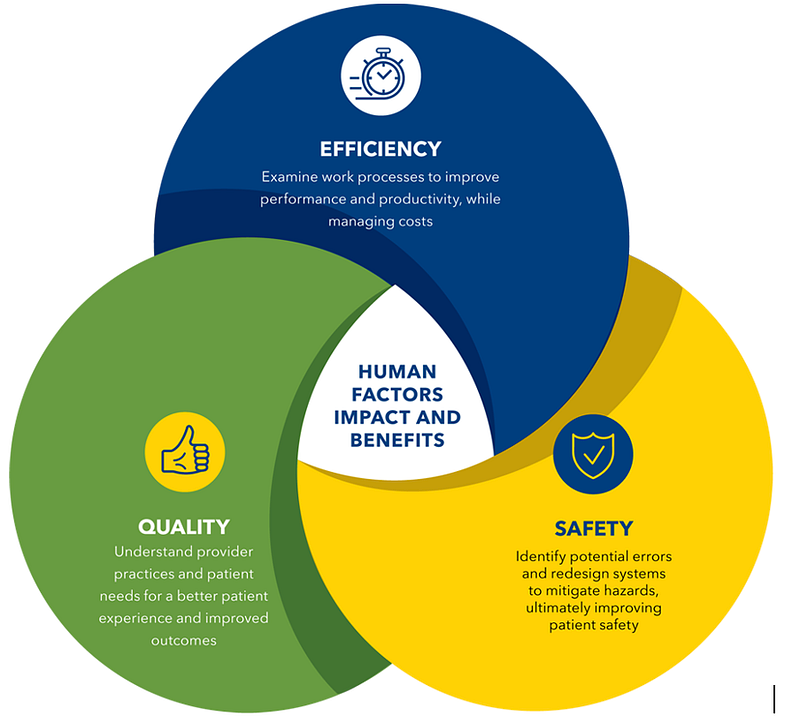
In the first story mentioned in the issues section of this blog post, it was difficult for everyone on the care team to access critical information for a patient. Using human factors, engineers who work on EHRs could take into account the communications that occur between various healthcare professionals. Then they could design EHRs in a way that makes it easy to input information and ensures accessibility to all necessary members of a healthcare team. However, to ensure that the EHRs meet all of the needs of a healthcare system, there must be rigorous testing and redesigning before being used.
Following the Rigors of “Evidence-Based Medicine” to Ensure Patient Safety
Beasley et al also suggest that EHRs must be subject to the same rigors of design and testing of medical interventions before they are incorporated into healthcare systems. A key component of maintaining this rigor is ensuring that any medical issues due to an error in an EHR are properly reported. Unfortunately, this reporting is not mandatory by the FDA or state authorities. Reporting also brings about complications regarding confidentiality clauses between the IT vendors who make the EHRs and the healthcare settings they serve(Toland, 2014). But mandatory reporting in a secure manner is crucial to ensure that both health care providers and engineers can easily pinpoint primary issues and come up with solutions for them. This is where the human factors approach can be the most useful, as engineers can dissect the various social, cognitive, and technical factors that arise in the most commonly reported issues.
Final Thoughts
Since their introduction to healthcare systems several decades ago, EHRs have shifted the way patient care is implemented. While they have made medical information management easier since the days of primarily using paper files, they are not fully comprehensive in their abilities to support our critical and fast-changing health care systems. Incorporating human factors and rigorously testing and designing EHRs makes them easier to use and less of a hindrance to providing effective patient care.
References
Beasley, J. W., Holden, R. J., Ötleş, E., Green, L. A., Steege, L. M., & Wetterneck, T. B. (2020). It’s time to bring human factors to primary care policy and practice. Applied Ergonomics, 85, 103077. https://doi.org/10.1016/j.apergo.2020.103077
Evans, R. S. (2016). Electronic Health Records: Then, Now, and in the Future. Yearbook of Medical Informatics, 25(S 01), S48–S61. https://doi.org/10.15265/iys-2016-s006
Millar, A. (2019, October 10). Improving electronic health records and cutting out administrative hassle. Retrieved April 19, 2020, from Verdict Medical Devices website: https://www.medicaldevice-network.com/features/improving-electronic-health-records/
Toland, B. (2014). Complaints about electronic medical records increase. Retrieved from https://go-gale-com.offcampus.lib.washington.edu/ps/i.do?id=GALE%7CA377261874&v=2.1&u=wash_main&it=r&p=ITOF&sw=w
What is Human Factors in Healthcare? (2019). Retrieved from National Center for Human Factors in Healthcare website: https://www.medicalhumanfactors.net/about-us/what-is-human-factors/