
Electric Vehicles Have a Water Problem
It isn’t going away anytime soon
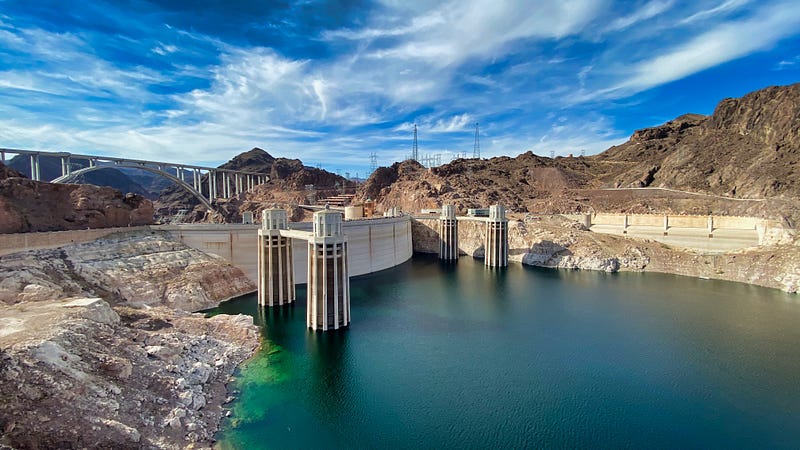
Last weekend, I was floating on the Colorado River with my brother-in-law in Grand Junction, Colorado. I floated past where the Gunnison River runs into the Colorado River. The convergence of those two rivers is actually how Grand Junction got its name, at least according to my brother-in-law. As we were floating, we started talking about water rights in Colorado, and the current Lake Mead drought. The more we talked, the more our conversation navigated to the convergence of different sustainability challenges. Water is necessary to sustain life through hydration, hygiene, and agriculture, and it is also necessary for mining and refining operations associated with the minerals needed for electric vehicle batteries.
I recently drove from Virginia to Colorado in my Nissan LEAF and in the process gained a real understanding of the current state of America’s electric vehicle charging infrastructure. For a long time, I have thought that the biggest challenge associated with the transition to mass electric vehicle adoption would be the build out of a robust charging infrastructure. However, after successfully traversing the American Heartland in an electric vehicle that only has a 150-mile range, I am confident that our electric vehicle charging network is on its way to ubiquity. It will take a few more years, but we will get there.
The bigger challenge I see now relates to the massive amount of water that it takes to mine Lithium and other minerals that are necessary for the production of electric vehicle batteries. Right now, Lithium mining and production is dominated by four countries, namely Argentina, Australia, Chile, and China, which make up over 90% of global Lithium mining operations. This presents unique challenges as demand for Lithium skyrockets. Wendover Productions produced a video with helpful data and visuals to understand many of the unique challenges associated with the skyrocketing demand for Lithium.
The United States does have a significant mostly untapped Lithium resource in Nevada, but there is very little water available to mine and refine the minerals. As you might imagine, the water rights in a place like Nevada are very precious and valuable, since Nevada is an arid region with little water availability. The extraction and processing of Lithium requires massive amounts of water. And, because of the extreme scarcity of water in the region, using water for extracting Lithium inherently means not using it for something else like ranching or farming.
There is also a non-trivial possibility that the mining and processing of Lithium in Nevada could leak unsafe levels of Arsenic into the regions groundwater table, which would have significant negative impacts on the water supply for communities in the region. There are also a number of biodiversity hotspots in Nevada, which means that a massive mining operation is likely to have a significant negative impact on wildlife in the region by destroying or deteriorating habitats and obstructing migratory paths.
And, if all of the above is not enough to make your head and heart hurt, then also know that resource extraction operations generally have a bad track record associated with labor rights and the treatment of indigenous populations. So, even if we solved the environmental challenges, we would still have challenges associated with human rights, safety, and cultural devastation.
So, how do we address all of these challenges? We need Lithium and other minerals to produce electric vehicle batteries. We need water to mine and refine the Lithium and other minerals. And, on top of all of that, we need to address environmental, safety, and cultural issues associated with the mining and production of Lithium and other minerals.
That is a difficult prompt, but it doesn’t seem like it is outside of the scope and capability of human ingenuity and intelligence. It is time for us to evolve and develop an advanced methodology that effectively minimizes negative externalities. It is hard to communicate optimism in the face of so many challenges, but no one ever said the transition to a sustainable future was going to be easy.


