
Elections Don’t Prove Much
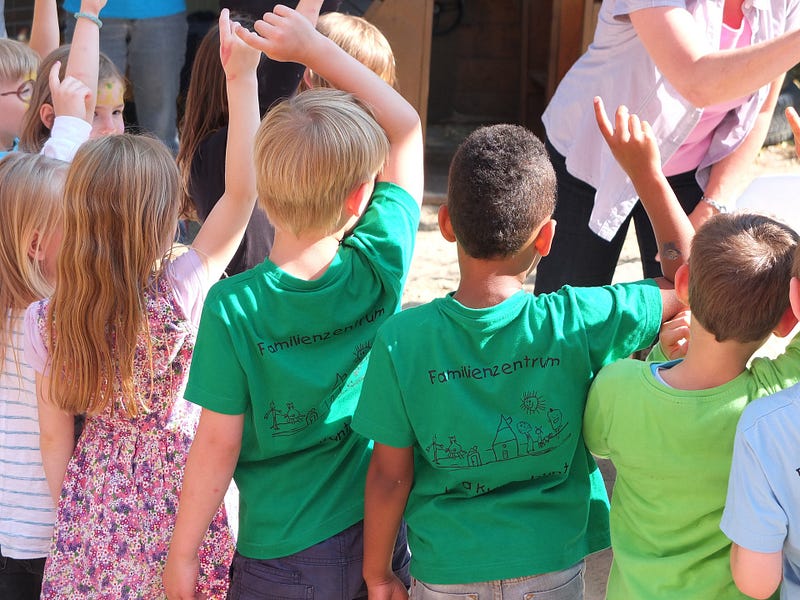
There’s no such thing as a mandate. Ask a kindergartener.
Presidents crow about their mandates. They think they know the will of the people. They’re wrong. Instead of mandates, elections are referendums on the regime in power. If Trump wins in November, it will mean that a slim majority of voters are satisfied with how he’s run the executive branch. If Biden wins, it will mean that a majority of voters are dissatisfied with Trump’s performance. Neither result means that 330 million people demand a massive structural change of one sort or another.
Donald Trump claimed a mandate because he ‘won’ the 2016 election. Though small historically, he called his 304 to 227 lead in the electoral college a landslide. Hillary Clinton, with 48.2% of the vote to Trump’s 46.1% would surely have claimed a mandate had she won the electoral college. But is 2.1% of the vote enough to disregard the opinions of tens of millions of people?
The lunacy shines even brighter when looking at the whole electorate. Clinton won 28.4% of eligible voters, while Trump won 27.2%. A difference of one or two out of a hundred eligible voters does not equal an overwhelming opinion. Even Obama only won 30.2% to 26.1% of the electorate, a difference of four people out of a hundred.
What this would look like in kindergarten
Imagine a kindergarten classroom with twenty students. The teacher/kitten herder lets the kids vote on whether to walk to the local park for recess or have extra time on their regular playground. Six kids vote to go to the park, and five vote for the playground. One kid writes in planting a garden. Do the walkers have a mandate?
What about the other nine children? One little felon spent the election in time-out. Another stayed in line for the nurse’s office with a mild fever and a dry cough. Three didn’t understand the election. Another three were trying to earn their lunch money finishing a stack of color sheets in front of them and were more focused on going hungry than getting to the polls. And Anthony? He gave his ballot to Judy to put in the box for him, but she ‘lost’ it on the way.
On the appointed day, the class assembles and marches off to the park. The walk takes a lot longer than advertised. It’s blazing hot. The water fountains are broken when they get there. Everyone has a miserable time. The Playgrounders are emboldened and the Walkers are cowed. The next election, over apple pie versus ice cream for dessert, goes for the Playgrounders seven to four. It would have been an even bigger blowout except that Billy always votes how Robert tells him to even if he likes ice cream better.
Finally! A mandate! The Playgrounders can put the racist Walkers in their place! The Walkers swear a blood oath to take revenge on the socialist Playgrounders. Meanwhile, the rest of the class wonders why they can’t have the pie à la Mode.
This is fiction, of course. We all know that kindergarteners would turn out to vote and are a lot more civil than our political class.
What this looks like in life
Coming out of the 2004 presidential election, George W. Bush put faith in his mandate. The people had given him the green light for entitlement reform, starting with Social Security. Then he was going to move on to tax reform.
“Let me put it to you this way: I earned capital in the campaign, political capital, and now I intend to spend it,”
— President George W. Bush
Bush completely misread the election. The American people more or less liked their walk to the park. He signed a prescription drug bill that party stalwarts on both sides hated, a badge of compromise. The economy was recovering. The Iraq War had not yet imploded. Considering the entire electorate, Bush’s 28.2% to 26.9% victory in 2004 did not indicate that the country was ready to radically change Social Security.
President Obama’s bet on the Affordable Care Act went much the same. The legislation passed after one of the most acrimonious crusades in legislative history. Even liberal Massachusetts elected Scott Brown on his promise to be the 41st vote against the act.
Deeply unpopular at its passing, the episode led to the rise of the Tea Party movement. The mid-term elections proved a disaster for the Democrats. The American people didn’t like the walk they had been taken on.
Implications for the future
Both parties risk overreach. The current buzz about eliminating the filibuster in the Senate makes the situation even more precarious for the Democrats should they win in November. For their part, if Republicans were ever to come to power in a filibuster-free environment, they would surely squander the opportunity as well. Here are just two possible examples out of many:
Gun control. The AR-15 and its variants, demonized as weapons of war, are the best-selling rifles in America. Before so-called assault rifles were a problem, handguns were demonized. The reality is that firearms are insanely popular in the United States. While conservatives are somewhat more likely to own guns than liberals, gun ownership is endemic to both parties. There are more guns in America than people.
Thirty years ago the push for gun control versus the right to bear arms split across party lines. For the 1994 assault weapons ban, 38 Republicans and 177 Democrats passed the bill, while 137 Republicans and 77 Democrats voted against. Today, Democrats almost exclusively back restrictive gun laws. Beto O’Rourke, touted by Biden as his ‘future gun czar,’ calls for confiscation.
”Hell, yes, we’re going to take your AR-15, your AK-47"
— Beto O’Rourke
The part of the President often loses power in mid-term congressional elections. While the majority of the country might be sold on some restrictions like red-flag laws, any large scale or intrusive restrictions or bans might see a backlash contributing to a result like the midterms in 1994.
Abortion. Once upon a time, the Democratic vision for abortion revolved around “safe, legal, and rare.” Since those days, the Democratic party line has moved towards ever more liberal. Most Americans recoil at the idea of elective abortions in the ninth month. Such procedures are very rare but provide Republicans a wedge.
Republicans could easily overplay their hand. Americans, while they may not like abortion in general, don’t want to return to the days where women were criminals. Like with gun control, Americans might back tinkering at the margins to prevent the next Kermit Gosnell, but the country is not interested in a widespread ban.
Moving the ball down the field
Presidents and their parties have two paths. In the Reagan mold, they can try to stake out a position and get the country to come to them. Ronal Reagan, the Great Communicator, focused on core values and tried to convince the country why something was important.
Americans forget the scandals and partisan division, especially in Reagan’s term, but the Republicans held their own in 1982 and the 1984 election was truly a landslide. Democrats didn’t make gains until 1986 when Reagan’s administration became mired in scandal and gridlock. Today Reagan is beloved by many Americans on all sides of the political spectrum.
Bill Clinton, on the other hand, pursued a strategy of ‘triangulation’ after devastating losses in the 1994 midterms. He would co-opt Republican issues that had appeal across the political spectrum, whether immigration or crime. His primary motive was to stay in power, but with each compromise, he moved the country a tiny bit to the left. He too faced incredible partisan rancor but is today regarded as a highly effective politician.
Presidents and their parties can address the illusion of mandate by either articulating their position in such a way as to build consensus around their view or by weaving a middle path slightly to the right or left. Pretending that a three or four percent election win (one or two percent of the entire electorate) is a license for drastic actions will only damage a President’s party at the next referendum.
Brian E. Wish works as a quality engineer in the aerospace industry. He has spent 29 years active and reserve in the US Air Force, where he holds the rank of Colonel. He has a bachelor’s from the US Air Force Academy, a master’s from Bowie State, and a Ph.D. in Public and Urban Administration from UT Arlington. The opinions expressed here are his own. Learn more at brianewish.com.