Election Special! Politics in India, Democracy and Voting
Finally its 2019, the much-awaited Lok Sabha elections is here. The result of the massive head-on fight between the Modi led BJP and Rahul led INC is just underway. Each and every vote is important. Here’s why!
In politics, nothing happens by accident. If it happens, you can bet it was planned that way.
-Franklin D Roosevelt
When our nation was in turmoil, hit by corruption and sudden global economic recession, a new era of politics dawned during mid-2013.
India, the largest indirect democracy in the world became a sovereign republic in 1950, with the official adoption of a constitution. Having adopted ideas from Britain and France, parliamentary democracy was established. Today we understand the importance of democracy and the fruits which we enjoy because of that. Learning from military rule of Pakistan, African nations, the dictatorship of Arab states to self-acclaimed Supreme leaders of the communist world. Democracy triumphs them all and that’s what history has always taught us.
A Brief Recap of Indian Politics
Jawaharlal Nehru, India’s first Prime Minister, was the flag bearer during the post-independence period. Bearing a senior post in the Indian National Congress [India’s largest Political Party till 2015], he necessitated a striking influence across the world. This was India’s first adoption of Socialism as an economic idea.
India follows the dual policy system. A double government which consists of a central authority at the centre, and states at the periphery.
Governments are formed through elections held every five years (unless otherwise specified), by parties that secure a majority of members in their respective lower houses (Lok Sabha in the central government, and Vidhan Sabha of states). Relative to other democratic countries, India has a large number of political parties.
It has been estimated that over 200 parties were formed after India achieved independence in 1947.
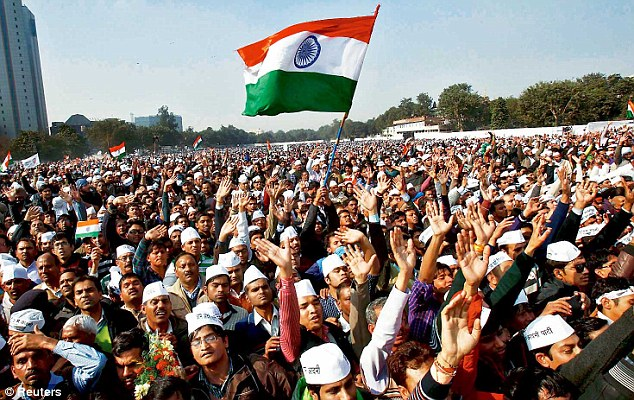
Establishing Democracy and Politics
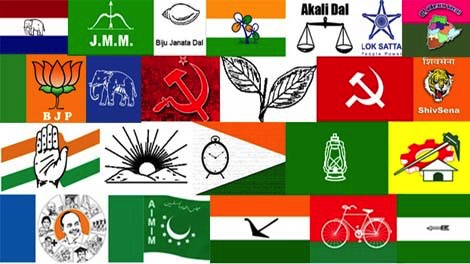
Currently there are 7 national parties aside from various state parties in India; namely: BJP, Congress, CPI(M), CPI, BSP, NCP, and Trinamool Congress, compared to just 2 way back in the 1950s.
The Congress, which is considered to be the pioneer organisation that brought about Indian Independence, has maintained a nationwide influence and has controlled a majority of the Indian administration. Albeit before Independence, its leaders were the flag bearers of soft Hindutva, its stance suddenly changed after partition, so as to accommodate secular views.
After emergency in 1977, the Janata Party defeated the incumbent Congress. This party got dissolved, and later came back to be known as BJP. BJP grew its strength with the Hindutva agenda, successfully manipulating the issue of Ram Janmabhoomi and Babri Masjid Demolition issue to its favour. It came up as the largest party in Lok Sabha during the 1996 issue. Later had to be supported by different state parties to form a coalition govt in the centre in 1999. Several small coalition governments came up during this period. This was perhaps the only time that India was under a right-wing party before the 21st century.
Looking towards 2013 and the upcoming elections
India after 10 years of UPA rule, saw both ups and downs in this small period, especially after liberalisation, India’s growth in all sectors was exponential. It took India just 9 years to grow from a 1 trillion economy to a 2 trillion economy. This was, of course, a golden feather in the cap of great Economist Dr Manmohan Singh. This legacy of his rule was shattered by multiple scams which came to a storm uprooting the UPA of its stable feet. The 2G spectrum, CWG scam, Coalgate were a few examples of the same. The only face saver, Economy also went through a bad period of recession, people lost jobs, growth slumped and inflation reached new heights.
All Indians needed a change; A change that would fulfil their dreams, heal their past and would lay a roadmap for their better future. People started searching for political alternatives. Either they had to choose between a corrupt regime or the one that changes the arena of politics forever. Lightning of change also struck the Congress party, even they started to think new. BJP the principal opposition had already had all the preparations done before itself. They had already decided their leader before itself, clean from corruption, star of development, moreover a leader of masses, the great architect of Gujarat Model. It was none other than Shri Narendra Modiji, a great charismatic revolutionary leader, able to uplift India to new heights.
Late 2013, saw elections to Vidhan Sabha in five states, Chattisgarh, Madhya Pradesh, Delhi, Rajasthan, and Haryana. All these states the BJP reigned supreme with a thumping margin uprooting the Congress. Now there was a new factor of surprise in this election, it was the new Party formed out of India Against Corruption by Anna Hazare, the Aam Aadmi Party, headed by Arvind Kejriwal. This infant party swept the wave across the Delhi raising the fear amongst even the strong BJP and the Congress. This election was a big game changer, firstly it was a semifinal for the upcoming Lok Sabha elections, secondly, it brought a new party which could bring fear in the minds of all existing political parties. In 2015, it bounced back securing 67/70 in Delhi.
Lok Sabha election time came around. Then followed the Media Hype of Gujarat Model and its obsession with Gujarat’s astute leader Modi. As portrayed before, Modi became stronger and stronger as days passed, while the Congress-led UPA crumbled. Massive rallies were organised by both sides in order to display their strength and might to the people. Rahul Gandhi was the poster boy their party. While all parties were doing ground on-ground campaigns, online social platforms were created to attract youth and consolidate their votes. BJP IT cell was again a revolutionary step in this. It created a vague image of Rahul Gandhi to everyone while endorsing Modi. Thus, the BJP IT cell was responsible for this revolutionary move. Politics also changed with elections; NDA now had more allies than ever. Even International media and organisations began discussing Indian elections like never before.
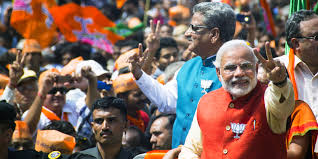
Election results were out on the 26th of May 2014, BJP which was once considered a powerless party, triumphed with 274 seats with NDA gaining a cumulative total of 336. While the Grand old Congress party came second with 44 seats; their lowest since independence.
Present political scenario and Modi era
Modi’s government began with a bang, by inviting all the Heads of Nations of India’s Neighbours, which is lauded as a well-begun move or a great political tactic. Since then every major state election in India was swept by Modi Wave. Modi‘s era has seen initiatives like Make in India, Mudra initiative, Startup India, Beti Bachao, Beti Padhao, Digital India Swachh Bharat Abhiyan, And who cannot forget the most controversial move- Aadhaar Linking policy.
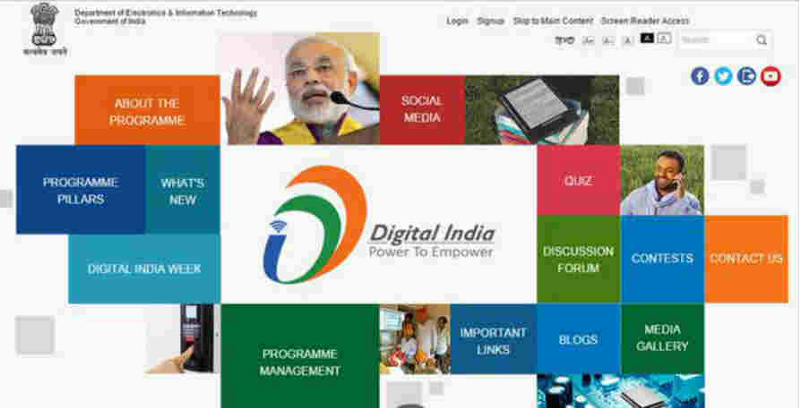
Twist in Governance wasn’t expected, a majority of the above-given projects were renamed from UPA and was just given an extra political push. Now, the twist was made, by seeing the Measures like Demonetisation and GST propping out of nowhere and were seen as a landmark initiative regardless of its drawbacks or results. Another political manipulation was taking credit for Surgical Strikes and the Balakot airstrikes, which can be seen again as a controversial.
Major policy failure is the Foreign policy with Pakistan, and mishandling of Kashmir issue. Modi spent a lot of time, by not attending the Parliament, but touring all major nations in the name of diplomacy. Also, a lot of time and effort was spent by the govt in election campaigning. Till today, Modi has been under a lot of criticism, for not being able to do enough on Unemployment, Corruption, Diplomacy, Bringing back Black money, Handling of the economy, the rise of right-wing pseudo nationalism and the bad condition of farmers in India. Modi since becoming PM has never held a single press conference.
States in the Northeast, which were once considered to be Congress bastions are now no more, majority of the states have already fallen for the saffron party, also to be noted that CPIM which was once considered to be a national party is now restricted only within Kerala, after it lost Tripura to BJP after being incumbent 25 years. The states of Maharashtra, UP, Assam, Jharkhand are now being ruled by NDA, where power was wrested again from Congress.
TDP which was an NDA ally as of 2014, left the alliance in March 2018, due to the discrepancy between the state and the central government. Following that BJP retained Goa, won Uttarakhand and also notably slumped itself in Gujarat, without losing its majority, to the Hardik Patel-Jignesh Mevani tie up, losing 19 seats to the Congress. JDS-Congress tie-up has now successfully kept BJP outside the southern states but the alliance itself is a messed up one. Congress also managed to wrest MP, Chhatisgarh and Rajasthan but got itself wiped out in the North-East. Kejriwal again is a kingmaker and a gamechanger. Now, with Rahul Gandhi contesting from Wayanad, Kerala.
Nevertheless, the Modi wave was successful to bring a change and also make a possible political earthquake in the 21st political History of India. Majority of BJP ruled states are hit by the anti-incumbency factor. With 2019 Lok Sabha elections en route, the bickering of the NDA alliance is a major challenge to BJP, while the biggest challenge of Congress is to get back the faith of people. The Third Front formed by a majority of regional parties will try to make a big comeback at least by damping the Modi wave up to a very good extent. With issues like Pulwama attack and strikes being converted to political talk, the game is now more twisted.
Whom to Vote and Why to Vote?
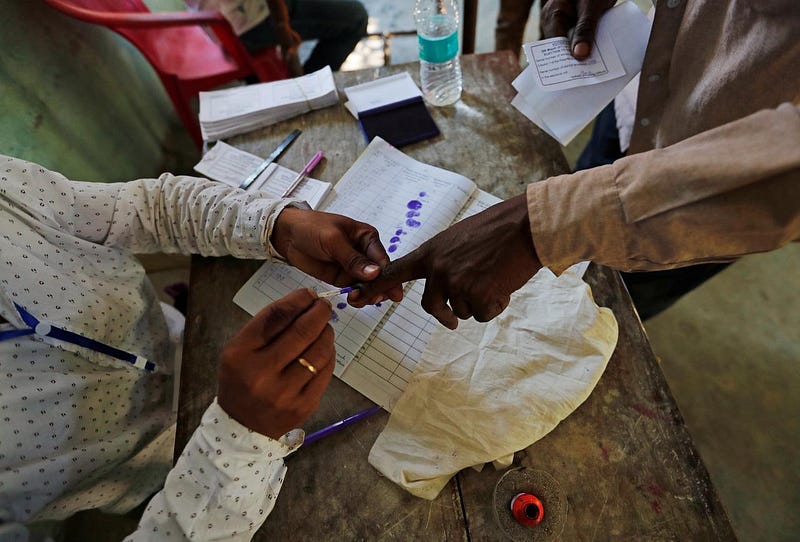
It’s often seen that people who vote their representatives in an election don’t follow up with their performance and at the end of the term start blaming them and the system. They don’t believe in politics and rather prefer to keep it untouchable. Their view of politics is still narrow.
The solution to this is to understand what a political party or a candidate stands for. A candidate should be judged by personality and ability to stand up for your cause irrespective of the political party they represent. Read the manifesto properly before you take a wise decision. Reject the candidate who spews venom, create communal hatred and divide people. At the end of a leader’s term, question his credibility and ask him; his track record. You can access his spending of MP LADs fund from govt websites. You can also follow your Leader on social media to track on what all minute details he focuses on. Quite often it is very important to decide whom you will vote for before you are at the polling booth.
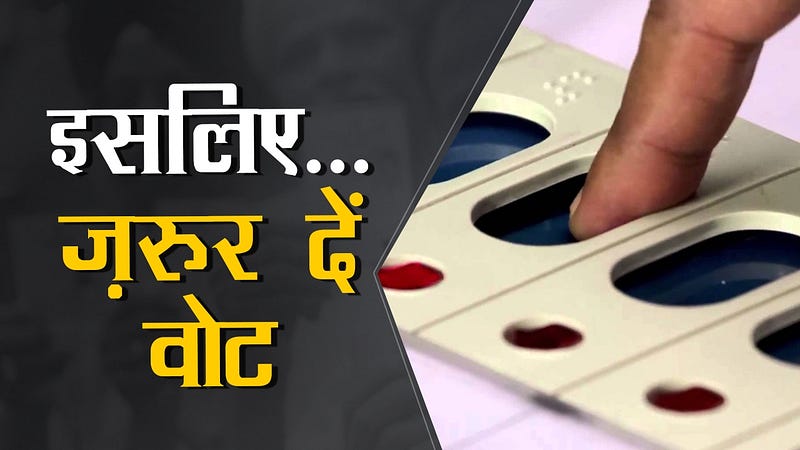
Why vote? Just because it’s your right? Never!!. You need to vote because it’s your government and you have the power to change it. You can be a part of its policies and you can decide it’s functionality. Politics is not something untouchable(Like people perceive it to be). Every decision that was taken and everything happening around you us due to politics. There is no way that you can run away from it(Unless you move to another country still your passport remains Indian and bound by Indian laws). For example, you were affected by demonetisation on November 2016 irrespective of the fact whether you had voted for Modi or not. Just like that each and every decision creates your fate and your vote builds that decision. It's important to make sure that the government works for you as well and the decisions taken are progressive.
Question- Oh no! I don’t like any political parties at present! What will I do? The simple answer is None of The Above (NOTA) option- All it says is that you have the right to select your choice or even to reject every choice proving that you can show your dissatisfaction in the present political system. NOTA votes most often triumph to a very large number making each and every vote significant to each one to secure a safe margin. Gone are those days when people used to select the Less Evil candidate from the list of evil candidates during the election.
So Vote, Question and Change.
We are thankful to our freedom fighters and constitution drafters that India is a democracy.
All political parties irrespective of ideology; BJP or Congress or any small party must revamp their style of politics and must keep people and the nation above the vote-bank politics. A goodwill politics must be the objective here instead of the cowardly politics which includes dividing people on the basis of race, caste and religion. Let’s work for a better India and let’s hope for the best!
Jai Hind!!!!!
Disclaimer- The writer doesn't affiliate himself with any political party; wrote the article from a neutral perspective and not to hurt anyone’s political sentiment. Political opinions represented here are just personal views.


